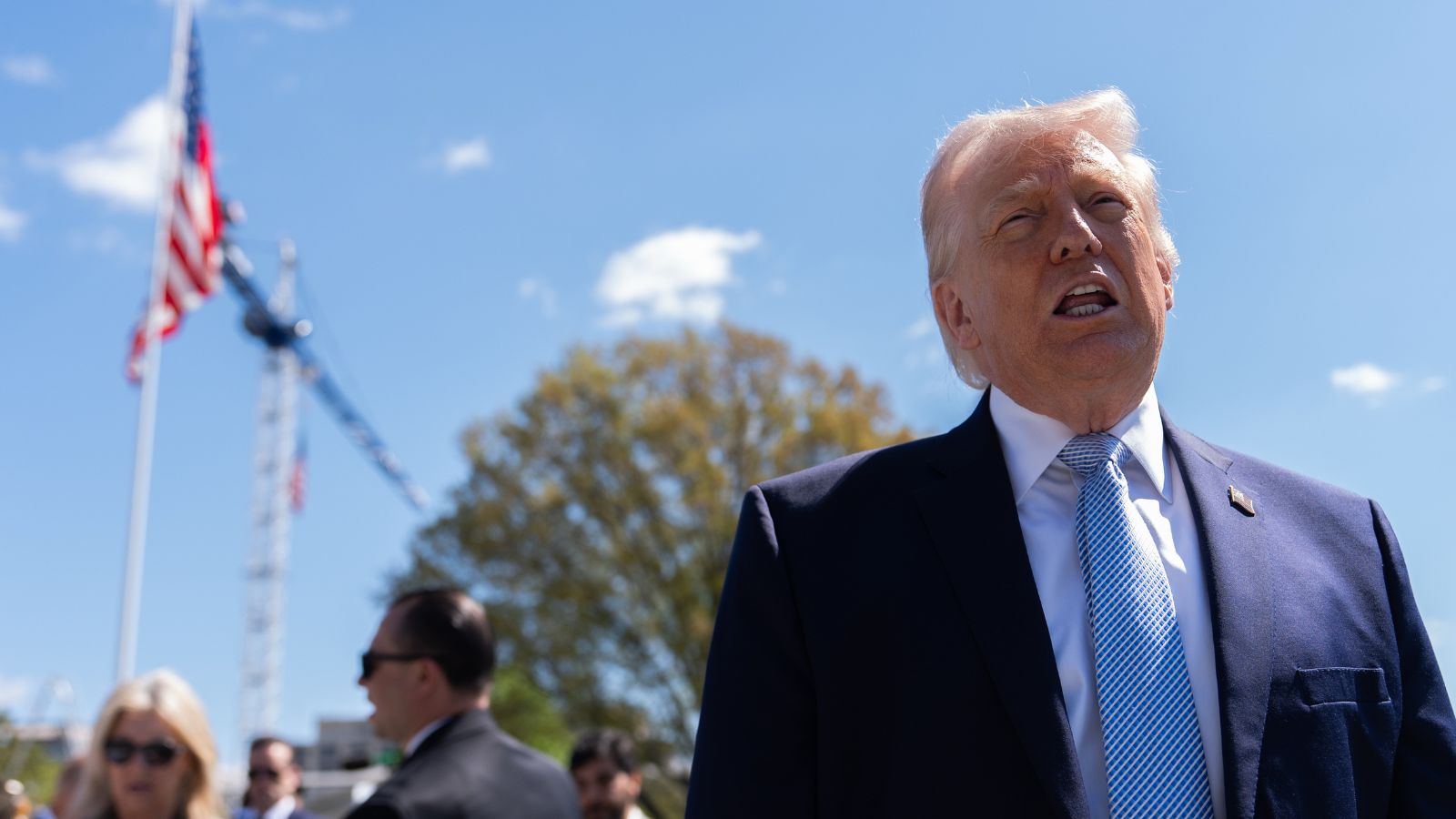
The escalation of rhetoric surrounding the leak of sensitive military documentation regarding an airman suggests a fundamental shift in the executive branch’s approach to internal security: the transition from administrative remediation to psychological and legal deterrence. When a political figure threatens a "mole" with imprisonment or publicly rebukes a journalist, they are not merely expressing frustration; they are attempting to recalibrate the cost-benefit analysis of prospective whistleblowers and the media. This strategy relies on three specific operational pillars: the isolation of the source, the weaponization of legal precedents, and the chilling effect of public vilification.
The Mechanics of Information Containment
In any high-stakes political environment, information flows through a network of trusted nodes. A "mole" represents a node that has been compromised, allowing data to exit the closed loop. The hunt for such a source operates on a logic of elimination.
- The Access Matrix: Investigators cross-reference the specific data points leaked with the digital fingerprints of those authorized to view them. Every classified document carries a metadata trail, including who accessed it, when, and from which hardware.
- The Motive Profile: Beyond technical access, analysts categorize potential leakers based on ideological alignment, financial vulnerability, or professional grievance.
- The Behavioral Filter: Sudden changes in communication patterns or work habits often precede an investigation’s focus shifting from a broad pool to a specific suspect.
The public demand to "give it up" serves as a blunt instrument to accelerate this process. By signaling that the investigation is nearing its conclusion, the executive attempts to induce a "prisoner's dilemma" where the leaker or their accomplices may feel compelled to come forward to secure a more favorable legal outcome before the evidence becomes overwhelming.
Legal Precedents and the Journalist’s Privilege
The warning issued to journalists regarding the airman leak touches upon a volatile intersection of the First Amendment and national security law. While the Supreme Court case Branzburg v. Hayes (1972) established that the First Amendment does not grant a reporter an absolute privilege against testifying before a grand jury, the Department of Justice has historically maintained internal guidelines to limit the subpoenaing of journalists.
The Conflict of Jurisdictions
The current environment suggests a move toward testing the limits of these guidelines. The executive’s strategy involves framing the leak not as "newsworthy whistleblowing" but as a "security breach" that endangers active military personnel. This distinction is critical for two reasons:
- The Espionage Act Application: If the government can prove that the information leaked is "national defense information" (NDI) and its disclosure could harm the United States, the legal threshold for pursuing the source—and potentially investigating the recipient—is lowered.
- Harm Documentation: To justify aggressive pursuit of a journalist, the state must demonstrate that the leaked information caused tangible damage. In the case of an airman leak, this involves showing that operational security was compromised or lives were put at risk.
The rhetoric of "go to jail" serves as a preemptive strike against the media’s defense. It signals an intent to bypass traditional civil norms in favor of a national security mandate, forcing media organizations to weigh the value of the story against the legal and financial burden of a protracted court battle with the federal government.
The Psychology of Public Deterrence
Publicly labeling a source as "sick" or a "mole" is a tactic designed to dehumanize the individual and strip away the protective veneer of "whistleblower" status. This is a deliberate exercise in framing.
- De-legitimization: By framing the act as a symptom of pathology or a betrayal of the country rather than a moral choice, the executive narrows the public’s sympathy.
- Social Isolation: The threat of imprisonment is not just a legal reality but a social one. It warns colleagues and associates that being linked to the source is professionally and legally terminal.
- Signal Noise Generation: Aggressive public statements create a feedback loop of media coverage that often focuses on the hunt for the leaker rather than the content of the leak itself. This shifts the narrative focus from the government's potential failings to the leaker’s perceived criminality.
This creates a high-friction environment for future leakers. If the perceived cost—years of litigation, social ostracization, and public vilification—outweighs the perceived benefit of "exposing the truth," the flow of unauthorized information slows.
The Structural Failure of Forced Silence
While the strategy of aggressive deterrence may yield short-term results in identifying a single source, it often creates long-term structural vulnerabilities. A culture of fear within an organization can lead to "information siloing," where critical data is not shared even among authorized personnel for fear of being accused of a leak.
Furthermore, the "Streisand Effect" frequently takes hold. When an executive goes to extreme lengths to hunt a mole or silence a journalist, they inadvertently signal to the public and foreign adversaries that the leaked information is of immense value. This increases the investigative pressure from other media outlets and intelligence agencies, potentially causing more damage than the initial leak itself.
Quantifying the Damage of NDI Leaks
To analyze the severity of the airman leak, one must look at the technical classification of the data. Information is typically categorized by the level of "identifiable damage" its disclosure would cause:
- Confidential: Damage to national security.
- Secret: Serious damage to national security.
- Top Secret: Exceptionally grave damage to national security.
The aggressive nature of the hunt suggests the information falls into the latter two categories. If the leak involves tactical movements, technical capabilities, or personnel locations (as is often the case with airmen-related data), the "Cost Function" of the leak includes the expense of re-securing communications, re-routing assets, and the potential loss of human intelligence (HUMINT) assets who may be exposed by the contextual data within the leak.
The Fragility of Executive Pressure
The strategy of hunting a mole via public threat has a diminishing rate of return. If an arrest is not made quickly, the executive’s authority is undermined, making the threats appear as performance rather than policy. Conversely, if a journalist is successfully pressured or prosecuted, it sets a precedent that can be used by future administrations of any political leaning to suppress transparency.
The reliance on "loyalty" as a security metric is also flawed. True security is built on robust access controls and clear, legal channels for whistleblowing. When these channels are perceived as ineffective or dangerous, individuals resort to the very "clandestine" methods that the executive is currently attempting to prosecute.
Strategic Realignment for Information Security
The current approach emphasizes reactive punishment over proactive architecture. To stabilize a leaking ship, an organization must move away from the "hunt and punish" cycle toward a "monitor and mitigate" framework.
- Zero Trust Architecture: Implement technical systems where no user is trusted by default, regardless of their clearance. Every interaction with sensitive data must be verified and logged in a way that is immutable.
- Internal Advocacy Pathways: Strengthen the internal Inspector General systems so that employees with genuine concerns feel they can report them without resorting to external media outlets.
- Media Engagement Protocols: Establish a consistent legal standard for dealing with NDI in the press that does not fluctuate based on political temperature. This provides a predictable environment for both the government and the fourth estate.
The escalation against the "mole" and the journalist is a signal of a system in a state of high entropy. The immediate play for the executive is to secure a conviction to validate the rhetoric, but the deeper strategic necessity is a total overhaul of how information is partitioned and protected within the defense and political apparatus. Failing to address the underlying access vulnerabilities will only ensure that once the current "mole" is captured, another will eventually take their place, driven by the same systemic failures.