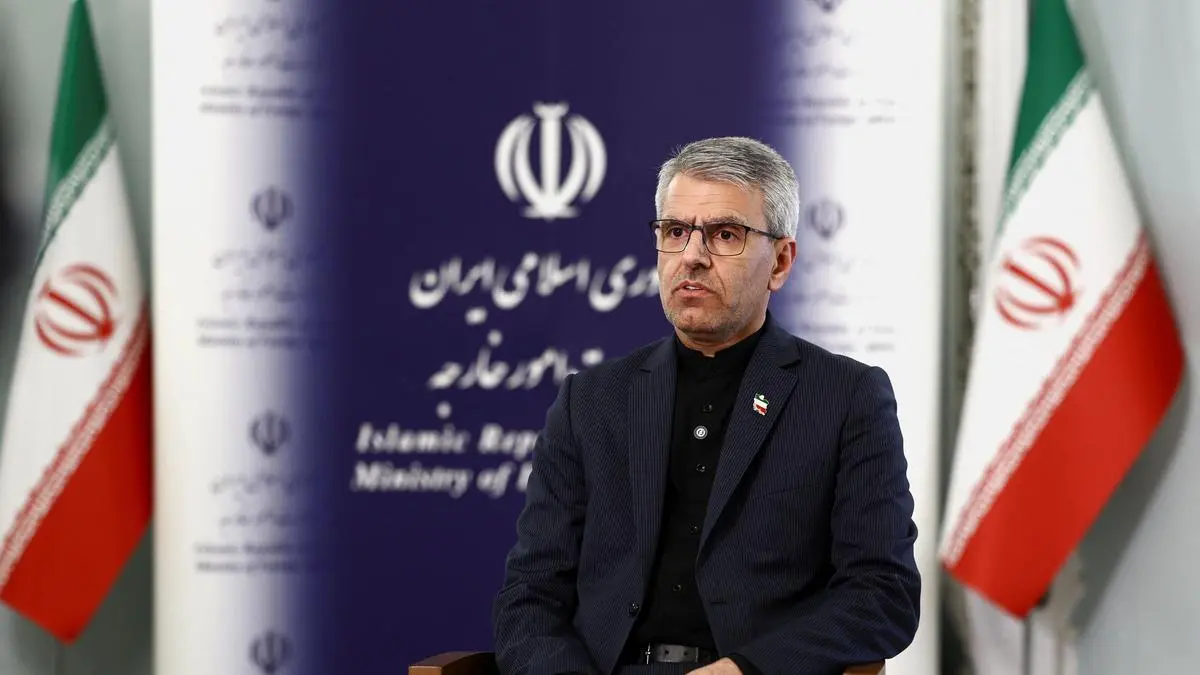
In the sterile, quiet halls of the Iranian Foreign Ministry, a pen has finally been set down. For months, the air in these rooms has been heavy, thick with the weight of millions of lives and the volatile friction of a region on the brink of a total collapse. Esmaeil Baghaei, the spokesperson whose face has become a permanent fixture of global news cycles, stood before the microphones not to offer a vague promise, but to confirm a reality. Iran has formulated its response. The message is ready. The next move belongs to the ghosts of diplomacy and the hard realities of the ground.
To understand what this piece of paper means, you have to look past the political jargon and the dry headlines of "ceasefire proposals." You have to look at the silence in the rubble of Gaza and the jittery, sleepless nights in the high-rises of Tel Aviv or the suburbs of Beirut. Behind every "formulated response" is a human calculation. How much longer can the hospitals run on fumes? How many more families can be displaced before the map itself dissolves?
The Weight of a Word
The "response" isn't just a list of demands. It is a mirror held up to a conflict that has outgrown its own borders. When Baghaei announced that Tehran had finalized its stance on the ceasefire proposals—those delicate, fragile frameworks largely brokered by the United States, Qatar, and Egypt—he wasn't just talking about borders or buffer zones. He was talking about survival.
The Iranian government finds itself in a vice. On one side, there is the ideological commitment to the "Axis of Resistance," a network of allies including Hamas and Hezbollah that look to Tehran for more than just rhetoric. On the other, there is the brutal reality of a domestic economy squeezed by years of isolation and a population that watches the drums of war with a mixture of fatigue and dread.
Consider a hypothetical shopkeeper in Isfahan. Let’s call him Reza. For Reza, a "formulated response" isn't a headline. It is the difference between planning for his daughter’s future and wondering if the regional escalation will finally, irrevocably, pull the ceiling down on his head. When the foreign ministry speaks, Reza listens for the undertones. He searches for the gap between the fiery public statements and the pragmatic private concessions.
The Invisible Architecture of the Deal
Diplomacy is often compared to a game of chess, but that is a lazy metaphor. Chess has rules. Chess has a clear board. This is more like trying to build a house during a hurricane.
The ceasefire proposal currently on the table is a multi-phased beast. It demands a cessation of hostilities, the release of hostages, and the massive influx of humanitarian aid. But for Iran, the stakes are layered. They are not a direct combatant in the trenches of Gaza, yet their fingerprints and their interests are everywhere. Their response is the invisible architecture that decides whether their allies will hold their fire or double down.
The Foreign Ministry’s announcement comes at a time when the regional temperature has reached a fever pitch. We have seen the tit-for-tat strikes between Israel and Iran move from the shadows into the blinding light of direct confrontation. The old "shadow war" is dead. In its place is a raw, exposed nerve.
Baghaei’s tone was deliberate. He spoke of "responsibleness." He spoke of Iran’s desire to see the aggression stop. But beneath that is the demand for a permanent solution, not a temporary band-aid that allows the parties to reload. This is where the friction lies. The West wants a pause. Tehran and its allies want an end. That distinction is measured in blood.
The Human Ledger
We often treat these diplomatic updates as if they are scores in a game. Iran says X. Israel says Y. The US mediates Z.
But what is the cost of the delay? Every hour that a "response" is being "formulated" is another hour where the humanitarian corridors remain blocked or insufficient. In the north of Gaza, the concept of a "proposal" is an abstraction that sounds like a cruel joke to a mother trying to find clean water. In the northern reaches of Israel, it is an abstraction to a family living out of a hotel room, unable to return to a home that sits in the crosshairs of Hezbollah rockets.
The Iranian response is a signal to the world that the window for a negotiated settlement is either opening wide or slamming shut. There is no middle ground left. The rhetoric has been exhausted. The "formulated" stance is the final product of internal debates within the Iranian leadership—a struggle between the hardliners who see any concession as a betrayal and the pragmatists who recognize that a full-scale regional war would be a catastrophe from which no one, least of all the Iranian state, would easily recover.
The Echo in the Halls
When Baghaei stands at that podium, he is performing for two audiences.
The first is the international community. To them, he must project a sense of power and uncompromising sovereignty. He must make it clear that Iran cannot be intimidated into a deal that doesn't serve its long-term strategic depth.
The second audience is much closer to home. It is the streets of Tehran. It is the military commanders. It is the religious leadership. To them, the response must look like a victory, or at least a principled stand.
The tragedy of modern diplomacy is that these two performances often require contradictory scripts. To get a deal done, you need to be flexible. To stay in power, you often need to be rigid. The "formulated response" is the attempt to bridge that impossible gap.
The Price of the Status Quo
If this response is rejected, or if it is deemed insufficient by the other side, the path forward narrows into a dark corridor. We are no longer talking about skirmishes. We are talking about the potential for a total regional realignment.
The Iranian Foreign Ministry is well aware that the world is watching. They are aware that the United States is hovering, its carrier groups a constant, silent presence in the nearby waters. They are aware that their own people are weary.
But there is a certain pride involved—a historical memory that stretches back centuries. Iran does not see itself as a minor player being told what to do. It sees itself as a cornerstone of the Middle East, a power that must be respected and reckoned with. The ceasefire response is written in that ink. It is a demand for a seat at the head of the table, not just a seat in the room.
The Quiet After the Announcement
After the cameras are turned off and the journalists scramble to file their reports, a strange quiet settles over the ministry. The work of the spokespeople is done for the day. Now, the document travels. It moves through secure channels to the mediators. It is translated, picked apart, analyzed for every hidden meaning and every subtle shift in punctuation.
Experts in DC and Tel Aviv will stay up all night looking at Baghaei’s words. They will look for what wasn't said. They will look for the "red lines" that have softened and the ones that have hardened into stone.
While they analyze, the world waits.
The response is a document, but it is also a heartbeat. It represents the collective breath of a region that has been holding it for too long. Whether this leads to a genuine de-escalation or just another chapter in a long book of sorrows remains to be seen. But the fact remains: the response is out. The silence has been broken.
The pen is down. The ink is drying. And somewhere in a basement in Gaza or a bomb shelter in Haifa, someone is waiting to see if that ink will finally be enough to stop the bleeding.
It is a terrifying thing, to realize that the fate of millions can be condensed into a few pages of diplomatic text. It is a reminder of how fragile our world is, and how much we rely on the hope that, eventually, the people in the quiet rooms will choose life over the alternative.
The world doesn't need another "formulated response." It needs a way home.
The streetlights in Tehran flicker as the evening settles in. The markets are closing. People are heading home to their families, to their dinners, to their small, private lives. They are the ones who will live with the consequences of the words written in those high-ceilinged offices. They are the ones who don't get to formulate responses, only to endure them.
The next few days will tell us if the diplomats have finally found a language that can compete with the roar of the missiles. Until then, we wait. We watch the podium. We read between the lines. We hope that this time, the words are more than just a stay of execution.
We hope they are a beginning.