The air in Simla usually offers a crisp, cool reprieve from the stifling heat of the Indian plains. But July 1972 was different. The atmosphere inside the grand, colonial-era halls of the Himachal Raj Bhavan was heavy, thick with the ghosts of a war that had ended only months prior.
Imagine a soldier standing guard on a jagged Himalayan ridge, his fingers frozen, his eyes strained against the blinding white of the snow. For him, peace is not a abstract concept debated by politicians in tailored suits. Peace is the difference between a warm meal at home and a bullet in the dark. In 1971, that soldier’s world had been torn apart by a swift, brutal war that reshaped the map of South Asia, resulting in the creation of Bangladesh and leaving over ninety thousand Pakistani prisoners of war in Indian custody.
The stakes in Simla were intensely human. Mothers in Pakistan waited for news of their captured sons. Families in India prayed that the fragile ceasefire would hold, ensuring their husbands and brothers would not have to march back to the front lines.
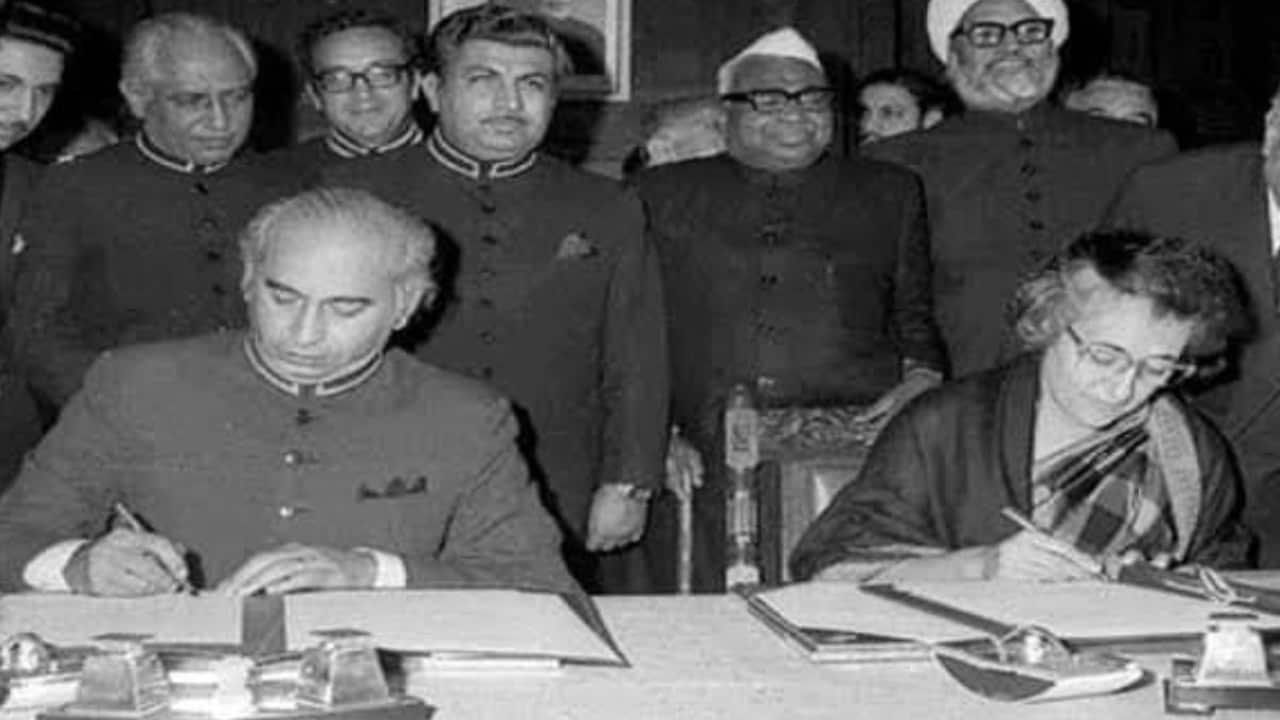
When Indian Prime Minister Indira Gandhi and Pakistani President Zulfikar Ali Bhutto sat across from each other, they held the hopes of hundreds of millions of people in their hands. The document they signed on July 2, 1972, was supposed to be a sacred pact. It was designed to establish a framework for bilateral relations, a commitment to settle differences peacefully through direct negotiation without the intervention of outside powers. It converted the 1971 ceasefire line into the Line of Control.
It was a moment of profound relief. The world breathed out.
But the tragedy of diplomacy is that ink dries quickly, and promises made in the cool mountain air can evaporate just as fast when exposed to the harsh sun of geopolitical ambition. The Simla Agreement was built on trust, and trust is a fragile currency.
Consider what happened next.
True bilateralism requires an unwavering commitment to look each other in the eye and resolve disputes without running to global forums to score political points. Yet, within a short span, the spirit of that table in Simla began to fray. The core tenet of the agreement—that India and Pakistan would resolve their differences exclusively through bilateral channels—was systematically dismantled.
Every time the issue of Jammu and Kashmir was raised by Pakistan at the United Nations or in international forums, a brick was pulled from the foundation of the Simla Accord. It was not just a violation of a legal clause. It was a rejection of the fundamental promise made to an exhausted region seeking stability.
Then came the true unraveling.
Peace cannot exist where state policy embraces covert aggression. For decades following that historic meeting, the Line of Control, which was meant to be a mutual boundary of respect, became a conduit for infiltration. The strategy shifted from open conventional warfare to a shadow conflict, a relentless stream of cross-border terrorism that targeted civilians, disrupted lives, and turned a beautiful valley into a fortress.
The human cost of this shift is devastating. Think of the shopkeeper in Srinagar who cannot open his store because of a sudden outbreak of violence, or the schoolchild whose education is halted by the sound of shelling across the border. These are the unwritten casualties of a broken treaty.
The most glaring departure from the pact occurred in the icy heights of Kargil in 1999.
Under the cover of winter, troops infiltrated across the Line of Control, occupying deserted Indian peaks. This was not a minor disagreement or a misunderstanding. It was a calculated military operation that directly violated the sanctity of the Line of Control established at Simla. The conflict that followed was fierce and bloody, costing hundreds of lives and bringing two nuclear-armed nations to the brink of catastrophe.
The soldiers who fought and died on those vertical cliffs were paying the ultimate price for a treaty that had been disregarded.
The Simla Agreement was never meant to be a magic wand that would instantly erase decades of deep-seated animosity. It was meant to be a map. A guide on how to behave when emotions ran high, a reminder that the two neighbors shared a history, a geography, and a responsibility to their people.
When one party decides that the map is no longer relevant, the journey becomes perilous for everyone involved.
Today, the grand rooms in Simla remain, preserved in time, holding the memory of a historic handshake. But down in the valleys and up on the high ridges, the reality is starkly different. The tragedy of the Simla Agreement is not that it failed due to a lack of vision, but that its vision was abandoned. The paper remains intact, but the promise is gone, leaving behind a legacy of what could have been, and a subcontinent still waiting for the peace it was promised over half a century ago.