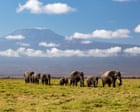
Fifteen magnificent animals dead in a single month. Ten of them paralyzed and dying within forty-eight hours. The numbers coming out of Kenya's Amboseli ecosystem are not just statistics on a bureaucratic ledger; they represent a terrifying anomaly in one of Africa's most heavily monitored wildlife sanctuaries.
When the Kenya Wildlife Service confirmed that animals in the Kimana Sanctuary and Kuku Ranch areas were dropping dead with identical neurological symptoms, the conservation community braced for the worst. Ten of the pachyderms exhibited stark signs of partial paralysis before perishing. Five more were discovered after scavengers had already begun stripping their remains. Demographics deepen the mystery. Almost all the victims are female elephants and their dependent calves, with only a single adult male among the dead.
Initial laboratory sweeps from the University of Nairobi flagged a potential toxic substance in tissue samples. Yet, separate analyses conducted by the Government Chemist returned blank slates for standard poisons. This glaring contradiction exposes the fragility of local diagnostic infrastructure when facing complex environmental toxins. It is an uncomfortable truth that standard field testing cannot always keep pace with modern ecological threats.
The Anatomy of a Toxic Frontier
To understand why fifteen deaths in the shadow of Mount Kilimanjaro matter, you have to look beyond the park borders. Amboseli is not a pristine, isolated Eden. It functions as a porous, shrinking wildlife corridor where massive herds must constantly negotiate space with expanding human settlements, livestock ranches, and agricultural plots.
Human-wildlife conflict has historically taken a predictable, brutal toll. Traditional poisonings usually involve agricultural pesticides laced onto carcasses or crops to deter raiding herbivores. But those incidents typically leave obvious forensic signatures, heavy scavenging tolls, and wide-spectrum casualties across multiple species. This current cluster is different. It exhibits a frightening specificity, primarily targeting family units led by matriarchs and carrying calves.
Field veterinarians note that partial paralysis points directly to neurotoxins affecting the central nervous system. Whether this agent entered through contaminated water points or localized vegetation remains the central question driving the ongoing environmental audits. Waterholes across the Amboseli-Kimana basin are shrinking under intense climatic pressures, concentrating both wildlife and livestock around dwindling pools.
Consider a hypothetical scenario where agricultural runoff or localized chemical dumping mixes with stagnant dry-season waterholes. The concentration of chemical agents spikes exponentially as liquid evaporates under the equatorial sun. An elephant consumes dozens of gallons daily, making them acute filters for concentrated environmental contaminants.
The Surveillance Blind Spot
For decades, conservation reporting has fixated on two primary drivers of pachyderm mortality: ivory poaching and prolonged drought. Amboseli has long been celebrated as a conservation success story, home to some of the world's most heavily researched, free-ranging elephant populations, including generations tracked by the Amboseli Trust for Elephants.
When a crisis strikes outside the direct tourist gaze, the institutional response moves at a glacial pace.
Laboratory assays take weeks. Bureaucratic clearances delay cross-border environmental sampling. Meanwhile, the sub-surface matrix of the Amboseli ecosystem continues to change beneath the hooves and feet of its inhabitants. Local Maasai pastoralists share the water sources with these herds. While wildlife authorities have rightly rushed to assure the public that the unidentified condition shows no current evidence of zoonotic transmission to humans, the shared water table represents a glaring vulnerability for both livestock and communities.
If a neurotoxin or heavy agricultural contaminant is coursing through the shared water sources of Kuku Ranch, the threat profile extends far beyond elite wildlife conservation. It is an immediate public health hazard hiding in plain sight.
The Hard Truth About Modern Conservation
We romanticize national parks as sealed glass enclosures where nature operates undisturbed by human friction. The reality on the ground is messier, louder, and far more precarious. Ecosystems bleed into farms. Groundwater tables absorb pesticide runoff from modern farming expansions meant to feed growing regional towns.
The investigation into these fifteen deaths will eventually yield a definitive toxicology report. It might point to an accidental agrochemical spill, a localized biotoxin from cyanobacteria blooms in stagnant water, or something far more insidious. Whatever the laboratory eventually uncovers, the damage is already done to a breeding cohort that the ecosystem can ill afford to lose.
Matriarchs carry the institutional memory of the herd, knowing where ancient wells lie dormant during dry cycles, steering their families away from danger. When mothers and calves perish en masse, the cultural and genetic fabric of the family unit unravels.
The dust of Amboseli settles over the fresh graves of fifteen giants, and the unanswered questions hang heavier than the Kilimanjaro fog