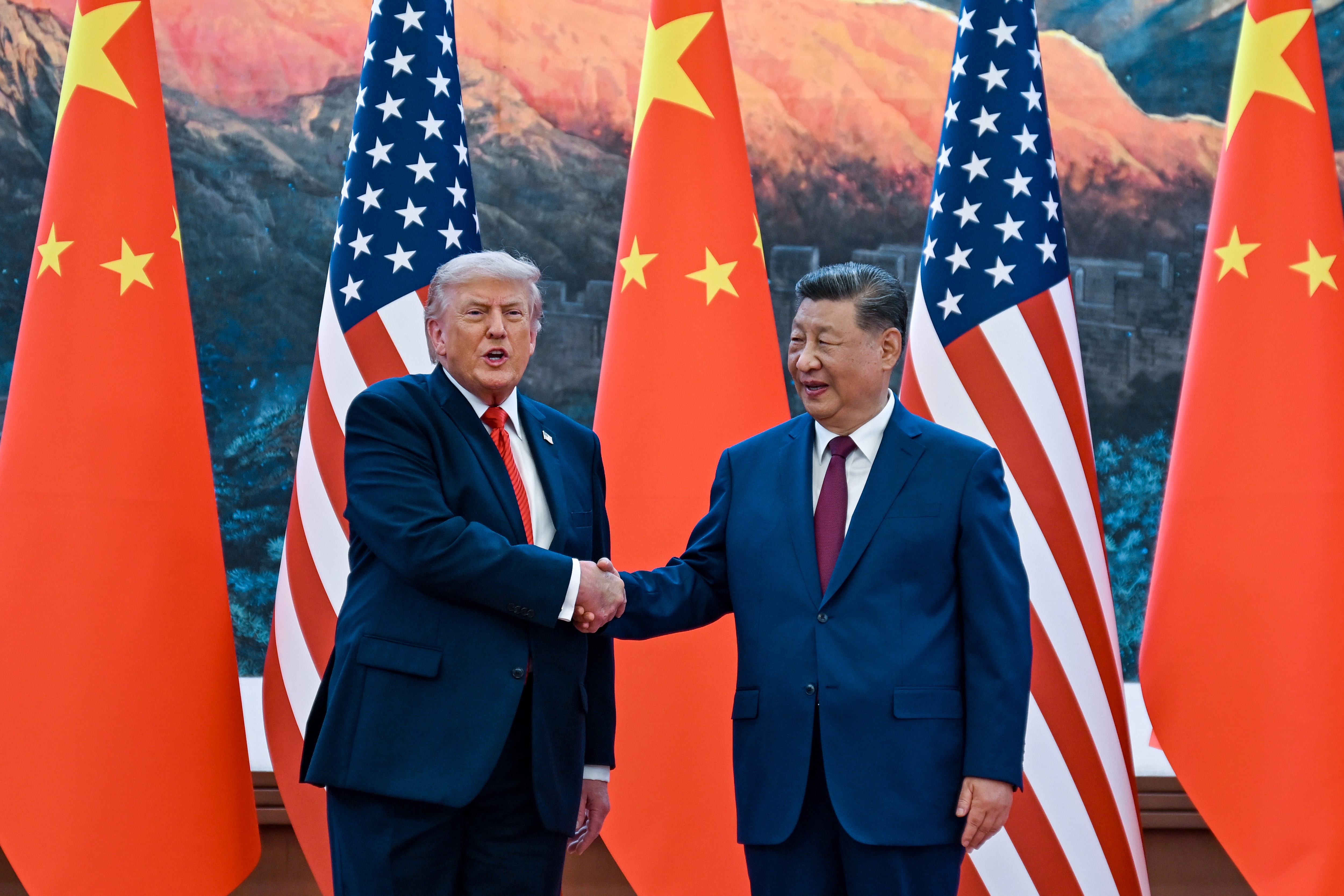
The political theater staging Donald Trump’s second presidential summit in Beijing obscured a fundamental shift in the global balance of power. While mainstream commentators fixated on the optical superficiality of the meeting, describing the transaction as a triumph of empty vibe-checking and personal flattery, the geopolitical mechanism grinding underneath was entirely transactional, asymmetric, and meticulously engineered by Zhongnanhai. Xi Jinping did not merely set a tone; he executed a calculated diplomatic squeeze that exposed Washington’s structural vulnerabilities.
The immediate domestic assessment of the May 2026 summit focused on the red carpet rolled out at the Temple of Heaven, the performance of the Chinese military guard, and the choreographed handshakes designed to satisfy Trump's known affinity for grand political spectacle. To view this through the lens of mere performance art is to misunderstand how the Chinese Communist Party uses protocol as an offensive weapon.
In 2017, Beijing offered Trump a "state visit-plus," clearing out the Forbidden City for an imperial-style private dinner. In 2026, the hospitality was noticeably stripped down, compressed into a lean, highly managed timeline. The change in format reflects a Chinese leadership that no longer feels the need to purchase stability through unprecedented, historic concessions. They have measured the current American political apparatus and found its soft spots.
The Leverage of the Strait
The primary driver of the summit was not an idealized pursuit of global harmony, but the acute economic pressure generated by the ongoing conflict involving Iran, which has choked energy flows through the Strait of Hormuz. For Washington, the closure of this critical maritime choke point represents a direct threat to domestic inflation targets and market stability. For Beijing, the crisis is a tactical asset.
China remains Iran’s most critical economic lifeline and its primary oil buyer. While the White House arrived in Beijing seeking Chinese intercession to pressure Tehran into reopening the shipping lanes, Xi utilized this dependence as structural leverage. By positioning himself as the only global actor capable of tempering Iranian calculations, the Chinese leader effectively transformed a regional security crisis into a bilateral bargaining chip.
The administration’s public goal was to walk away with a sweeping security guarantee. What they received instead was a masterclass in conditional diplomacy. Beijing’s official readout emphasized a "constructive relationship of strategic stability," code for an arrangement where Chinese cooperation on Western security pain points is directly tethered to American concessions on technology transfers and export controls. The deal on the table is not based on goodwill. It is a cold calculus of energy security versus geopolitical containment.
The CEO Delegation as a Soft Target
A defining feature of the American delegation was the presence of major technological executives, including Tesla’s Elon Musk and Nvidia’s Jensen Huang, both of whom traveled directly to Beijing. The corporate inclusion was framed by Washington as a demonstration of American economic power and industrial dominance. In reality, it provided Beijing with a distinct set of domestic lobbying targets.
China understands that the American executive class operates under a completely different set of mandates than the State Department. By granting access to these business leaders while simultaneously restricting the flow of critical raw materials—such as the rare earth elements discussed during previous bilateral meetings—Beijing creates an internal friction point within the American apparatus. Corporate leadership wants market access and supply chain predictability; the defense establishment wants decoupling and security guarantees.
Consider the structural reality of the semiconductor and automotive industries.
- Supply Chain Asymmetry: American firms design advanced architectures, but they remain dependent on processing networks heavily concentrated within mainland China.
- Market Access Dependencies: Major tech firms derive significant portions of their revenue from Chinese manufacturing clusters and consumer markets, making them inherently risk-averse regarding aggressive trade policies.
- The Tariff Dilemma: While judicial decisions back in Washington have previously struck down components of broad-spectrum import taxes, the threat of renewed trade friction forces corporations to act as stabilizing advocates for Beijing's interests within the American political ecosystem.
By hosting these executives alongside the political delegation, Xi effectively bypassed the traditional diplomatic corps. He spoke directly to the financial engines that influence Washington's legislative agenda, turning corporate exposure into an instrument of statecraft.
The Red Line on the Strait of Taiwan
While the public messaging focused on trade balances, agricultural purchase agreements, and the creation of a joint "Board of Trade" to monitor economic reciprocity, the structural core of the summit remained fixed on the status of Taiwan. This is where the diplomatic choreography became sharpest.
The Chinese leadership did not alter its vocabulary. Xi reiterated that Taiwan remains the absolute boundary of bilateral relations, a point delivered with zero ambiguity despite the otherwise cordial environment. The strategy here is one of calculated contrast. By maintaining an unyielding position on territorial sovereignty while offering flexibility on minor economic fronts—such as agricultural procurement or tourism frameworks—Beijing forces Washington into a position where it must constantly weigh peripheral economic wins against core strategic commitments in the Pacific.
The establishment of the Board of Trade is a concession to Trump’s preference for tangible, metric-driven outcomes, echoing the structure of the 2020 Phase One trade deal. However, historical precedent shows that purchase commitments are easily delayed, renegotiated, or quietly abandoned when the geopolitical climate shifts. A promise to buy American soybeans can be toggled on or off depending on how aggressively Washington patrols the South China Sea.
The Illusion of Managed Stability
Analysts within global financial institutions have pointed to the summit as the beginning of a period of managed stability, arguing that both powers have successfully built guardrails to prevent an outright collision. This perspective mistakes a temporary tactical pause for a permanent structural solution.
Beijing’s willingness to engage in these high-level summits is born out of tactical necessity, not a desire for long-term assimilation into a Western-led international order. The Chinese economy is navigating its own internal transitions, dealing with real estate debt and shifting demographic pressures. A hot trade war or an escalation in the Pacific does not serve Xi’s immediate domestic goals. Therefore, the appearance of cooperation—the friendly gestures, the shared tours of cultural sites like the Temple of Heaven, the talk of "measured competition"—serves to buy the time necessary to build domestic self-reliance.
Washington risks misinterpreting this tactical breathing room as a fundamental concession. The reality of the 2026 Beijing summit is that the United States entered the room needing immediate relief from a global energy crisis and left with a series of committees, conditional promises, and a highly visible reminder that its leading corporate entities are deeply bound to the Chinese manufacturing base.
The pageantry was not a distraction from the real negotiation; it was the vehicle for it. Xi Jinping used the theater of the state visit to project an image of a steady, confident superpower capable of managing an unpredictable American executive, all while holding the line on the structural issues that will define the next decade of global politics. Washington may celebrate the vibes, but Beijing walks away with the ledger.
An on-the-ground look at Trump's China state visit
This video provides an immediate, on-the-scene report from Beijing during the summit, illustrating the specific scale of the ceremony and the immediate geopolitical context regarding the Strait of Hormuz crisis discussed above.