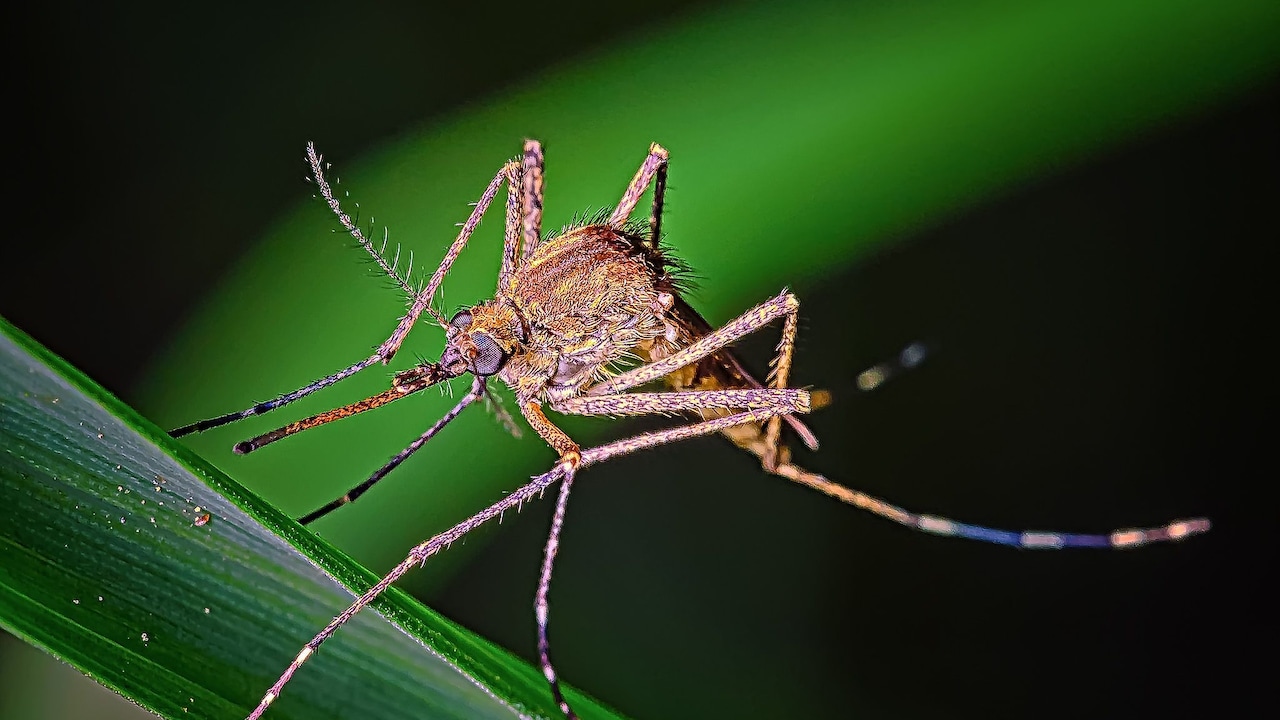
Six hundred thousand lab-reared mosquitoes are currently being introduced to metropolitan backyards to fight a rising wave of vector-borne illnesses, utilizing a targeted biological mechanism rather than chemical spraying. Private pest control initiatives and municipal programs are deploying male mosquitoes infected with Wolbachia bacteria to crash local disease-carrying populations.
The strategy relies on a foundational biological truth: male mosquitoes do not bite humans. Only females require blood meals to develop their eggs, feeding exclusively on plant nectar and fruit juices. By mass-rearing millions of males and introducing them into neighborhoods, vector control teams hijack the reproductive cycle of invasive species like the Asian tiger mosquito without dousing neighborhoods in broad-spectrum chemical insecticides.
[Image of the life cycle of a mosquito]
The Mechanics of Cytoplasmic Incompatibility
To understand why releasing hundreds of thousands of insects into an urban environment is a pest control win rather than a public relations disaster, you have to look inside the microscopic biology of the insect.
The technique centers on a common bacterium called Wolbachia, which naturally infects over half of all insect species globally. However, the specific strain introduced into these lab-reared males is carefully controlled. When these modified males mate with wild female mosquitoes that lack this specific bacterial strain, a phenomenon known as cytoplasmic incompatibility occurs.
The fertilization fails at a cellular level. The eggs laid by the wild females never hatch. Because female mosquitoes typically mate only once or twice in their brief lifespans, a single encounter with a sterile lab-reared male effectively removes that female from the reproductive pool permanently.
For decades, the standard playbook for mosquito management relied heavily on truck-mounted foggers, chemical larvicides, and widespread chemical spraying. These methods come with substantial collateral damage. Chemical foggers kill beneficial pollinators like honeybees, degrade local aquatic ecosystems, and face a mounting evolutionary hurdle: mosquitoes adapt, developing chemical resistance at an alarming rate.
Biological control changes the vector entirely. It treats the pest with the pest itself.
Scaling the Bio-Control Frontier
Moving this science from a controlled laboratory setting to a chaotic urban environment involves immense logistical hurdles. Rearing insects by the million requires precise climate-controlled facilities, automated sex-sorting technology to ensure zero biting females slip through the production lines, and delicate distribution networks.
At present, scaling these programs faces severe financial and regulatory bottlenecks. While international projects—such as large-scale deployments in parts of Southeast Asia—have demonstrated massive population drops exceeding ninety percent in targeted zones, municipal implementation in the United States often relies on smaller private contractors or localized vector control districts. Large technology initiatives, including programs backed by major corporate research groups, have spent years pushing through federal approvals to test similar methodologies across millions of acres in states like California and Florida.
The economics remain steep. Producing, transporting, and strategically releasing millions of sterile insects costs significantly more per acre than standard truck-mounted chemical spraying. Public perception also presents an immediate hurdle. When residents see technicians releasing thousands of insects into a residential neighborhood, the immediate reaction is often alarm, regardless of the biological reality that the released specimens are incapable of biting.
The Limits of Radical Intervention
No vector control strategy offers a silver bullet. While the sterile insect technique and bacterial sterilization drastically drop local densities of specific invasive vectors, they are strictly species-specific.
If a program targets the Asian tiger mosquito, populations of native floodwater mosquitoes or nuisance biters of entirely different genera remain untouched. Furthermore, biological suppression requires sustained, continuous releases over successive generations. If funding lapses or distribution stops, surviving wild populations quickly rebound as vacant ecological niches are rapidly recolonized from neighboring untreated zones.
Public health officials emphasize that bio-control must operate as part of an integrated management framework. Homeowners must still clear standing water from old tires, clogged gutters, and forgotten containers where local strains breed within a radius of mere feet from back doors.
The half-million insects arriving in the capital region this summer represent a shift away from chemical saturation toward precision biological engineering. The success of this transition will not be measured by public comfort alone, but by whether logistical scaling can finally match the stubborn resilience of one of humanity's most persistent disease vectors.