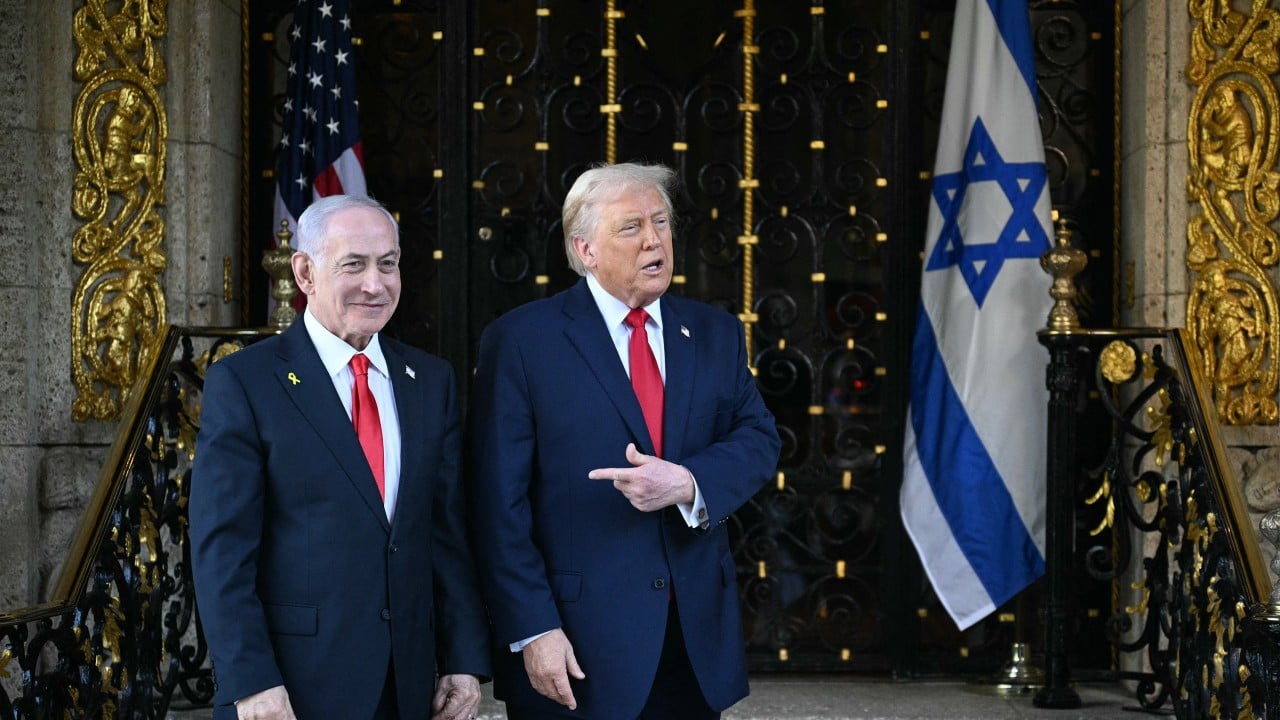
The handshake in New Taipei last Saturday was not a sign of mutual affection; it was a cold calculation of survival. When Kuomintang (KMT) Chairwoman Cheng Li-wun and Taiwan People’s Party (TPP) Chairman Huang Kuo-chang finalized their "nominate first, coordinate later" pact for the November 28 local elections, they effectively signaled the end of the traditional three-way political split. By merging their candidate pools through a rigid system of opinion polls, the two parties are betting that a unified front can starve the ruling Democratic Progressive Party (DPP) of its path to victory.
This is a high-stakes gamble to consolidate the "Pan-Blue" and "White" camps into a single electoral juggernaut. If the alliance holds through the 2026 midterms, it creates a nearly insurmountable springboard for the 2028 presidential race. However, beneath the talk of "joint governance" and "people-centric policies" lies a fragile architecture built on deep-seated distrust and clashing personal ambitions.
The Math of a Forced Union
The logic driving this alliance is simple arithmetic. In the 2024 presidential election, the split between the KMT and TPP allowed the DPP’s Lai Ching-te to secure the presidency with roughly 40% of the vote. The opposition realized that as long as they fought each other for the same pool of "non-Green" voters, they would remain in the political wilderness.
The new agreement targets 22 cities and counties, prioritizing incumbent protection. Where both parties have already staked claims—most notably in New Taipei, Yilan, and Chiayi—the pact mandates a "cross-party primary" driven by polling data. This is designed to prevent "vote-splitting," a phenomenon where two similar candidates cancel each other out, handing the seat to a third party with a smaller but more unified base.
The New Taipei Standoff
New Taipei City is the ultimate proof of concept for this alliance. It is the most populous municipality and a traditional KMT stronghold. The KMT has positioned Deputy Mayor Lee Shu-chuan, a veteran with deep local roots, to succeed outgoing mayor Hou You-yi. Meanwhile, the TPP’s Huang Kuo-chang has built a massive national profile as a firebrand legislator and is refusing to step aside quietly.
The agreement specifies that polling must pass a representativeness test with a p-value below 0.05. This technical jargon hides a brutal reality: if Huang’s national celebrity doesn't translate into local polling dominance, the TPP may be forced to sacrifice its most prominent star to save the alliance.
A Shift in the KMT Identity
The rise of Cheng Li-wun as KMT Chairwoman in October 2025 marked a departure from the centrist pragmatism of her predecessor, Eric Chu. Cheng won with 50.15% of the party vote, running on a platform that leans significantly more toward a traditional Chinese identity. Her leadership has already begun to reshape the party’s rhetoric.
- Geopolitics: Cheng has been vocal in her opposition to President Lai’s $40 billion special defense budget, arguing that such spending is a burden on the economy.
- China Relations: She has faced criticism for remarks suggesting that Chinese military drills are "protecting" the island, a stance that resonates with the "Deep Blue" base but alienates the centrist youth the TPP claims to represent.
- The TPP Factor: For Cheng, the TPP is a tool to capture the under-30 demographic. For the TPP, the KMT is the organizational machine they lack.
This ideological drift creates a paradox. While the TPP markets itself as a "White" alternative to the "Blue" and "Green" establishment, it is increasingly acting as a legislative and electoral wing of the KMT. This alignment has already manifested in the Legislative Yuan, where the two parties have blocked judicial appointments and paralyzed the Constitutional Court over budget standoffs.
The 2028 Horizon
The 2026 local elections are widely viewed as a "semi-final" for the 2028 presidency. In Taiwan’s political cycle, a "Blue Wave" in the municipalities often precedes a change in the central government. By coordinating now, the opposition is attempting to build a narrative of inevitability.
However, the "joint governance" model faces an existential threat: the "Third Force" identity crisis. Historically, minor parties in Taiwan that align too closely with the KMT eventually get absorbed or lose their unique appeal. The TPP, founded by Ko Wen-je, rose to prominence by mocking both major parties. By signing a formal cooperation pact, Huang Kuo-chang risks turning the TPP into a mere "KMT-lite" satellite.
Strategic Vulnerabilities
The DPP is not standing still. They have already accelerated their own nomination process, naming candidates for key battlegrounds like New Taipei (Su Chiao-hui) and Kaohsiung (Lai Jui-lung). The ruling party’s strategy is to frame the Blue-White alliance as a "pro-Beijing coalition" that threatens Taiwan’s defense resilience.
The opposition’s greatest weakness is the polling mechanism itself. In 2024, the "Blue-White" talks collapsed specifically because both sides could not agree on how to weigh the polls. While the new 2026 agreement includes more granular statistical requirements, it still relies on both parties accepting a result that might end a candidate's career.
If the polling shows a TPP candidate is significantly weaker in a rural county, will Huang Kuo-chang truly command his supporters to vote for a KMT veteran? Conversely, if a TPP "outsider" wins the primary in a KMT heartland, will the local KMT machine—built on decades of patronage and family ties—actually show up to knock on doors for a newcomer?
The alliance is a marriage of necessity, not of love. It is a structure held together by a shared enemy rather than a shared vision. In the high-pressure environment of a Taiwan election, where minor gaffes become national scandals overnight, this "unified front" is only one bad poll away from a messy public divorce.