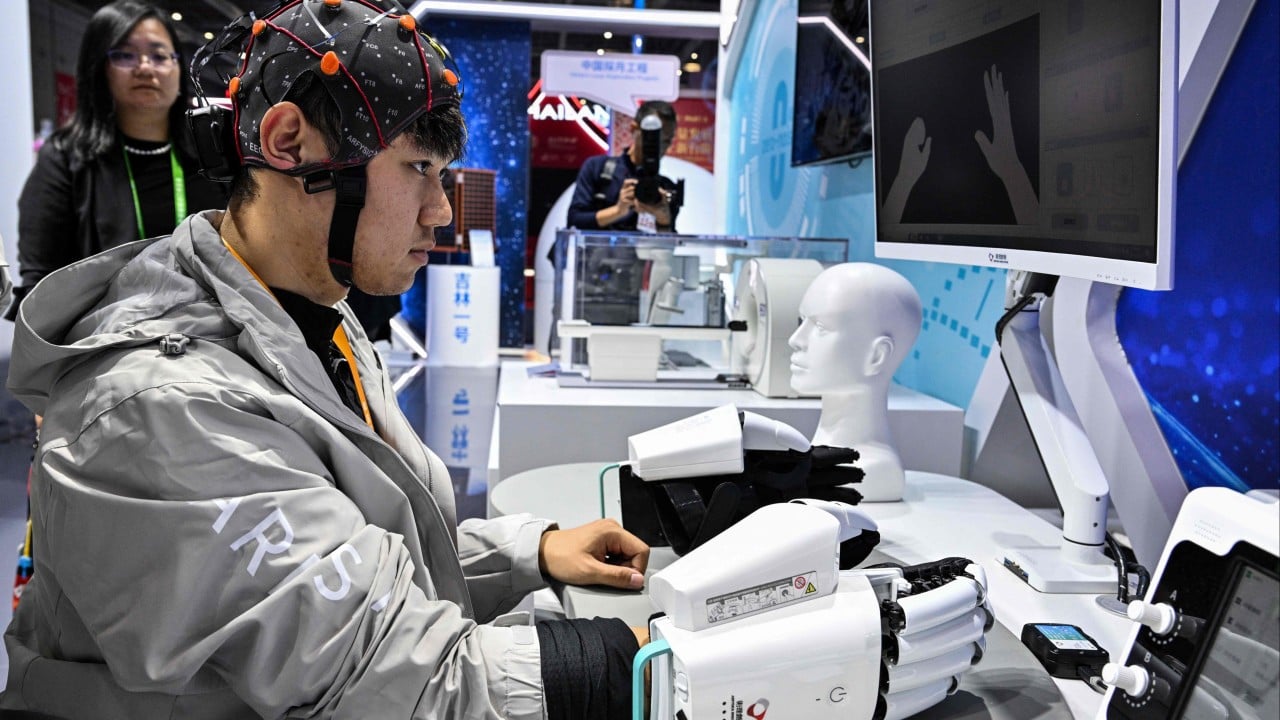
Beijing is not merely subsidizing neural startups; it is writing the rulebook, defining the terminology, and governing the signal datasets for brain-computer interface technology before Western rivals agree on a single baseline. Anyone watching this sector through the lens of Silicon Valley media hype—where flashy animal demos and celebrity founders dominate the feed—is looking at the wrong scoreboard. Real industrial power in neurotechnology will belong to whoever locks down signal formats, regulatory definitions, and clinical data pipelines, turning local compliance into a global lock-in mechanism.
Having covered hardware supply chains and medical device regulations across three continents for over twenty years, I have watched this exact playbook run in telecom equipment, solar panels, and electric vehicles. First comes state coordination to standardize components and lower manufacturing friction. Next comes domestic scale that crushes unit costs. Finally, international committees codify those domestic conventions into global norms. With brain-computer interface systems moving out of university labs and into hospitals, Beijing has pulled every one of those levers at once. For another perspective, read: this related article.
Why Standards Matter More Than Flashy Neural Demos
A high-channel neural implant sounds impressive on stage. Getting a hospital pharmacy or surgical procurement team to buy five hundred of them is a completely different war.
Medical hardware lives and dies by interoperability, repeatability, and auditability. If one lab labels a motor-imagery waveform one way and another company formats electroencephalography (EEG) metadata differently, clinical datasets turn into incompatible silos. Regulators stall. Insurance reimbursement stalls. Hospital integration drags on for years. Further reporting on the subject has been provided by The Next Web.
China tackled that bottleneck systematically. Starting in September 2025, the National Medical Products Administration (NMPA) rolled out foundational industry rules, beginning with YY/T 1987—2025 on core BCI medical terminology and YY/T 1996—2025 covering performance testing methods for closed-loop implantable neural stimulators. Then came YY/T 2029—2026, moving oversight downstream into the data layer by setting lifecycle requirements for collecting, annotating, storing, and controlling the quality of EEG datasets used to train AI decoding models, with an effective date set for September 1, 2027.
That sequence reveals real strategic discipline. You cannot regulate an AI decoder fairly if you ignore the messiness of the brain signals feeding it. By codifying terminology first, hardware test methods second, and training-data hygiene third, regulators in Beijing built a unified compliance stack before commercial volume exploded.
How State Policy Turned Neurotech Into a Priority Track
Watch the ministries, not just the startups. In July and August 2025, a coalition of seven central government bodies—led by the Ministry of Industry and Information Technology (MIIT), alongside regulators and planning agencies—published an implementation plan to build a world-leading brain-computer interface sector. The roadmap set concrete targets for 2027 on core hardware, chips, electrodes, and standards, followed by broader industrial scale and leading enterprises by 2030, reinforced by placement among future industries in the 15th Five-Year Plan.
Policy alone does not wire a motor cortex. Clinical approval does.
On March 13, 2026, China’s NMPA approved Neuracle Medical Technology’s NEO-ONE SCI system, an implantable cortical-surface device aimed at hand-motor function compensation for patients with cervical spinal cord injuries. Meanwhile, Shanghai-based NeuroXess pushed a fully implanted, wireless, battery-integrated system into clinical validation after demonstrating high-speed Chinese speech syllable decoding from electrocorticography (ECoG) signals.
At the same time, Beijing tightened how clinical pathways are separated. Rules taking effect on May 1, 2026, created a structured track under the National Health Commission for early-stage biomedical new technologies while keeping defined medical devices under strict Class III registration rules.
| Track or Standard | Primary Focus | Practical Impact on Builders |
|---|---|---|
| YY/T 1987—2025 & YY/T 1996—2025 | Core terminology and closed-loop stimulator testing | Aligns technical dossiers and lab verification with official Chinese definitions |
| YY/T 2029—2026 | EEG training dataset collection, annotation, storage, and QA | Forces AI-driven BCIs to prove data lineage and quality before commercial review |
| NMPA Class III & Fast-Track | High-risk implants and qualifying breakthrough devices | Demands rigorous clinical evidence alongside faster review channels for priority cases |
| ISO/IEC JTC 1/SC 43 | International BCI vocabulary, use cases, and non-invasive data formats | Shapes global interoperability across 11 participating countries and wider observers |
Notice what happens when domestic standards align with global bodies. Inside ISO/IEC JTC 1/SC 43, the international subcommittee dedicated to brain-computer interfaces, work has progressed on core vocabulary (ISO/IEC 8663), use cases (ISO/IEC TR 27599), and non-invasive BCI data formats (ISO/IEC TS 27571), with meetings hosted in Chinese cities like Hangzhou and Tianjin alongside global peers. When a country’s domestic engineering habits match the draft specifications circulating in international committees, its local manufacturers enjoy a head start on compliance.
The Counter-Argument Nobody Wants to Hear
Fast approvals and thick standard binders do not repeal biology. A brain is not a printed circuit board, and tissue response does not care about a five-year plan.
Even with regulatory momentum, brain-computer interface developers face brutal physical trade-offs. Non-invasive EEG caps are easy to put on and safe enough for broad consumer or rehabilitation use, yet skull attenuation and electrical noise limit spatial precision. Penetrating intracortical arrays capture crisp single-neuron or high-frequency activity, but inserting foreign hardware into living brain tissue triggers immune reactions, micro-motion, glial scarring, and long-term signal drift. Epidural or subdural grid implants sit in the middle—lower surgical risk than deep parenchymal probes, stronger signals than scalp sensors—yet every surgical battery replacement or firmware update carries real clinical stakes.
Consider a hypothetical example to see how dataset rules collide with messy clinical reality. Suppose a company builds a non-invasive motor-rehab headband and trains its decoder on hospital patients recovering from stroke. Under a strict dataset-quality standard like YY/T 2029—2026, the firm cannot simply dump raw recordings into a training pipeline; it must document electrode placement consistency, artifact labeling, storage integrity, and validation splits across hundreds or thousands of sessions. If a patient’s fatigue or muscle tension shifts their signal profile, an algorithm overfitted to clean lab sessions will stumble in real clinics.
There is also a quieter friction point in standard-setting: speed versus openness. When committees rush to lock in file schemas and hardware interfaces early, early adopters gain predictability—but risk cementing yesterday’s assumptions before next-generation optical, ultrasound, or flexible polymer sensors mature.
Where Western Rivals Are Leaving Room on the Table
Too many Western neurotech executives treat standards work as unpaid bureaucracy. They send junior engineers occasionally, or skip technical working groups altogether while waiting for FDA clearance on a single flagship implant.
That posture is shortsighted. Medical device giants in orthopedics, cardiology, and imaging learned decades ago that whoever shapes test methods, sterilization benchmarks, and data exchange schemas quietly sets the cost of entry for everyone else. If foreign companies ignore brain-computer interface standards in China and international forums, they risk discovering later that their signal pipelines require costly re-engineering just to pass audits or plug into hospital networks.
At the same time, Beijing has not solved every hard problem overnight. Long-term chronic implant durability, standardized multi-center clinical endpoints, cross-border neural data governance, and patient liability rules remain active engineering and legal fronts rather than settled triumphs. Calling China’s approach an automatic victory overstates where the science stands today; dismissing it as mere state posturing misses how quietly industrial rules become default infrastructure.
What Serious Operators Should Do Right Now
If you run a neurotech startup, fund deep-tech hardware, or lead hospital strategy, stop treating brain-computer interface standards as an afterthought at the end of product development. Audit your signal schemas, annotation workflows, and regulatory terminology against both domestic Chinese benchmarks and ISO/IEC working drafts before locking in your next hardware revision. Retrofitting data governance onto a neural decoder after clinical trials begin is expensive, slow, and avoidable.