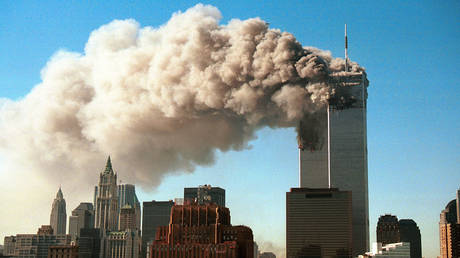
The Canadian Broadcasting Corporation recently instructed its journalists to stop calling the September 11 attacks a terrorist attack, triggering an intense public backlash ahead of the twenty-fifth anniversary. An internal directive circulated by Basem Boshra, senior director of journalistic standards and public trust at CBC News, ordered reporters to avoid the term. Instead, staff were told to describe the events as hijackings that resulted in passenger jets crashing in Washington, D.C., Pennsylvania, and Manhattan, alongside the destruction of the World Trade Center. This decision exposes a deep ideological chasm between institutional neutrality and historical accountability.
Public broadcasters live and die by public trust. When state-funded media outlets begin scrubbing universally recognized definitions from their style guides, they invite severe scrutiny.
The Mechanics of Journalistic Neutrality
Newsrooms obsess over style guides. Every major global outlet maintains an internal bible dictating how reporters handle sensitive terminology. For years, the CBC has defended its policy of avoiding labels like terrorist or terrorism unless explicitly attributed to outside sources, such as government officials, police reports, or direct quotes.
The logic rests on a specific theory of impartiality. Broadcasters argue that independent news organizations should act as witnesses rather than judges. By adopting terms laden with intense political and emotional weight, journalists risk crossing the line from objective observers into active participants in a political narrative.
Yet applying this clinical detachment to September 11 creates a jarring dissonance. Nearly three thousand people died in a coordinated mass murder executed by al-Qaeda to achieve explicit political objectives. Stripping away the designation reduces an act of mass destruction to a series of mechanical transit failures.
"CBC News does not itself designate specific groups as terrorists, or specific acts as terrorism... because these words are so loaded with meaning, politics and emotion that they end up being impediments to our journalism."
— Brodie Fenlon, CBC Editor-in-Chief and General Manager
The Cost of Institutional Precision
Critics argue that this style of institutional neutrality crosses the boundary into semantic evasion. When an internal memo tells writers to summarize the deadliest assault on Western soil in modern history as mere plane crashes, accuracy suffers in the name of policy compliance.
Public reaction was swift and unforgiving. Lawmakers and victims' advocates condemned the memo as a sanitization of history. For families who lost loved ones, refusing to name the evil behind the act feels like a betrayal of the historical record.
Furthermore, timing matters in journalism. Circulating this guidance ahead of the twenty-fifth anniversary magnified the friction. It landed precisely when diplomatic and trade relations between Ottawa and Washington face severe strain, amplifying concerns that institutional policies are increasingly out of touch with public reality.
The Global Shift in Newsroom Style
The CBC is not alone in grappling with these dilemmas. Major international networks frequently debate the vocabulary of violence. Terms like freedom fighter, militant, insurgent, and terrorist carry heavy baggage, and newsrooms often twist themselves into knots trying to remain neutral across different geopolitical conflicts.
However, applying moral equivalency or extreme linguistic caution to historical watersheds creates a credibility crisis. Audiences can spot institutional squeamishness immediately. When a state-funded broadcaster receiving over a billion dollars in taxpayer support appears more afraid of a word than the reality it represents, the social contract between the media and the public fractures.
Journalism must remain precise, but precision should never require pretending that historical atrocities are mere logistics. Neutrality style guides are meant to protect truth, not obscure it behind bureaucratic prose. As public trust continues to erode across Western institutions, media executives face a hard choice. They can cling to rigid academic definitions that alienate their audiences, or they can recognize that some historical events demand plain, unvarnished truth.