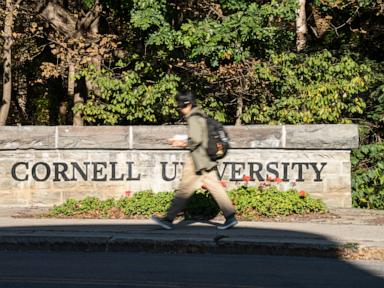
Cornell University faculty members are initiating a formal vote of no confidence against senior administrators over the institution’s handling of campus sexual assault and rape allegations. The resolution stems from deep frustration among professors regarding opaque disciplinary procedures, perceived institutional inertia, and a widening gulf between administrative rhetoric and survivor support. While a no-confidence vote carries no direct legal power to terminate university executives, it represents one of the severest public rebukes an academic senate can deliver, threatening donor relations, faculty recruitment, and the long-term legitimacy of the administration.
Universities rarely air their internal governance disputes in public unless internal channels have completely collapsed. At Cornell, the push toward a formal ballot follows months of escalating tension over how sexual misconduct cases are investigated, adjudicated, and communicated to the broader campus community. Faculty governance bodies—traditionally cautious, deliberative, and slow to move—do not reach the point of a no-confidence resolution over a single isolated misstep. They reach it when a pattern of administrative decision-making convinces senior scholars that institutional self-preservation has replaced student safety as the primary operational directive.
The Mechanics of Academic Mutiny
To understand why a faculty vote of no confidence matters, one must look past the lack of formal statutory power. In American higher education, boards of trustees hold the legal authority to hire and fire presidents, provosts, and deans. A faculty senate cannot simply vote an administrator out of office.
Yet the practical consequences are severe. Higher education runs on shared governance, a delicate compact in which trustees manage fiduciary duties, administrators handle operations, and faculty oversee curriculum, research, and academic standards. When faculty formally declare they have no confidence in leadership, that compact breaks.
Administrators rely on faculty cooperation to sit on disciplinary panels, run departmental searches, serve on policy task forces, and maintain the academic reputation that attracts federal grant money and top-tier students. Once a no-confidence resolution passes—or even comes close to passing—every committee meeting becomes adversarial. Deans struggle to recruit respected professors for administrative posts. External academic bodies take notice, and prospective hires begin asking pointed questions during interviews about campus stability and leadership integrity.
Historically, major universities facing similar faculty revolts over institutional crises—whether at the University of Southern California, Michigan State University, or the University of North Carolina—have seen leadership tenures shorten dramatically within twelve to twenty-four months of a formal vote. Boards of trustees may publicly defend their appointed executives in the immediate aftermath to project stability, but behind closed doors, trustees watch donor sentiment and reputational metrics closely. If alumni giving stalls or national rankings dip, the board quietly begins searching for an exit strategy.
Why Campus Sexual Assault Procedures Break Down
The core friction driving the Cornell resolution reflects a structural flaw embedded across elite American universities. Institutions are caught between two conflicting mandates: functioning as supportive educational communities and acting as quasi-judicial investigators of violent felonies.
Under federal Title IX regulations and New York State’s "Enough is Enough" law, universities are legally required to respond promptly to reports of sexual violence, provide supportive measures to complainants, and conduct equitable investigations. On paper, these frameworks look thorough. In practice, they often produce bureaucratic paralysis.
The Burden of Dual Roles
A university is not a court of law. Campus investigators lack subpoena power, cannot compel off-campus witnesses to testify, and cannot access municipal police forensic databases without external cooperation. Yet administrators routinely construct elaborate, legalistic hearing processes that mimic criminal trials without possessing the investigative tools to make those trials effective.
When a student reports a rape, the case enters a labyrinth of intake coordinators, Title IX investigators, external legal counsel, and hearing officers. Months pass. Academic semesters turn over. Survivors frequently find themselves sitting in lecture halls or dining facilities near the accused while waiting for preliminary findings.
Risk Management Versus Survivor Advocacy
The deeper issue—and the one that typically enrages faculty—is the quiet influence of general counsel and institutional risk management. When a high-profile sexual assault allegation surfaces, the university’s legal team immediately assesses liability exposure.
Every public statement is scrubbed to avoid defamation claims from the accused or negligence lawsuits from the complainant. To students and professors, this extreme caution reads as coldness, secrecy, and cover-up. When administrators cite student privacy laws—specifically the Family Educational Rights and Privacy Act (FERPA)—to withhold basic aggregate information about campus safety threats or disciplinary outcomes, trust evaporates. Faculty members who spend their careers mentoring students see the human toll of delayed investigations firsthand, while watching senior leadership issue carefully worded, legally sanitized memos that acknowledge no systemic failure.
The Regulatory Pendulum
Understanding the administrative paralysis at institutions like Cornell requires looking at the erratic federal regulatory environment surrounding campus sexual misconduct over the past fifteen years. University compliance offices have been forced to rewrite their rulebooks repeatedly as presidential administrations flipped federal mandates back and forth.
| Regulatory Era | Primary Federal Directive | Impact on University Operations |
|---|---|---|
| 2011–2017 (Obama Era) | Aggressive enforcement via Dear Colleague letters; lower evidentiary standards ("preponderance of evidence"); discouragement of live cross-examination. | Rapid expansion of Title IX offices; surge in institutional investigations; subsequent wave of due-process lawsuits from accused students. |
| 2020–2024 (Trump Era Rules) | Formalization of quasi-judicial live hearings; mandatory cross-examination by advisors; narrowed geographic jurisdiction for off-campus incidents. | Steep drop in formal complaints due to intimidating hearing formats; heavy reliance on expensive outside attorneys; prolonged timelines. |
| 2024–Present (Shifting Mandates) | Ongoing federal revisions and court injunctions creating a patchwork of state-by-state compliance requirements. | Institutional hesitation; administrators delaying major structural reforms out of fear that new rules will soon be overturned in federal court. |
This constant regulatory whiplash has conditioned university administrators to prioritize procedural compliance over substantive justice. Compliance officers become obsessed with checking every legal box to survive a potential Department of Education audit or a federal lawsuit. In doing so, they lose sight of the basic moral obligation to maintain a safe campus environment.
Faculty members, operating outside the compliance bureaucracy, judge the administration by outcomes rather than procedural checklists. If students report being assaulted, if campus alerts are delayed or vague, and if perpetrators face minimal or slow-moving consequences, professors view the system as broken regardless of whether it technically satisfies federal regulations.
What Critics of No-Confidence Votes Argue
Not every professor or governance expert agrees that a no-confidence resolution is the right instrument for fixing campus sexual assault policies. Even among faculty who share deep concerns about student safety, significant debate surrounds the strategic utility of a public rebuke.
One major counter-argument centers on institutional distraction. Launching a full-scale no-confidence campaign consumes months of faculty senate bandwidth, media attention, and administrative energy. Critics argue that senior leaders spend their days managing the political fallout and defending their jobs rather than overhauling Title IX staffing, expanding mental health counseling, or auditing campus security protocols.
There is also the problem of precision. A broad no-confidence resolution aimed at top executives treats the university as a monolith, potentially penalizing administrators who have quietly pushed for internal reforms while shielding mid-level compliance bureaucrats whose rigid adherence to legalism actually caused the bottlenecks.
Furthermore, some legal analysts point out that universities operate under strict statutory constraints that faculty members sometimes underestimate. Administrators cannot simply bypass due-process protections or expel students on the basis of unverified allegations without inviting immediate federal injunctions and costly settlements. When an administration moves slowly, critics of the resolution argue, it may be navigating genuine legal minefields rather than engaging in willful neglect.
The Hidden Friction Between Faculty and Student Affairs
Another overlooked factor in these campus revolts is the structural divide between academic affairs and student affairs. At large research institutions like Cornell, these two divisions operate almost like separate companies sharing the same brand name.
Faculty live in academic departments. Their currency is research output, peer review, grant funding, and classroom instruction. They rarely interact with the vast administrative apparatus of student life—housing, campus police, health services, and Title IX compliance—until a crisis spills into their classrooms.
Student affairs, meanwhile, has grown over the past three decades into a massive, professionalized bureaucracy staffed by administrators with backgrounds in higher education management, counseling, and law. Many professors view this administrative bloat with skepticism, noting that administrative headcount and salaries have outpaced tenure-track faculty hiring across the Ivy League.
When a crisis erupts over sexual assault, this latent resentment surfaces immediately. Faculty look at a sprawling, well-funded administrative apparatus and ask why an organization with so many vice provosts, associate deans, and compliance specialists cannot execute basic communication and timely investigations. The no-confidence vote becomes a referendum not just on a specific mishandling of rape allegations, but on the broader competence and accountability of the modern administrative university.
Concrete Consequences of a Public Rebuke
If the Cornell faculty pushes forward and passes the resolution, the immediate aftermath will unfold across several predictable fronts:
- Board of Trustees Intervention: The board will almost certainly issue an initial statement affirming support for the administration while simultaneously commissioning an external, independent review of Title IX and campus safety operations.
- Accelerated Turnover: Even if top executives survive the immediate vote, key lieutenants overseeing student life, campus safety, or legal compliance frequently depart within the following academic year under the guise of retirement or career transitions.
- Governance Concessions: To restore working relationships with the faculty senate, administrators typically agree to structural concessions, such as placing elected faculty representatives directly onto oversight boards that monitor Title IX timelines and anonymized case outcomes.
- Scrutiny from Prospective Students and Donors: High-profile governance battles make national headlines, influencing admissions yield among concerned families and prompting major donors to pause unrestricted gifts until the board demonstrates measurable reform.
The deeper reality is that passing a resolution is the easiest part of faculty activism. Sustained oversight is much harder. Once the headlines fade and the academic year ends, administrative bureaucracies naturally revert to old habits unless faculty governance bodies enforce strict, ongoing transparency metrics—demanding regular public reporting on investigation durations, case dispositions, and resource allocation for survivor support.
A vote of no confidence forces the crisis into the open, stripping away the polished veneer of institutional public relations and compelling the board of trustees to confront the gap between the university's stated values and its daily operations. Whether that confrontation produces lasting structural change depends entirely on whether the faculty maintains pressure long after the ballots are counted.