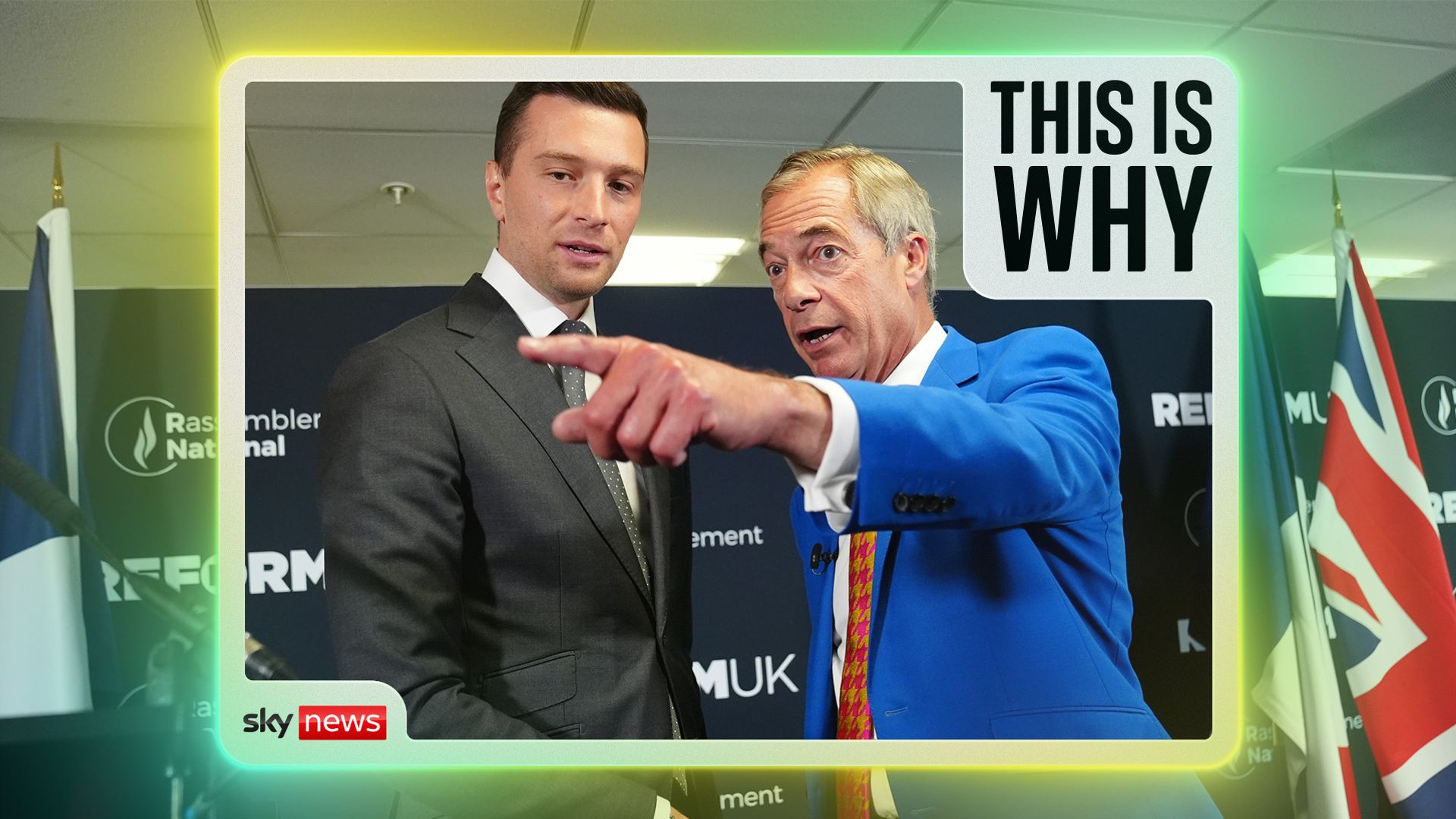
The political alignment between British populist leader Nigel Farage and French National Rally president Jordan Bardella represents a calculated operational shift across the English Channel. Far from being a mere symbolic handshake, this partnership bridges two distinct nationalist movements into a unified transnational front focused heavily on border control and anti-immigration policies. By examining how both leaders leverage public grievances, financial controversies, and digital platforms, we can dissect the real mechanics driving this high-profile bilateral strategy.
The Mechanics of Transnational Populism
For decades, right-wing populist parties across Europe operated in isolation, constrained by historical nationalist rivalries and differing domestic priorities. Today, that fragmentation is giving way to pragmatic cooperation. When Jordan Bardella took the stage at the Reform UK conference in Birmingham alongside Nigel Farage, the appearance signaled more than a routine exchange of pleasantries. It marked a synchronization of messaging aimed directly at mainstream voters who feel abandoned by traditional centrist parties.
The core premise of their alliance rests on an operational promise regarding cross-Channel migration. Both figures understand that immigration remains the single most potent mobilizing issue for their respective electoral bases. By signing a joint framework outlining coordinated border enforcement—including controversial proposals to return small boats—they are attempting to project executive competence. They want electorates to view them not as permanent opposition gadflies, but as governments-in-waiting capable of negotiating bilateral treaties across national borders.
Navigating Scrutiny and Financial Scandals
Yet, this partnership does not exist in a vacuum of unblemished popularity. Both leaders face intense scrutiny regarding party finances and legal challenges that would traditionally derail mainstream political careers. Farage has battled questions over undeclared high-value donations and parliamentary standards investigations, while Bardella remains closely tied to Marine Le Pen, who faces severe legal fallout and conviction-related obstacles over European Parliament funding.
Rather than hiding from these controversies, both movements have adopted a playbook of aggressive normalization. By standing shoulder-to-shoulder, they seek to dilute domestic political scandals into a broader narrative of anti-establishment persecution. When mainstream institutions challenge their funding or legal standing, their base interprets it as proof that the ruling class fears their growing electoral momentum.
Consider a hypothetical scenario where an established political party faces similar transparency inquiries; the usual response involves internal investigations and cautious PR management. Farage and Bardella flip this script, turning inquiries into public rallies and framing oversight bodies as partisan actors attempting to suppress the popular will.
The Digital Generation Gap
A critical differentiator for Bardella's trajectory within French politics—and a key asset for Farage's broader international appeal—lies in digital native engagement. While traditional politicians rely heavily on press releases and television broadcasts, Bardella has mastered short-form video platforms like TikTok, cultivating millions of followers. This digital infrastructure allows right-wing populist figures to bypass traditional journalistic gatekeepers entirely.
By communicating directly with younger demographics, they sanitize policies that might otherwise face harsh intellectual dismantling in mainstream forums. The aesthetic is slick, professional, and carefully curated to project modernity. This rebranding effort—often termed "de-demonization"—is designed to make nationalism palatable to corporate entities and suburban voters alike.
Ultimately, the Farage-Bardella axis exposes the shifting tectonic plates of European governance. As both leaders push toward national power, their ability to coordinate cross-border policy will face the ultimate test of reality. If voters look past the political theatre, the endurance of this alliance will depend entirely on whether populist rhetoric can translate into administrative delivery.
For a closer look at the joint press conference and the specific migration pact signed in Birmingham, you can watch the Farage and Bardella Press Conference. This footage captures the immediate media response and the specific terms outlined by both leaders regarding cross-Channel migration management.
http://googleusercontent.com/youtube_content/1