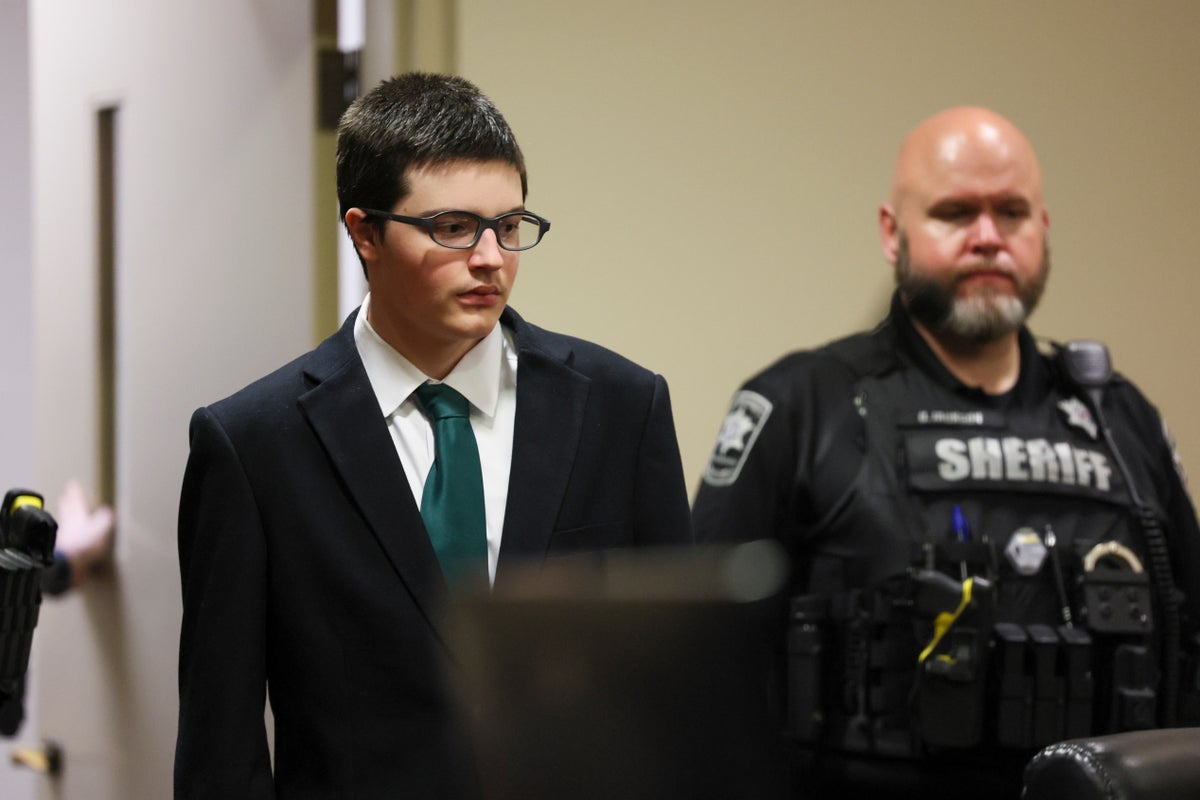
When a teenager trades reality for the toxic glow of an online hate-cult, tragedy stops feeling accidental. It starts looking like an engineered script.
Courtrooms rarely offer clean answers after a massacre. But the recent sentencing testimony surrounding Colt Gray, the perpetrator of the 2024 Apalachee High School shooting in Winder, Georgia, exposed a terrifying blueprint. Forensic psychologist Dr. Kevin Richards took the stand to break down what happens when a neglected, highly isolated kid disappears entirely into the dark corners of the internet. Meanwhile, you can read related stories here: The Handshake Across Continents That Changes Tomorrow.
The picture painted wasn't just about a broken home. It was about a digital indoctrination.
The Anatomy of an Online Obsession
Gray didn't wake up one morning and decide to destroy four lives and injure several others without a frame of reference. According to expert testimony from 15 hours of evaluations, his real life was defined by chaos. Financial instability, constant moving, substance abuse by his parents, and deep isolation formed the baseline. To explore the full picture, check out the excellent analysis by The Washington Post.
Yet, the true catalyst lived on servers and chat rooms.
Gray spent his formative hours buried inside Discord communities dedicated to true crime and mass casualty events. He didn't just browse. He fixated. He studied previous killers like a fan studying sports stats.
Investigators uncovered over 2,000 photos of Parkland shooter Nikolas Cruz stored on Gray's phone. He printed 16 of those images and pinned them to his bedroom wall like a shrine. He communicated with online peers about these killers, adopting their habits, mimicking their pre-attack actions, and manufacturing calculated "easter eggs" to gain notoriety within a sick subculture.
When someone spends all day breathing digital poison, reality bends. Gray convinced himself teachers were plotting against him. He experienced severe anxiety and paranoia, yet experts noted his actions weren't driven by active psychosis. They were driven by a calculated desire for status within a community that worships infamy.
Why the Digital Pipeline Goes Unchecked
We keep looking at school shootings strictly as localized mental health failures or political flashpoints. We miss the wider ecosystem.
Kids who feel invisible in the physical world often find hyper-visible validation in the darkest digital spaces. Platforms like Discord host micro-communities where alienated teens can trade isolation for notoriety. If you are a lonely kid with zero coping skills, getting praise from strangers online for studying mass murderers is a potent drug.
Gray even lied about his symptoms online to fit in, fabricating stories to match the lore of past shooters. He wanted to belong. The irony is brutal. In trying to escape his lonely existence, he anchored himself to the most destructive subculture on earth.
When his mother was later recorded searching for "fan art" of her son online after his arrest, the horrifying scale of this digital feedback loop came into full view. The internet had turned a broken teenager into a self-styled monster looking for applause.
Breaking the Cycle Before the Next Tragedy
Fixing this requires looking past generic school security measures. We have to confront how online spaces radicalize vulnerable youth.
Parents and educators need to watch for the warning signs of digital isolation. Total withdrawal into niche forums, obsession with violent history, and sudden changes in behavioral framing are loud alarms. When a kid stops living in the real world, someone else will write their script for them.
Colt Gray pleaded guilty to 55 counts, facing the heavy consequences of a ruined life. The victims' families are left holding a permanent grief. Until society learns to dismantle the online shrines where these killers find their inspiration, the cycle will simply repeat itself.