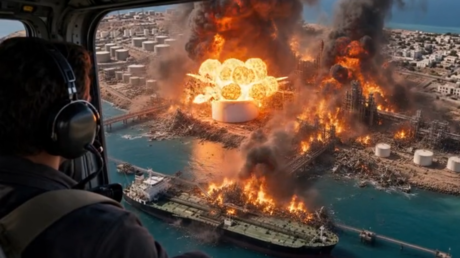
Donald Trump recently shared synthetic video clips on Truth Social depicting the catastrophic destruction of Kharg Island, Iran's primary oil export terminal, accompanied by the assertion that the strategic asset was "being blown to smithereens." In reality, the facility remained untouched, and the footage was traced to generative algorithms rather than combat gun cameras. This digital theater highlights a dangerous evolution in modern statecraft: the weaponization of synthetic media to fight psychological proxy battles before conventional ordnance ever leaves the launch rail.
The Anatomy of a Synthetic Strike
Intelligence analysts tracking the Persian Gulf theater spent hours verifying whether a major escalation had occurred at Kharg Island, an installation that handles the vast majority of Iranian crude shipments. Open-source investigators quickly flagged inconsistencies in the circulating clips. The lighting physics on the exploding storage tanks defied atmospheric norms, and maritime tracking data confirmed zero kinetic impacts near the terminal.
The White House and military commands face a compounding verification crisis. When political leaders distribute computer-generated imagery depicting high-stakes military outcomes, the line between strategic deterrence and disinformation blurs entirely. Tehran dismissed the posts as laughable propaganda, yet the secondary economic shockwaves hit immediately, nudging global energy markets upward.
The Strategic Logic of Virtual Destruction
Why trade physical munitions when pixels achieve an immediate sensory reaction? The economic war waged against Iran relies heavily on psychological pressure, supply chain anxiety, and insurance spikes for commercial shipping in the Strait of Hormuz.
Consider a hypothetical scenario where a state actor wishes to test market volatility or coerce an adversary without risking pilot lives or escalating into total war. Distributing high-definition artificial media simulates the psychological impact of a strike at zero cost. It forces opposing command structures into defensive communications loops, consuming hours of diplomatic and intelligence bandwidth just to prove an event never happened.
The Fog of the Synthetic Age
Military doctrine has always accounted for propaganda, but the speed and fidelity of modern generative software create unprecedented friction. Traditional intelligence gathering relies on multi-source confirmation: satellite telemetry, intercepted communications, and human assets on the ground. When a head of state introduces hyper-realistic synthetic media into the information ecosystem, it degrades the currency of truth itself.
The friction extends beyond foreign adversaries to domestic audiences who struggle to separate operational reality from campaign theater. As generative tools become accessible to every political office and state intelligence apparatus, the battlefield shifts permanently from physical geography to the cognitive domain. Kharg Island survived this specific digital onslaught intact, but the precedent ensures that the next geopolitical crisis will be fought twice: first in the prompt windows of neural networks, and only later in the oilfields.
Trump's Kharg Blown To Smithereens Claim Makes Tehran Laugh
This video provides valuable context regarding the international media reaction and the specific claims surrounding the synthetic footage of the Iranian oil facility.