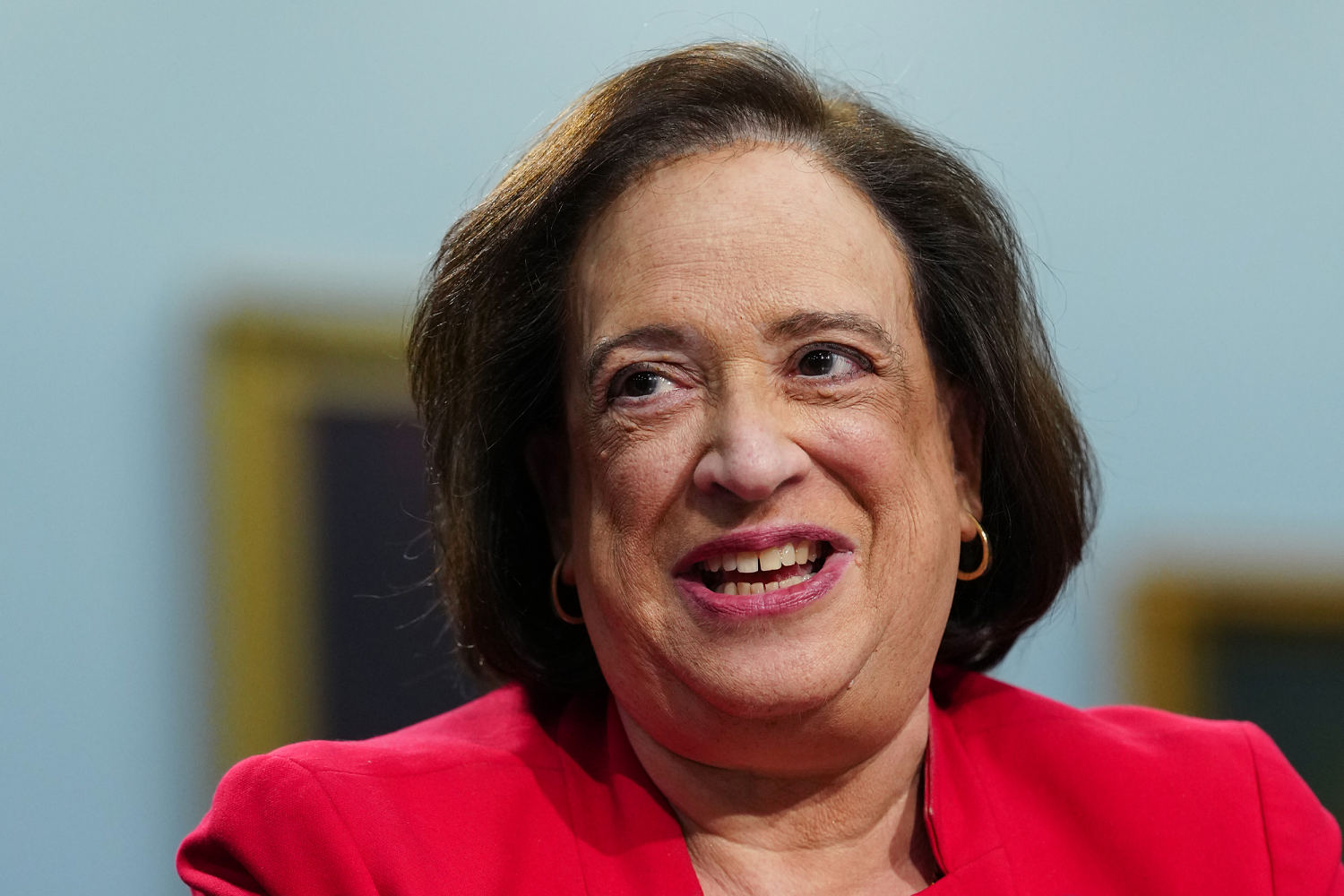
When Indian-origin South African jurist Navanethem "Navi" Pillay won the 2026 Nobel Peace Prize for advancing international accountability against war crimes, crimes against humanity, and genocide, New Delhi chose quietude. Congress MP Shashi Tharoor swiftly condemned that omission on social media, calling it a "deplorable decision" and demanding, "Shame on the petty men who have made such a deplorable decision" over the Centre's failure to extend congratulatory words to a woman of Indian ancestry. Weeks later, the Ministry of External Affairs reiterated that it had no comment to offer on the prize.
Diplomacy rarely runs on sentiment alone. A surface reading of the spat treats the episode as a routine clash between an opposition lawmaker hunting for an easy moral high ground and a government nursing ideological grievances. That reading misses the harder strategic mechanics operating behind closed doors in New Delhi.
Why Diaspora Pride Collides With Foreign Policy
India has spent decades cultivating warm ties with the global Indian diaspora, celebrating achievers from business, science, literature, and public life whose roots trace back to the subcontinent. Yet an ancestral link does not automatically translate into an official state endorsement when a laureate's career intersects with sensitive geopolitical fault lines.
Pillay's biography carries immense weight in global legal history. Born in South Africa to a family of Tamil descent, she endured the brutal exclusions of apartheid before becoming the first non-white woman to serve as a judge on South Africa's High Court, later sitting on the International Criminal Court and serving as United Nations High Commissioner for Human Rights. During her tenure at the International Criminal Tribunal for Rwanda, she helped shape the landmark 1998 Akayesu judgment that recognized sexual violence as an instrument of genocide under defined circumstances.
Those milestones earned her wide respect among human rights advocates and international jurists. They also placed her squarely inside contentious diplomatic arenas. In 2025, a commission she chaired concluded that Israel had committed genocide in Gaza, a finding Israel fiercely rejected. For a government balancing defense partnerships, trade priorities, and delicate West Asian diplomacy, issuing a celebratory statement for a figure tied to such a charged finding carries immediate diplomatic baggage.
Official silence in foreign policy is often a deliberate instrument rather than an oversight, designed to avoid signaling alignment on disputes where a country prefers room to maneuver.
Critics inside India also pushed back against Tharoor's framing from another angle. Online commentators pointed out that selective outrage cuts both ways in politics, questioning how opposition leaders treat other figures and incidents while demanding sweeping moral purity from the ruling establishment. Tharoor rejected those jabs by pointing to his own prior statements on other events, illustrating how quickly a debate over diplomatic protocol turns into a proxy fight over partisan credibility.
The Mechanics of New Delhi's Restraint
To understand why the Ministry of External Affairs held its line even two weeks after the Norwegian Nobel Committee announced the award, look at how modern states manage reputational risk. A congratulatory note from a government is never read in isolation by foreign capitals. Capitals read it as a signal.
If New Delhi praises a laureate celebrated by some for holding powerful states to account under international law, adversaries or partners with sharp sensitivities toward international tribunals may ask what that endorsement implies. Conversely, if New Delhi stays silent, domestic critics accuse the government of pettiness or indifference toward a trailblazer of Indian heritage.
Neither path is cost-free. Both carry trade-offs that seasoned diplomats weigh carefully before drafting a single line for a press briefing.
Strategic Autonomy Versus Moral Signaling
India's foreign policy tradition has long prized strategic autonomy, a posture that resists rigid bloc politics and avoids binding itself to external moral campaigns that could constrain national options. Over the past decade, that pragmatism has become even more pronounced as New Delhi navigates shifting power balances across Asia, Europe, and the Middle East.
A Nobel Peace Prize is inherently political, no matter how firmly the committee in Oslo frames it around law and peace. Past laureates have provoked sharp pushback from major powers across the globe. When a prize lands amid active geopolitical friction, silence allows a ministry to keep bilateral channels open without picking a fight it does not need.
That restraint comes with a real price at home. Public diplomacy relies on emotional resonance as much as calculation. When millions of citizens watch a person of Indian descent receive one of the world's most visible honors, an unacknowledged milestone can feel like a missed chance to project confidence and generosity.
Domestic Polarisation and the Nobel Lens
Domestic politics in India rarely leaves international news untouched. Every foreign development is quickly pulled into an existing domestic ledger where loyalty, nationalism, and institutional trust are contested daily.
Supporters of the government often argue that critics apply double standards, scrutinizing the Centre's every word while overlooking similar omissions or contradictions elsewhere. Critics counter that basic courtesy toward a distinguished jurist with roots in Tamil Nadu and South Africa should not depend on whether her legal findings flatter every partner in New Delhi's foreign policy playbook.
| Vantage Point | Core Argument | Blind Spot or Vulnerability |
|---|---|---|
| Opposition Critics | Ignoring a Nobel Peace Prize laureate of Indian origin reflects petty politics and disrespect toward a historic legal career. | Can treat complex diplomatic trade-offs as pure malice while ignoring partisan selective outrage. |
| Diplomatic Realists | Declining comment preserves strategic room to maneuver on sensitive international disputes and bilateral ties. | Risks ceding soft-power goodwill and appearing overly defensive over contested legal findings. |
| International Legal Advocates | International law and accountability for grave crimes deserve unequivocal backing regardless of state convenience. | Often underestimates how sovereign states weigh security and alliance interests against legal norms. |
What This Episode Reveals About Statecraft
Consider a hypothetical scenario to see how these pressures collide in practice. Suppose a foreign minister's office prepares a three-sentence greeting for a laureate who spent decades fighting discrimination and now chairs a high-profile inquiry criticized by an important security partner. Even a polite note on human rights can trigger an awkward demarche in a foreign capital or spark domestic uproar over perceived inconsistency. So the spokesperson is told to say nothing.
That calculation explains the mechanics, yet it does not settle the broader question of judgment. Great powers and rising powers alike constantly test where to draw the line between principled engagement and calculated silence. Draw the line too rigidly around convenience, and a country looks timid when values are tested. Draw it too loosely around rhetoric, and a country risks entanglement in disputes that serve none of its core interests.
In the end, the clash between Tharoor and the Centre is less about a single missing press release than about two competing instincts in Indian public life. One insists that a confident nation can honor extraordinary achievement without turning every gesture into a geopolitical calculation. The other insists that in a fractured world, saying nothing is sometimes the safest move a government can make.
Shashi Tharoor Slams Modi Govt Over Silence On Navi Pillay's Nobel Win
This video provides context on the public debate surrounding Shashi Tharoor's criticism of the Indian government's silence after Navi Pillay won the Nobel Peace Prize.