Roughly six in ten Americans say they are confident elections will be conducted fairly and accurately, a headline number that makes the system look far steadier than it actually is. Strip away the topline comfort and a sharper split emerges. Four in ten Americans—and nearly half of political independents—do not share that confidence.
I have spent more than two decades covering campaigns, county clerks, and polling shops across the country. Whenever a poll reports that six in ten Americans trust the election process, newsrooms treat it like a clean bill of health. It isn't. A topline figure compresses dozens of distinct anxieties into a single rounded fraction, masking the difference between how people feel about their own neighborhood polling place and how they feel about national politics.
Why Topline Poll Numbers Mislead Readers
Polls asking whether elections will be run fairly and accurately measure mood as much as mechanics. In an ABC News/Washington Post/Ipsos survey ahead of the 2026 midterms, about six in ten Americans expressed confidence in fair and accurate election administration, with roughly two-thirds saying votes would be counted accurately. That sounds reassuring on its face. Yet even among those who answered "confident," only a smaller fraction said they were very confident. "Somewhat confident" often means I hope it works, though I hear a lot of noise.
Question wording changes everything. When researchers ask Americans whether their own ballot will be counted as intended, trust climbs sharply. Following the November 2026 midterms, Pew Research Center found that large majorities of in-person and mail voters were confident their own vote was accurately counted, and even more said elections in their own community were run well. People trust what they can see with their own eyes. They doubt what they only see argued about on cable television.
Voters regularly rate local election administration far higher than the national system as a whole. Proximity breeds proof; nationalized media breeds suspicion.
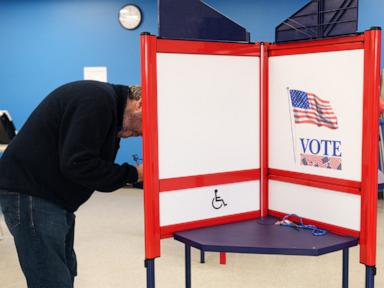
To see how question framing shifts the picture, consider a hypothetical example of two neighbors in the same county. Voter A casts a ballot at a local school gymnasium, watches poll workers seal the ballot box, and sees short lines. Asked about her own precinct, she says the process works fine. Asked whether American elections as a whole are fair and accurate, she thinks about partisan fights over mail ballots, voter rolls, and contested results—and says she isn't sure. Neither answer is fake. Both reflect real cognitive friction.
The Shrinking Middle and the Independent Doubt
For years, analysts assumed voter confidence moved strictly along party lines, rising when a respondent's preferred party held power and falling when the opposition led. That rule has fractured. Gallup's tracking through 2026 showed overall confidence in election honesty hovering just under half, with sharp divides across parties and an unusual pattern in which Americans disapproving of national leadership expressed higher confidence than approvers.
Independents are the real warning light. In pre-election polling on fairness and accuracy, independents trailed both Democrats and Republicans in confidence, with nearly half saying they were not confident elections would be conducted fairly. Independents are not a single ideological bloc. Many are simply exhausted by partisan spin, distrustful of institutional messaging, and quick to assume rules are bent whenever a race gets messy.
Win-loss outcomes also bend perception after the fact. Post-election polling from November 2026 illustrated how quickly attitudes can swing once results land, with confidence surging among some groups and dropping among others depending on how their side fared. When confidence rises or falls based primarily on who won, that confidence is fragile. It is borrowed from victory rather than earned from process.
| Dimension of Voter Trust | What Topline Numbers Often Show | What Closer Polling Reveals | Practical Meaning for Elections |
|---|---|---|---|
| Scope of Question | General confidence in fair and accurate elections (~6 in 10) | Much higher trust in one's own ballot and local polling place | Local operations perform better than national reputation suggests |
| Intensity of Belief | Combined "very" and "somewhat" confident buckets | "Very confident" is a much thinner slice than the combined total | Surface agreement can mask lingering skepticism |
| Partisan & Independent Split | Surface parity or modest gaps in certain snapshots | Independents often lag; post-vote shifts track political outcomes | Losing sides frequently question fairness after close or surprising results |
| Perception of Fraud | Broad debate over election integrity | A minority view fraud as a major problem, while a sizable share is unsure | Ambiguity fuels rumors faster than settled facts calm them |
What Happens Inside a Real Count
Most Americans never set foot inside a central counting facility on election night. Because they do not see the safeguards, they fill the vacuum with speculation.
Election administration is built on chain of custody and redundancy, not blind faith. Paper ballots—whether marked by hand or printed by a ballot-marking device—leave a physical trail. Every transfer from precinct to county headquarters is logged, sealed, and often observed by bipartisan teams or public monitors. Scanners tabulate votes, while post-election audits, including risk-limiting audits and hand-count samples, check machine tallies against physical paper.
Paper Trails vs. Machine Speed
Critics on one side worry about software, tabulators, and electronic connectivity. Critics on the other worry about slow counts, mail-in processing rules, and shifts in tallies as late batches arrive. Both worries usually stem from misunderstanding how slow, deliberate verification works.
Counting thousands or millions of paper ballots accurately takes time. Signature checks, ballot curing, batch reconciliation, and logic-and-accuracy testing are boring, painstaking steps. When results trickle out over days rather than minutes, impatience turns into suspicion. Speed feels like competence to an anxious public; accuracy requires patience.
Why Audits Rarely Make Headlines
A successful audit is quiet. When election officials sample paper ballots and confirm the machine tally held up, there is no dramatic cliffhanger to sell.
Audits are designed to catch mistakes or anomalies early and verify outcomes before certification, yet their routine nature keeps them out of daily headlines.
Even so, audits are not a magic wand. Rules vary widely from state to state, timelines can be tight, and a public already primed to distrust institutions may dismiss an audit as insider validation unless the explanation is plain and verifiable. Transparency only builds trust when ordinary voters can understand what was checked and why it mattered.
Overlooked Factors Driving Doubt
Coverage of election confidence usually fixates on presidential rhetoric, partisan lawsuits, and viral claims of fraud. Three quieter pressures deserve equal scrutiny.
- Information overload and conflicting claims. Voters are bombarded with contradictory assurances and accusations before a single ballot is even opened. Over time, constant volume wears down certainty, leaving many people in a permanent state of "maybe."
- Administrative turnover and burnout. Local election offices run on tight budgets, seasonal staff, and strict statutory deadlines. Experienced clerks and poll workers have retired or stepped away in many jurisdictions, forcing newer teams to manage high-stakes logistics under intense public scrutiny.
- Mismatch between rules and expectations. Many voters assume election rules are uniform nationwide and that results should be final by midnight. When they discover that mail-ballot deadlines, curing windows, and recount thresholds differ across state lines, routine legal procedures can look suspicious.
Gray Areas Where Experts Disagree
Honest reporting has to admit where consensus ends. Election experts agree that large-scale fraud altering federal outcomes has not been demonstrated and that paper-backed systems with strong chain of custody are far safer than paperless machines. Beyond that baseline, debates get thorny.
Some reformers argue that faster reporting—such as processing mail ballots earlier where state law allows—would reduce evening drama and boost confidence. Others warn that rushing steps can increase human error or spark complaints about early partial tallies. Similarly, debates over voter ID, roll maintenance, and ballot access pit convenience and participation against security and peace of mind. No single rule satisfies every voter, because voters hold conflicting definitions of what makes an election fair.
How to Read the Next Poll Without Getting Played
The next time a survey announces that roughly six in ten Americans are confident in elections, read past the headline. Look at three details immediately: whether the question asks about the national system or your own vote, how large the "very confident" share is compared to "somewhat confident", and whether the poll was taken before or after a major political shift.
Healthy skepticism in a democracy is normal; citizens should always demand proof, audits, and clear rules. Cynicism is different. Cynicism assumes the scoreboard is rigged before the game is played—and six-in-ten headlines will never cure that on their own. Check your own registration, learn how your local county verifies and audits ballots, and judge claims by documented evidence rather than volume.