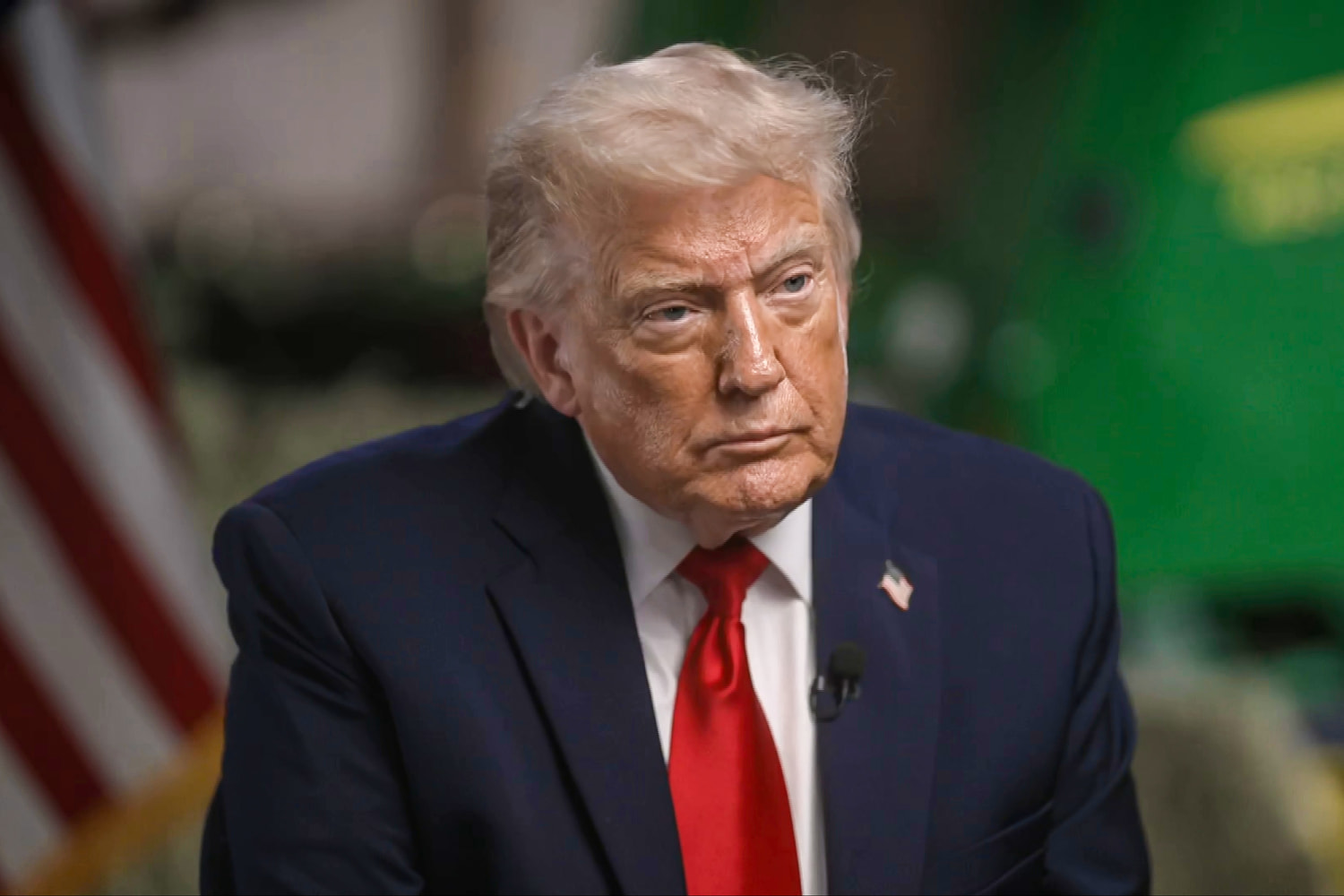
Traditional media fact-checking is failing because it treats political rhetoric as a series of isolated math problems rather than a coherent narrative strategy. When political figures use high-profile network interviews to deploy distorted figures on immigration, inflation, and trade, the standard journalistic response is to issue a list of corrections. This strategy misses the entire point. By focusing exclusively on correcting specific numbers, news organizations fail to address the underlying framework that makes those assertions persuasive to millions of voters in the first place.
The conventional approach to political accountability operates under a flawed premise. It assumes that if a reporter presents an accurate dataset, the audience will automatically reject the politician's broader argument. Mainstream networks consistently struggle during high-stakes broadcasts because they treat live interviews as traditional debates centered on static data. A comprehensive analysis of recent network appearances reveals that political communication has outpaced the rigid structure of traditional broadcast fact-checking, turning these interviews into theatrical exercises rather than exercises in public accountability. Don't miss our earlier post on this related article.
The Structural Failure of Live Corrections
Live television is a poor medium for real-time data verification. When a public figure introduces an inaccurate statistic, a moderator has only a few seconds to interject, recall the correct data point, and present it clearly to the audience. This structural limitation creates an immediate advantage for the speaker, who can quickly pivot to a new assertion before the viewer can fully process the initial correction.
The math of a televised interview favors speed over precision. A speaker can deliver three unverified claims in the time it takes an interviewer to thoroughly dismantle one. This imbalance forces journalists into a reactive posture. Instead of driving a meaningful conversation about policy outcomes, the host becomes an on-air editor, frantically correcting names, dates, and percentages while the clock runs down. If you want more about the context here, Associated Press offers an informative summary.
This dynamic became clear during recent network coverage of economic policy. Assertions that domestic consumers bear none of the financial burden of international import tariffs are routinely met with citations from economic consensus panels. While organizations like the American Economic Association consistently demonstrate that import duties function as a tax on domestic importers and consumers, simply repeating that consensus on air rarely changes the narrative direction of the broadcast. The speaker simply shifts the focus to manufacturing jobs, leaving the audience with two conflicting statements rather than a clear understanding of trade mechanics.
The Weaponization of Fragmented Government Data
Modern political communication rarely relies on completely fabricated data. Instead, it utilizes real government figures taken entirely out of context. This strategy creates a major challenge for traditional fact-checkers because the core metric being cited technically exists within an official document.
A prime example involves federal immigration data. High-profile political figures frequently cite a specific figure from Immigration and Customs Enforcement indicating that more than 13,000 noncitizens convicted of homicide are currently not held in federal immigration detention facilities. On its face, the number is accurate and originates directly from a Department of Homeland Security communication.
[Federal Noncitizen Homicide Data Breakdown]
Total Noncitizens with Homicide Convictions Outside ICE Detention: ~13,000
|
+---> Serving active sentences in state/local prisons (Majority)
+---> Completed sentences but cannot be deported due to international law
+---> Historical entries spanning over four decades of administrations
The deception lies entirely in how the timeline is framed. During live broadcasts, this metric is routinely presented as a snapshot of individuals who entered the country exclusively over the last three years. In reality, that data represents an aggregate total compiled over more than 40 years, encompassing multiple presidential administrations. Many of the individuals included in the count are not in immigration detention because they are currently serving long-term sentences in state or local penitentiaries.
When a moderator attempts to explain this historical context, the explanation requires a detailed breakdown of federal sentencing guidelines and multi-decade immigration tracking. To the casual viewer, this detailed contextual explanation can sound like bureaucratic hair-splitting rather than a definitive correction. The raw, alarming number remains fixed in the viewer's mind, while the necessary context is lost in the rapid back-and-forth of the broadcast.
The Inflation Narrative and Post Hoc Ergo Propter Hoc
Economic reporting on television frequently suffers from a fundamental logical fallacy. Political figures excel at using the chronological order of economic events to imply direct causation, a tactic that traditional interview formats are poorly equipped to counter.
The ongoing debate over the origins of domestic inflation serves as a clear case study. Assertions that the domestic economy experienced zero inflation during specific periods, followed by a sudden spike caused entirely by subsequent legislative spending, oversimplifies global macroeconomics. While expansive domestic spending bills certainly added fuel to the economic fire, attributing the entire inflationary wave to a single legislative act ignores the systemic disruptions caused by global supply chain collapses and international energy market shocks.
Global Supply Chain Disruptions (2020-2022) ---> Restricted Goods Supply --+
                                                                             |---> Peak Inflation (9%)
Post-Pandemic Consumer Demand Spike       ---> Rapid Cash Velocity       --+
When journalists counter these sweeping economic claims by showing charts of month-over-month consumer price index shifts, they are attempting to fight a emotional narrative with technical documentation. The audience doesn't experience the economy through a seasonally adjusted index; they experience it at the supermarket counter. By failing to bridge the gap between abstract federal metrics and lived economic reality, standard fact-checking pieces end up feeling detached from the very public they are trying to inform.
The Illusion of Scientific Debate on Public Health
Perhaps the most damaging aspect of the current media environment is how live interviews handle complex scientific topics. When a public figure suggests a link between childhood immunization schedules and rising rates of neurological conditions, the media's standard operating procedure is to state that the claim is unsupported by medical consensus.
This response is insufficient because it treats a settled scientific issue as an ongoing public debate. By presenting the politician's assertion alongside a brief corporate disclaimer from the Centers for Disease Control and Prevention, the network inadvertently creates a false equivalence. The viewer is left with the impression that there are two valid viewpoints on child health, rather than a mountain of peer-reviewed epidemiological data contrasting with an unproven anecdotal claim.
The rapid rise in documented cases of conditions like autism over the past quarter-century is a matter of public record. However, medical historians and epidemiologists have repeatedly demonstrated that this trend is driven by expanded diagnostic criteria, increased clinical awareness, and the dismantling of historical stigmas. When a live interview allows a speaker to connect these two realities without a deep dive into diagnostic evolution, it gives a platform to misinformation under the guise of balanced journalism.
Redefining the Parameters of Political Accountability
If the traditional approach of running a live crawl of corrections or publishing post-interview bullet points is no longer working, news organizations must fundamentally change how they approach high-profile political interviews. The answer is not to abandon fact-checking entirely, but to change the focus of the conversation from the validity of specific details to the mechanics of the broader argument.
Journalists must stop letting politicians use interviews as a platform to repeat unverified claims, and instead force them to explain the underlying logic of their policy proposals. If a political figure proposes an immediate, sweeping change to constitutional interpretations regarding birthright citizenship, the interview should not devolve into a debate over how many other nations offer similar legal protections. The questioning must focus entirely on the legal, logistical, and humanitarian realities of implementing such a policy.
This shift requires a different style of preparation. Producers must stop anticipating specific talking points and start analyzing the core rhetorical strategies used by their guests. This means moving away from a model that prioritizes viral moments and quick soundbites, and moving toward a structural format that values sustained, rigorous cross-examination. Until major news networks recognize that their current approach is being actively exploited to spread misinformation, these high-profile interviews will continue to undermine public discourse rather than inform it.