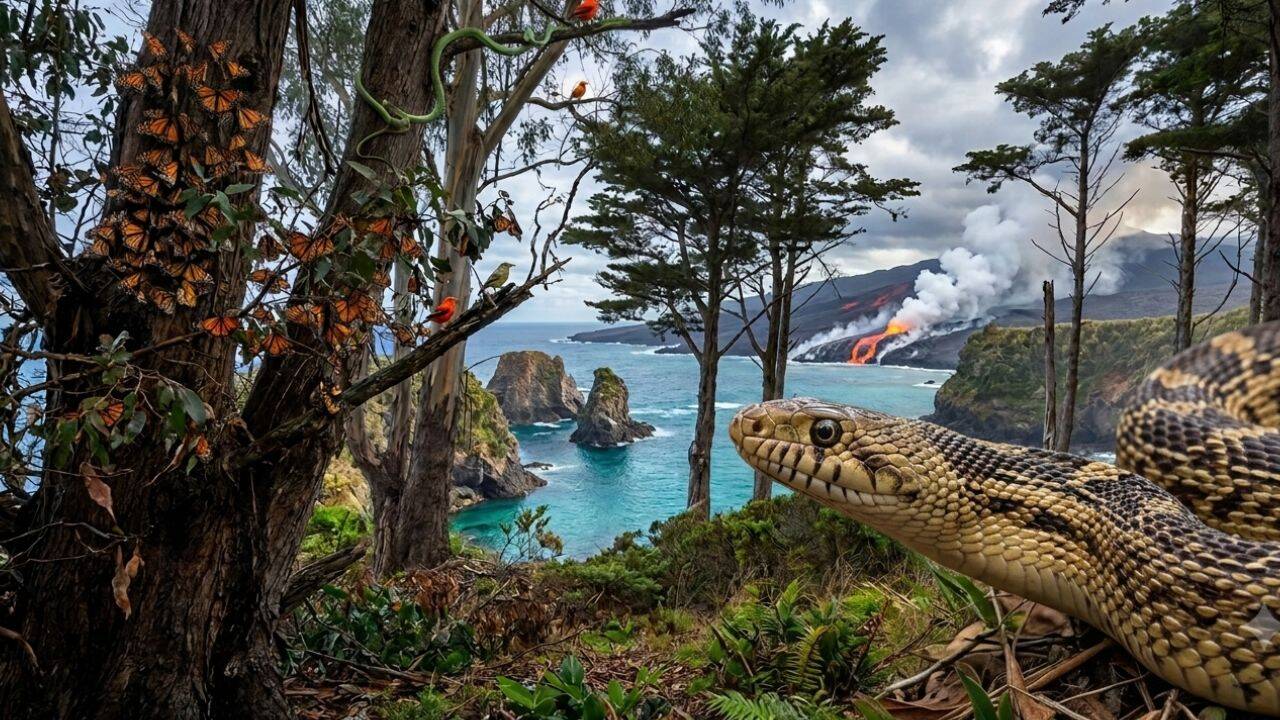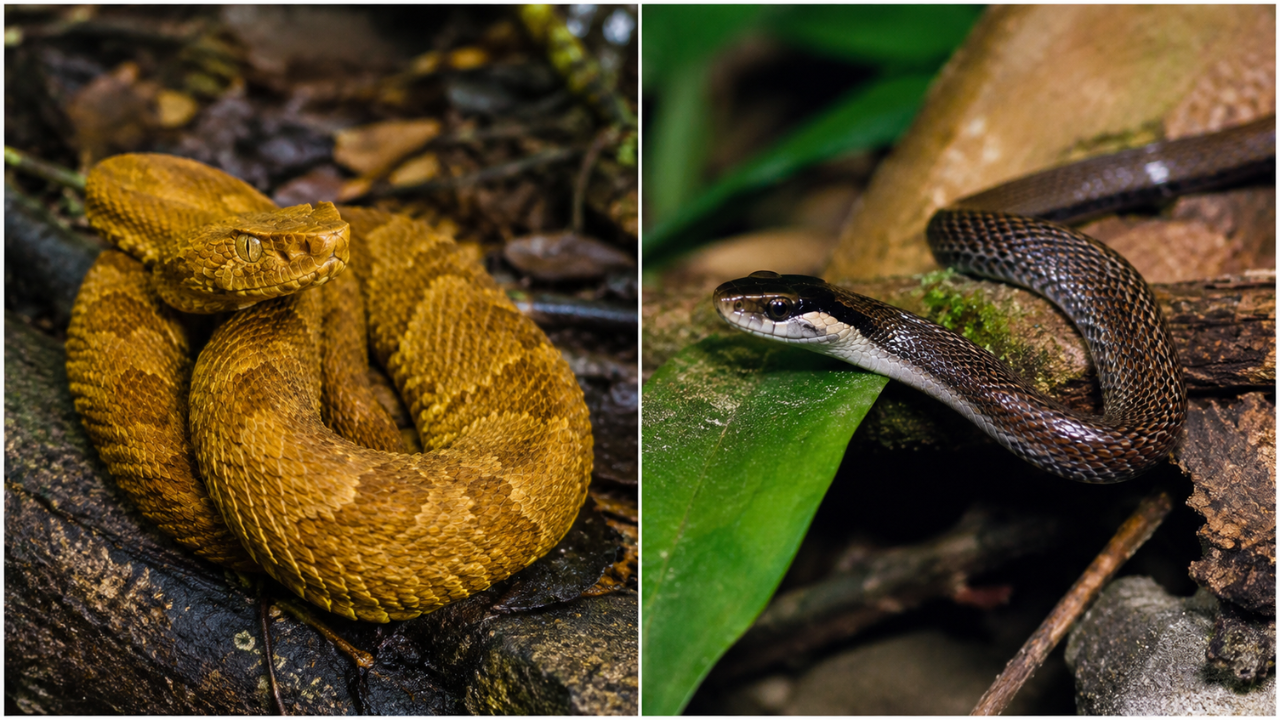
Brazil's Ilha da Queimada Grande, universally known as Snake Island, is home to two snake species: the critically endangered golden lancehead pit viper (Bothrops insularis) and the non-venomous Sauvage's snail-eating snake (Dipsas albifrons). Located roughly 20 miles off the coast of São Paulo, this 43-hectare rock outcropping has spent decades trapped in a feedback loop of sensationalist folklore and strict governmental censorship.
The internet loves a monster story. Tabloids routinely paint the island as a hellscape carpeted by hundreds of thousands of hyper-venomous vipers waiting to drop from the canopy onto unsuspecting tourists. The reality is far more complex, scientifically compelling, and precarious than the myth.
The Evolutionary Trap
Roughly 11,000 years ago, at the close of the last ice age, rising sea levels severed the connection between Queimada Grande and the South American mainland. The snakes stranded on this isolated landmass faced a brutal biological bottleneck.
Terrestrial mammals—the standard prey for mainland lanceheads—did not make the transition or quickly vanished. To survive, the stranded vipers had to pivot entirely. They turned their attention upward, shifting their dietary focus to migratory birds that used the island as a temporary pit stop during seasonal journeys.
This dietary shift rewrote the biological rules of engagement. A mammalian prey item bitten by a pit viper will typically succumb to venom while staggering a short distance away, allowing the predator to track its scent trail. A bird, however, can take flight instantly and travel miles over the ocean before dying, rendering it lost forever to a ground-bound predator.
Evolution acted with ruthless efficiency. The golden lancehead developed a hemotoxic venom significantly faster-acting and more potent than its mainland ancestors, designed to immobilize avian prey before it can flutter off a branch.
Dispelling the Population Myth
For generations, sensational accounts claimed that the island groaned under the weight of 400,000 snakes, packing creatures tighter than sardines across every square meter.
Biology rejects this premise. An ecosystem operates on strict energetic limits. A tiny island lacking large mammalian herbivores or scavengers cannot support an astronomical biomass of apex predators.
Rigorous scientific censuses funded and regulated by Brazilian authorities revealed a much lower, though still concentrated, population. Current estimates place the number of golden lanceheads between 2,000 and 4,000 individuals, restricted primarily to the island's rainforest patches.
They are heavily concentrated, yes. But they are not queuing up to storm the shoreline.
The Ghostly Isolation of the Lighthouse
The human history of Snake Island is written in iron, timber, and isolation. In 1909, the Brazilian government constructed an automated-style cast-iron lighthouse to warn maritime traffic away from the jagged, treacherous cliffs.
For years, lighthouse keepers and their families lived on the island. Local folklore birthed dark urban legends about the final human residents—stories claiming an entire family was wiped out after vipers slithered through their windows at night.
Historical records present a more mundane, albeit lonely, reality. The lighthouse was eventually fully automated by the Brazilian Navy in the 1920s, removing permanent human habitation for good. Today, naval personnel visit the station periodically for routine maintenance, while civilian access remains strictly illegal.
The Human Threat to the Vipers
The tables of vulnerability have turned. The primary danger on Snake Island no longer flows from reptile to human, but from human greed to the reptile.
Because the golden lancehead exists nowhere else on Earth, it commands astronomical sums on the international black market. Organized wildlife traffickers, often referred to as bio-pirates, occasionally brave the treacherous surf to poach specimens. A single live golden lancehead can fetch tens of thousands of dollars among clandestine reptile collectors.
This illicit trade, combined with historical attempts by early settlers to slash and burn sections of the forest for banana plantations, has left the species in an exceptionally vulnerable spot. The fires carved permanent scars into the landscape, reducing the viable habitat available to the vipers.
Conservation Behind Closed Doors
The Brazilian Navy and environmental agencies like the Chico Mendes Institute for Biodiversity Conservation enforce a near-total travel ban. Stepping foot onto Queimada Grande without explicit governmental research permits is a serious criminal offense.
These restrictions serve a dual purpose. They protect curious travelers from a potentially lethal envenomation, but more importantly, they build a fortress around a critically endangered genetic repository. Researchers granted access must navigate stringent protocols, often requiring medical personnel on-site to guard against the rapid systemic effects of a lancehead bite.
Snake Island stands as a monument to evolutionary isolation. It forces us to look past the horror-movie hyperbole and confront the fragile reality of island biogeography, where species shaped over millennia can vanish in an instant if left unprotected.