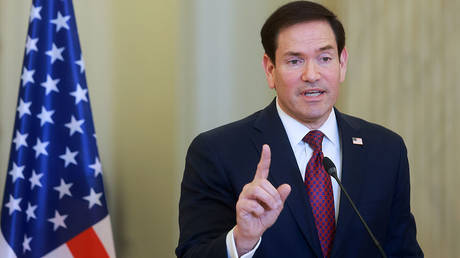
Vice President JD Vance confronted sharp pushback from voters during a CBS News broadcast, exposing the administrative strain, messaging vulnerabilities, and economic friction defining the White House heading into critical elections.
The televised panel in Michigan stripped away standard campaign talking points, putting the executive branch's military strategy, domestic enforcement tactics, and inflation timeline under direct scrutiny. Rather than presenting a smooth defense of the current tenure, the exchange highlighted structural blind spots inside the administration. If you found value in this article, you should read: this related article.
The Information Vacuum in Washington Command Structures
National security accountability took center stage when the Vice President was pressed directly on military casualties overseas. Joey Amor, whose wife Master Sgt. Nicole Amor was killed during initial operations in the conflict with Iran, raised severe questions regarding command decisions and systemic oversights.
Vance acknowledged he was unfamiliar with the specific tactical failures surrounding the casualty, admitting live on air that high-ranking officials frequently operate inside an isolated decision-making environment. Information does not always flow upward through executive channels efficiently. For another perspective on this story, refer to the recent update from NBC News.
That admission highlights a persistent challenge within modern administrative structures. When information filtering breaks down, leadership remains insulated from field realities while making sweeping strategic decisions.
Military Intelligence Flow Gap:
[Field Level Incident] ──> [Intermediate Processing] ──x──> [Executive Awareness]
                                                            (Information Blocked/Delayed)
Attempting to shift focus toward long-term geopolitical positioning, Vance argued that present military engagements would eventually deliver strategic stability. Yet, defending active military engagements seven months after their inception remains difficult when gold-star families demand immediate answers regarding initial operational errors.
Economic Deficits and Industrial Timelines
Voter frustration with cost-of-living increases remains a primary political vulnerability. Michigan business owners challenged the administration on when average households could expect tangible relief from elevated consumer prices and sluggish local spending.
Vance offered a candid assessment of industrial reality. Reversing decades of manufacturing decline and structural supply chain issues cannot happen within an eighteen-month window.
| Economic Factor | Short-Term Impact | Long-Term Projection |
|---|---|---|
| Manufacturing Investment | High capital output, delayed jobs | Factory opening in 3–5 years |
| Consumer Price Relief | Sticky inflation, high borrowing costs | Slow market stabilization |
| Domestic Industrial Base | Supply chain re-shoring costs | Increased domestic output |
The administration points to significant foreign capital commitments and domestic automotive expansion plans as signs of structural progress. However, macroeconomic re-shoring requires years of infrastructure building, tooling, and labor realignments before individual main-street businesses feel meaningful cash-flow relief.
Border Policy Enforcement and Internal Oversight Mechanics
Immigration policy enforcement continues to generate severe friction between local communities and federal agencies. Questioned by religious leaders and border-state advocates about federal enforcement tactics, Vance adjusted his tone regarding field agents.
Acknowledging that federal personnel sometimes make grave operational errors, Vance maintained that executive policy targets systemic commercial abuse rather than individual labor units. Rhetorical missteps, he conceded, had previously obscured the administration's focus on companies exploiting labor channels.
This distinction underscores the difficulty of enforcing aggressive federal policy without alienating key voting blocs or causing operational missteps on the ground. Balancing strict regulatory enforcement with public accountability remains an active challenge across multiple federal enforcement agencies.
Ethics Inquiries and Political Succession
Questions surrounding White House access ethics and future leadership stability further complicated the executive narrative. When pressed on allegations of financial influence and paid access within political circles, Vance condemned any commercial monetization of White House access, calling such actions fundamentally unethical.
Addressing political succession ahead of upcoming election cycles, Vance acknowledged that potential future campaigns depend on balancing heavy public obligations with personal factors. Executive responsibilities carry immense institutional burdens that complicate simple long-term electoral planning.
The town hall demonstrated that top-tier leadership faces mounting pressure across multiple fronts simultaneously. Navigating complex foreign entanglements, slow-moving economic shifts, and aggressive enforcement oversight will test the administration's capacity to maintain public trust.
The core challenge for executive power lies in closing the gap between high-level policy promises and the real-world consequences felt on the ground.