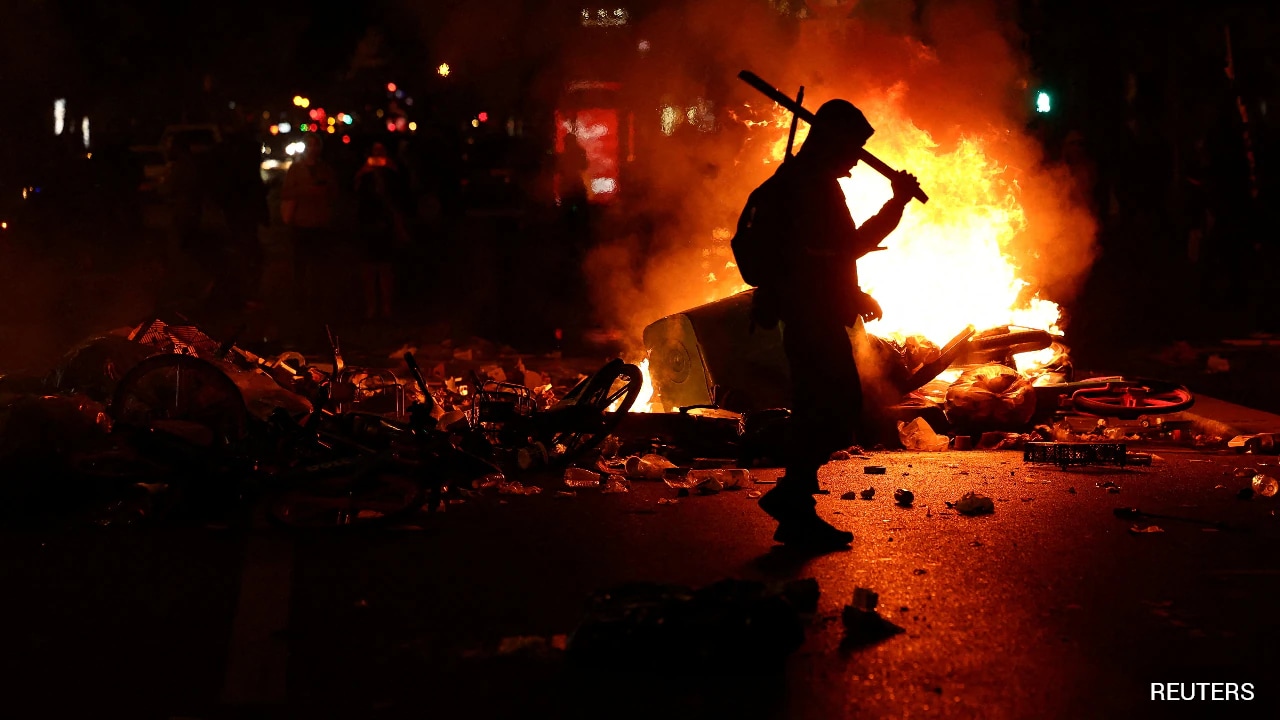
French civil unrest does not erupt out of thin air; it builds quietly inside underfunded classrooms, strained paychecks, and municipal halls that have absorbed decades of unresolved friction. When demonstrations that began over high school conditions and living costs spilled into violent street clashes, looting, and arson across French cities in the autumn of 2026, most headline summaries treated the nights of chaos as a sudden breakdown of public order. Having covered street protests, labor standoffs, and political crises in Europe for more than twenty years, I have learned that the cameras always arrive after the fuse has already burned down to the powder.
Look past the tear gas canisters and smashed shopfronts for a moment. What looks like an explosion of pure lawlessness is frequently the visible end of a slow administrative squeeze. Students blockading gates over missing teachers and sweltering classrooms, workers marching against stagnant purchasing power, and young people colliding with riot police are reacting to pressures that have accumulated long before a single window is broken.
How Classroom Friction Became a Street Flashpoint
Every major wave of French civil unrest needs a spark, and in September 2026 that spark appeared at a high school entrance rather than a highway roundabout or a suburban housing block. Teachers and students at Antoine de Saint-Exupéry High School in Créteil walked out over staffing shortages, turning a localized school frustration into a viral video moment that spread rapidly across social feeds. Within weeks, blockades and marches spread to hundreds of high schools across France, pulling in parents, university students, and major labor unions.
A high school blockade is easy to dismiss as routine teenage agitation. It is not.
In France, the public school system is supposed to serve as the Republic's great social elevator, a place where merit and shared civic standards level out differences in family wealth. When classrooms pack thirty to nearly forty students into rooms lacking air conditioning during heat waves, and when schools start the academic year missing teachers, that promise starts to feel hollow. Standardized test results sliding downward and anxiety around the university admissions portal Parcoursup add a sharp sense of personal stakes for teenagers who feel the ladder is being pulled up just as they try to climb it.
Once union confederations, left-wing activists, and ordinary families joined the marches over cost-of-living pressures, the movement widened fast. Peaceful marches and evening street violence are not the same thing, yet in crowded urban centers they often share the same geography. When night falls and hooded agitators or opportunistic looters move into the wake of large demonstrations, police lines become the thin barrier between organized grievance and unchecked destruction.
Why Standard Explanations Miss the Structural Squeeze
Conventional commentary on French civil unrest usually falls into two predictable camps. One camp blames agitators, social media provocation, and a collapse of deterrence; the other blames deep-seated social alienation and heavy-handed policing. Both points capture real pieces of what happens on the pavement, yet neither explains why frustrations keep jumping from one sector to another.
Consider the math behind public services and household budgets. When inflation bites into groceries, rent, and transport while public institutions struggle to hire staff or maintain aging buildings, everyday irritation turns political quickly. Even if we take a purely hypothetical example of a household with two working adults and two teenagers—say, a family watching grocery bills and utility costs climb while a high schooler loses class hours to teacher absences—the grievance is tangible long before any politician speaks. People feel squeezed at the checkout counter and in the school hallway at the exact same time.
There is also an institutional bottleneck that rarely gets enough attention during prime-time broadcasts. Local mayors, school principals, and beat officers sit right on the front line of national policy disputes, yet they often lack the budget flexibility or staffing depth to fix systemic shortfalls on their own. When anger boils over, municipal offices, public buildings, and neighborhood storefronts end up taking the physical punishment for national gridlock.
| Pressure Point | What Shows Up on the Street | Underlying Strain |
|---|---|---|
| Public Schools | High school blockades, banners, and student walkouts | Teacher vacancies, crowded classes, aging buildings, admissions stress |
| Household Costs | Union-backed marches and weekend demonstrations | Rising living costs and pressure on real purchasing power |
| Urban Policing | Clashes, tear gas, arson, and mass arrests | Escalation by violent groups, strained officers, trust deficits |
| Electoral Politics | Polarized slogans and rival political blame | Pre-election positioning ahead of national votes |
Notice how each layer feeds the next. A peaceful afternoon rally draws broad public sympathy when ordinary citizens see legitimate complaints about schools and wages. Then a few hundred people throw fireworks, petrol bombs, or bricks, thousands of shopfronts get hit or shut down, and suddenly the entire conversation shifts from policy fixes to emergency containment.
The Escalation Trap Between Protesters and Police
Anyone who has watched enough European street clashes recognizes the choreography of escalation. A crowd gathers with grievances. Tensions rise around cordons. Rumors spread online faster than officials can verify them. Within minutes, a confrontation that started over policy turns into a physical test of force.
In the autumn 2026 unrest, interior ministry figures and reporting pointed to waves of arrests, hundreds of officers injured across clashes, thousands of commercial claims filed over two intense days of unrest in mid-October, and investigations into serious attacks on security forces. Authorities pointed to radical far-left groups and violent troublemakers exploiting demonstrations to clash with police and pillage businesses, while union leaders and demonstrators insisted their core demands were peaceful and rooted in real hardship.
Both sides have an incentive to simplify the story. Hardline voices argue that only overwhelming force and harsher penalties restore order. Protest leaders and critics of the government argue that ignoring chronic social and economic strain guarantees the next flare-up.
Here is the uncomfortable truth: order without reform only buys time, while protest without boundaries destroys public support. Heavy policing can clear a boulevard by midnight, yet it cannot fill a vacant teaching post or lower a supermarket receipt the next morning. Conversely, when rioters torch public property or loot small businesses, they hand political opponents the exact images needed to drown out legitimate grievances.
Small Businesses Pay the Steepest Price
Lost in many macro-level debates is who absorbs the immediate financial shock when civil unrest turns destructive. When shops are ransacked, windows shattered, or streets shut down for days, it is rarely a faceless abstraction that suffers first—it is local shopkeepers, staff on hourly shifts, and neighborhood merchants trying to stay afloat. Insurance figures from the October 2026 flare-up underscored how heavily commercial property bore the brunt of the damage, with businesses accounting for the overwhelming share of insured losses.
Even when insurance covers part of the physical repair bill, lost foot traffic and fear among customers linger. A small business does not have a national treasury or a multi-year budget cycle to ride out repeated disruptions.
What History Tells Us About French Street Cycles
France has a long history of turning street mobilization into a central instrument of political pressure. From the yellow vest movement that began over fuel taxes and living costs to pension battles and urban riots sparked by police shootings, street conflict in France repeatedly exposes deep fissures between the state and parts of the citizenry.
Yet each episode carries its own texture. Some movements stay tightly focused on a single bill or tax; others—like the unrest that swept schools and city centers in late 2026—act like a magnet for overlapping frustrations, pulling together school staff, students, wage earners, political activists, and street agitators under one volatile roof.
What makes those broad, multi-grievance waves so hard for any government to manage is that there is no single negotiation table that settles everything at once. Offer a wage adjustment or a school measure, and another group argues it misses the mark. Crack down hard in the streets, and critics say the state is answering social distress with batons and tear gas.
Approaching the next flashpoint requires tracking three concrete indicators before the first barricade goes up: teacher and public-service staffing gaps, real household purchasing power, and early friction between municipal authorities and local protesters. Watch those three signals closely, because in France the street usually tells the truth long before the official statements catch up.