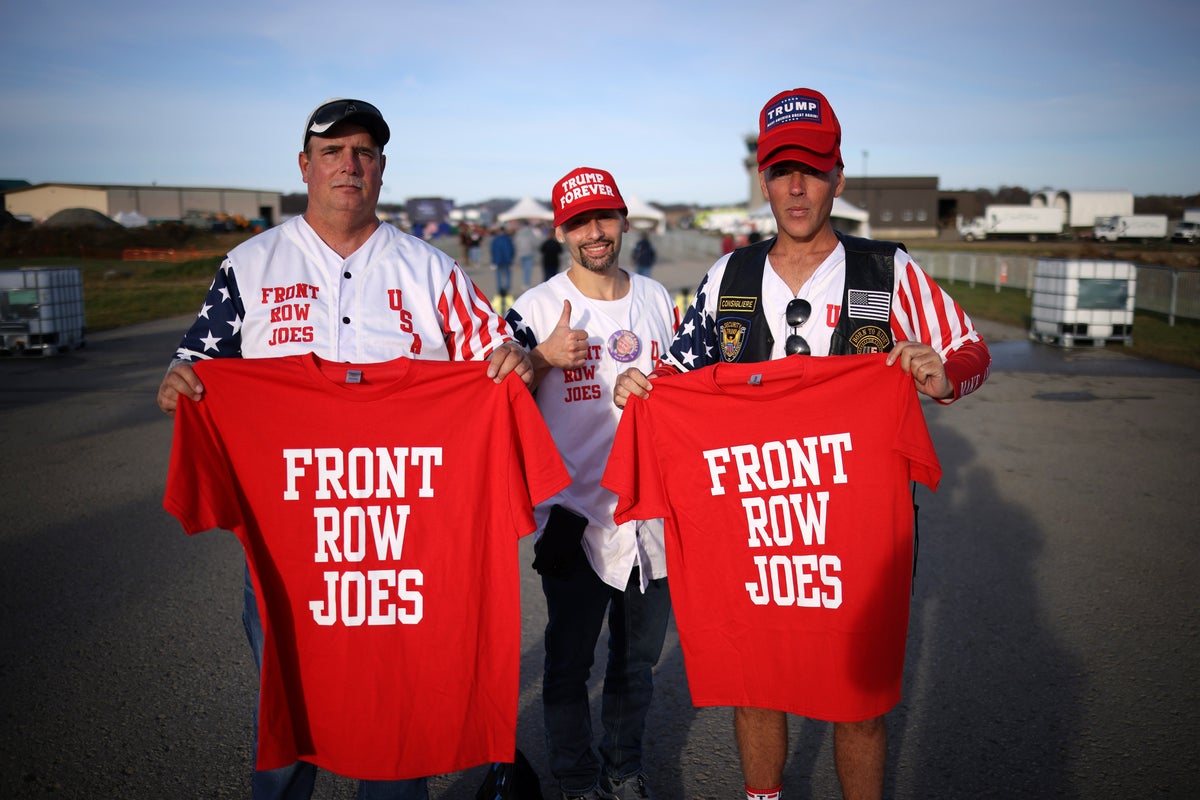
They sleep in parking lots. They wait on freezing sidewalks for five days straight. They spend tens of thousands of dollars on gas, motel rooms, and custom baseball jerseys.
Meet the Front Row Joes. Meanwhile, you can read similar events here: Why Western Human Rights Statements Fail the Uyghurs Every Single Time.
If you've watched a single televised Donald Trump campaign event over the past decade, you've seen them. They sit directly behind or in front of the podium, waving signs, wearing matching attire, and cheering every signature line. To political commentators and casual news viewers, they look like a dedicated fan club. To political scientists, they represent something far stranger.
They're political groupies. They travel the country in packs, treating campaign stops the exact same way Deadheads treated Grateful Dead tours in the 1970s. To explore the complete picture, check out the detailed analysis by Al Jazeera.
Yet despite their fierce, years-long loyalty, their relationship with the man on stage remains surprisingly one-sided.
The Wild World of Extreme Campaign Groupies
The network isn't a casual collection of voters who decide to attend a local speech when it happens to swing through town. It's a structured group of roughly 1,500 regulars from all corners of the country.
People like Sharon Anderson from East Tennessee have logged dozens upon dozens of events. Adam Radogna, a shop owner from Ohio, reported spending upwards of $30,000 on travel expenses just to maintain his spot near the front. They pack camping chairs, park themselves in downtown parking garages days in advance, and shower at local Planet Fitness locations between appearances.
Why do it?
If you ask the Joes themselves, it isn't about fame. They don't get VIP passes or backstage access. Trump's security detail doesn't usher them through secret doors. They stand in line just like everyone else. They just get there earlier than anyone else is willing to.
For these super-fans, the sacrifice is the whole point. Enduring 48 hours on a cold sidewalk in Rome, Georgia, or Casper, Wyoming proves their commitment. It elevates their participation from mere voting to a core personal identity.
The environment at these gatherings feels less like a traditional political speech and more like a hybrid between a rock festival and a megachurch service. The air smells like hot dogs and exhaust fumes. Merchants sell custom flags, hats, and bootleg t-shirts along miles-long entry lines. Inside the venue, the shared grievance against mainstream culture creates an instant bond among total strangers.
For many in the movement, these trips are the primary social structure of their adult lives.
What Trump Actually Thinks of His Front Row Superfans
Despite their legendary dedication, the political figure at the center of their world maintains a distant relationship with them.
From the podium, Trump regularly acknowledges the Front Row Joes with a wave or a quick shout-out. He points them out to the crowd, praising their loyalty and marveling at how many events they've attended. To the super-fans, those five seconds of recognition from the microphone make weeks of sleeping in cars worthwhile.
Behind the scenes, however, the campaign operations keep the group at arm's length.
Campaign staffers don't reserve seats for the group. They don't fund their travel or hand out special credentials. Trump himself rarely interacts with them outside of public rally settings. To the broader political apparatus, the Joes are reliable background dressing—a guarantee that the cameras will capture enthusiastic faces in the front row regardless of the weather or location.
Political insiders note that this dynamic is central to the movement's appeal. The campaign gets free, high-energy visuals for national television broadcasts. The fans get a sense of belonging to an exclusive brotherhood.
It's a strange transaction. The superfans offer total devotion, and the candidate offers a stage for their devotion to be seen.
The Endurance Required for Front Row Loyalty
Getting to the front row isn't just a matter of showing up early. It requires military-level logistics and extreme physical endurance.
- Camping Out: Members frequently arrive two to seven days before an event starts, setting up camp chairs and sleeping bags outside arenas.
- Car Sleeping: When municipal laws prevent sidewalk camping, members sleep in their cars in nearby parking lots, taking turns guarding their place in line.
- Sanitation Runs: Members coordinate shifts so individuals can run to local gyms or gas stations to wash up and use facilities without losing their spot.
- Financing the Road: Most Front Row Joes cover 100% of their own travel costs, using savings, side hustles, or retirement funds to pay for fuel and lodging.
The sheer physical tax of this routine limits the group mostly to retirees, small business owners, or individuals with flexible schedules. For them, the grueling travel schedule isn't a chore. It's an adventure.
Why Political Groupies Are Here to Stay
Political scientists who study American voting behavior point out that the Front Row Joes aren't just an anomaly. They represent a fundamental shift in how Americans consume politics.
Decades ago, voters expressed political identity through local precinct work, union meetings, or community dinners. Today, national politics has largely replaced local civic institutions. Political figures function less like traditional public servants and more like cultural symbols.
When politics becomes culture, fan culture naturally follows.
The Front Row Joes are simply the most visible manifestation of that reality. Just as sports fans buy season tickets and travel to away games, political super-fans invest their personal resources into physically being present where the action happens. The speeches are secondary. Most members can recite the standard points by heart. They go for the shared experience with fellow believers.
They go to feel seen.
How to Understand the Superfan Phenomenon
If you want to understand modern American campaigns, you have to look past the policy speeches and study the parking lots.
Understanding this subculture requires looking at three distinct layers:
- The Social Network: The rallies function as national reunions where friends who met on the road reconnect every few weeks.
- The Media Strategy: The visual of passionate, matching supporters in the front row creates a sense of momentum for television cameras.
- The Personal Validation: For the individual superfan, being recognized from the podium provides a level of validation that traditional political involvement can't match.
Whether the political era shifts or stays the same, the template for political super-fandom has been set. The strategy of building a traveling army of dedicated regulars will likely be copied by candidates across the political spectrum for decades to come.
To track this trend yourself during upcoming election cycles, pay attention to the crowds behind the speakers at major campaign stops. Look for the repeat faces, the matching apparel, and the sign-holders who arrived three days before the cameras did. You're looking at the future of political engagement in America.


