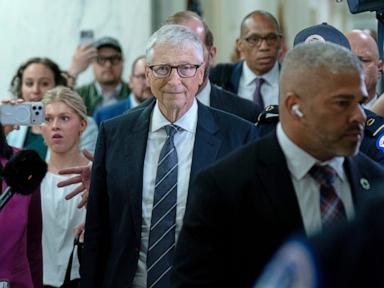
An external review into the Bill & Melinda Gates Foundation revealed that co-chair Bill Gates and senior executives met with convicted sex offender Jeffrey Epstein roughly 30 times between 2011 and 2014, continuing the engagements despite explicit safety and reputational concerns raised by foundation security and communications staff. Gates sought funding for a multi-billion-dollar global health fund that Epstein claimed he could cultivate through wealthy contacts. The internal warning signs were repeatedly set aside in pursuit of philanthropic capital, exposing deep vulnerabilities in how massive non-profit institutions manage risk, governance, and executive oversight when high-value opportunities emerge.
The Pursuit of Global Capital Overrode Executive Risk Protocols
The financial engineering behind global philanthropy operates on relationships. When Jeffrey Epstein pitched a massive global health fund to the Gates Foundation in 2011, he was offering direct access to sovereign wealth funds and ultra-high-net-worth individuals. Epstein had already served a prison sentence in Florida following a 2008 conviction for procuring an underage girl for prostitution. That conviction was public record. Yet the promise of securing billions for global health initiatives created an institutional blind spot.
Internal documentation from the external review demonstrates that staff members voiced discomfort early in the relationship. Communications team members raised red flags regarding the public relations disaster of associating a world-leading charity with a registered sex offender. Security details expressed reservations about travel to Epstein’s residences in New York, Palm Beach, and the U.S. Virgin Islands.
Those warnings were treated as secondary operational friction rather than structural stop signs. Gates and a select group of top advisors continued to travel to Epstein's Manhattan townhouse and host him at private events.
The institutional mechanics were straightforward. Gates wanted to scale philanthropy beyond his personal fortune by pulling in external capital. Epstein presented himself as an indispensable financial broker who could structure a complex vehicle to collect commitments from foreign governments and Wall Street magnates. The sheer scale of the ambition diluted the application of standard due diligence protocols.
+-----------------------------------------------------------------------+
|                       BREAKDOWN OF ENGAGEMENT                         |
+-----------------------------------------------------------------------+
| Total Documented Meetings | ~30 interactions (2011–2014)              |
| Key Locations             | New York City, Palm Beach, Strasbourg     |
| Primary Stated Goal       | Multi-billion-dollar global health fund   |
| Internal Warnings Raised  | Security staff, Communications leadership |
| Institutional Outcome     | Governance overhaul, external audit       |
+-----------------------------------------------------------------------+
Governance Failures at the World's Largest Charity
The structure of major private foundations often grants founders extraordinary latitude. At the Gates Foundation, power was concentrated tightly at the top. The board of trustees during the period in question lacked the structural independence needed to veto high-level meetings arranged directly by the co-chair.
This creates a governance hazard. Standard corporate entities rely on compliance officers who hold the power to halt business dealings that violate ethical guidelines or expose the entity to severe legal liability. In private philanthropy, particularly entities bearing a founder's name, compliance departments often operate as advisory bodies rather than regulatory gates.
- Risk assessment protocols were bypassed. Meetings were classified as private calendar events rather than official foundation business, effectively side-stepping standard vetting.
- Advisory warnings carried no veto power. Staff who flagged Epstein’s criminal background could only register concern; they lacked the institutional authority to block executive travel or calendar commitments.
- Financial structures were pursued without legal clearance. Discussions about the proposed multi-billion-dollar health fund progressed deep into planning phases before formal compliance checks were fully applied.
When a founder operates above the standard compliance hierarchy, risk assessment breaks down. Staff members lower down the chain learn to stop pushing back when their warnings produce no operational changes. The review highlighted a culture where employees felt their primary task was to facilitate executive objectives rather than police them.
The Financial Vehicle That Never Materialized
Epstein’s pitch hinged on creating a philanthropic investment fund that would collect management fees, a portion of which would theoretically flow toward global health causes like polio eradication and vaccine distribution. It was an unconventional structure for charitable fundraising.
It was also a phantom.
Epstein did not possess the financial backing or institutional credibility to deliver the foreign capital he promised. Wall Street firms and sovereign funds approached by the group showed little appetite for an offshore philanthropic fund structured by a convicted felon. Gates Foundation financial officers eventually realized the proposed fund was unworkable and structurally soundless.
By the time formal discussions ceased around 2014, dozens of interactions had already taken place. Epstein used those meetings to burnish his own reputation, leveraging his proximity to Gates to restore his standing among global elites. The foundation received zero dollars from the interactions.
"The association provided immediate social laundering for Epstein while offering the foundation nothing more than unfulfilled promises of third-party capital."
👉 See also: The Ghost at the Gas Pump
The asymmetric value of these meetings was obvious in hindsight. Epstein traded on prestige. Gates traded on an unvetted promise of expanded funding.
Rethinking Executive Oversight in Big Philanthropy
The fallout from the external review has forced an overhaul of how the Gates Foundation handles high-level networking, travel, and personal meetings involving its leadership. The foundation expanded its board of trustees, adding independent members designed to dilute the absolute authority previously held by the core family unit and close advisors.
These structural changes reflect a broader realization across the philanthropic sector: large non-profits operate with the global footprint and influence of multinational corporations, yet often retain the informal governance of small family trusts.
Key Governance Reforms Implemented Following the Review
- Independent Board Expansion: The addition of external trustees with explicit authority to review executive conduct and institutional risk management.
- Mandatory Vetting for Executive Contacts: Removing the distinction between "personal" and "official" meetings when those interactions touch upon foundation strategy or prospective fundraising.
- Protected Whistleblower Channels: Establishing direct lines of communication between compliance staff and the board’s audit committee, bypassing executive management entirely.
When an organization manages tens of billions of dollars dedicated to public health, reputational damage directly threatens operational efficacy. Partner governments hesitate to sign bilateral agreements. Public trust in health interventions declines. Staff morale erodes.
The findings of the external review underscore a fundamental reality about institutional power. No amount of good intent or global ambition justifies stripping away the safeguards designed to keep an organization aligned with its basic ethical duties. The failure to heed internal staff warnings was not a failure of intelligence; it was a failure of structure.