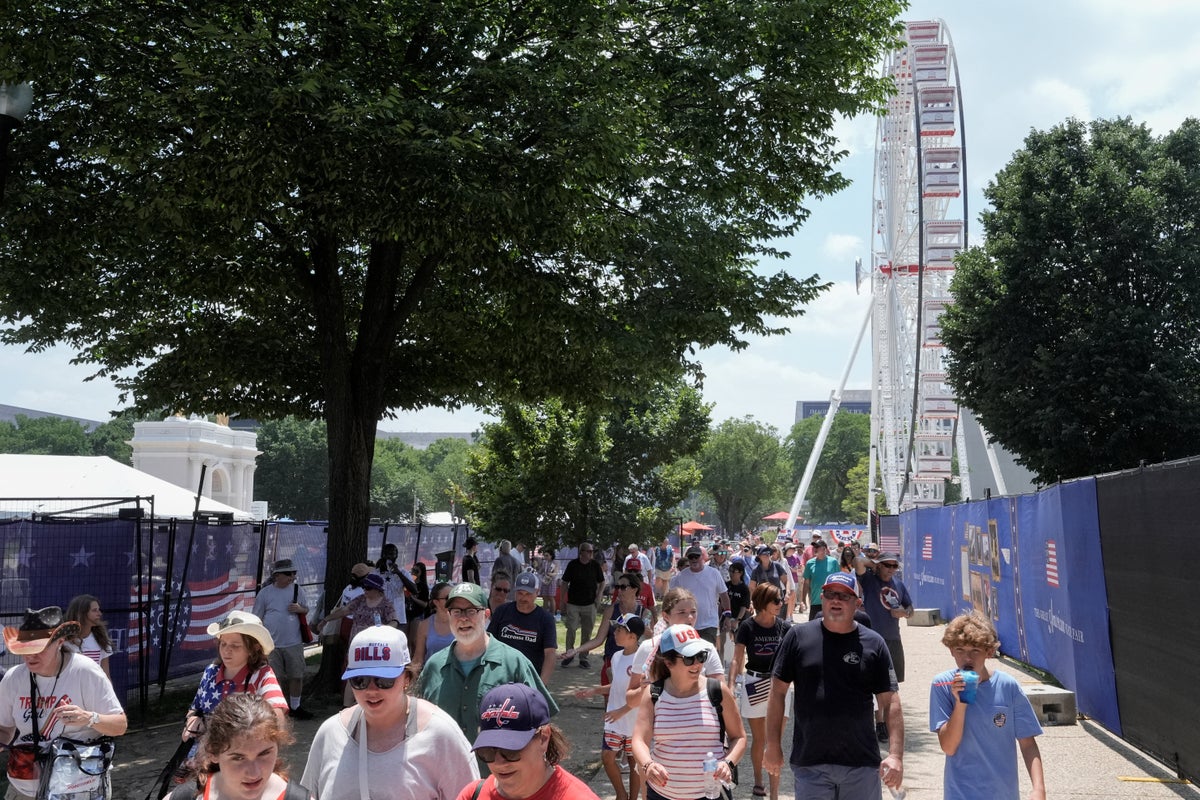
The physical shutdown of the Freedom 250 Great American State Fair on the National Mall on Friday afternoon was blamed entirely on a historic heatwave pushing temperatures past 100 degrees. That is only half the story. The sudden evacuation of the Mall under scorching skies was the predictable climax of an institutional failure months in the making, combining severe logistical oversights, infrastructure collapse, and deeply flawed attendance assumptions. Organizers shuttered the gates until evening, citing public safety, but the multi-day event had already begun coming apart at the seams due to internal mismanagement and technical dysfunction.
It was a total operational failure. When the mid-day heat index spiked past 110 degrees, the temporary electrical grids deployed across the National Mall buckled under the load of thousands of air conditioning units trying to keep exhibition booths cool.
The power died completely. Industry insiders familiar with large-scale Washington events point out that organizers failed to secure adequate heavy-duty industrial generators, relying instead on overstretched commercial equipment that failed as soon as the humidity peaked. Without power, the fair’s premier attractions ground to a halt. One eyewitness reported that the main ferris wheel stopped turning entirely, leaving the few early visitors stranded in metal baskets under the baking sun before they could be evacuated. Vendors watched helplessly as thousands of dollars in perishable food inventory ruined within hours, including entire shipments of ice cream that melted when the refrigeration systems lost power.
Security protocols exacerbated the misery. Unlike traditional regional fairs where attendees can carry personal coolers or insulated water flasks to ward off heat stroke, this event enforced strict federal security perimeters that barred outside liquids. Visitors were forced to queue at a limited number of official hydration points, which quickly ran out of water as the supply chain collapsed under the sudden demand.
The heat merely exposed the structural emptiness of the entire venture. Conceived as a grand celebration for America's 250th anniversary of independence, the fair was built around a rigid organizational philosophy that assumed ideology alone could drive massive logistical operations. Insiders within the planning committees reveal a deep sense of panic that had been building days before the opening gates. Organizers adopted a strict mentality that presumed crowds would simply materialize based on sheer political branding, completely ignoring standard regional outreach, institutional ticket distribution, or basic weather contingencies.
The numbers did not lie. Aerial photographs taken earlier in the week revealed vast, empty swathes of gravel and grass where tens of thousands of citizens were projected to stand. White House officials reportedly scrambled to delete early crowd photographs after internal friction over the visibly sparse turnout, choosing to blame media distortion rather than addressing the lack of basic infrastructure like shade tents, misting stations, or accessible transport options.
National transport networks offered no help either. Amtrak canceled dozens of Northeast Corridor trains leading into Washington due to heat-related track warping, cutting off the main artery for out-of-state visitors who had intended to travel for the holiday weekend. Those who did arrive found a venue completely exposed to the elements, devoid of natural tree canopies or artificial cooling structures.
The crisis now shifts directly to the planned Saturday evening fireworks and address on the National Mall. Public safety officials are privately warning that continuing to restrict personal coolers while offering minimal shade infrastructure during a sustained heatwave is a recipe for a mass casualty heat illness event. Changing the momentum of a multi-million dollar public operation in less than twenty-four hours is nearly impossible, leaving organizers with a stark choice between scaling back the event or risking total public health chaos under the midday sun.