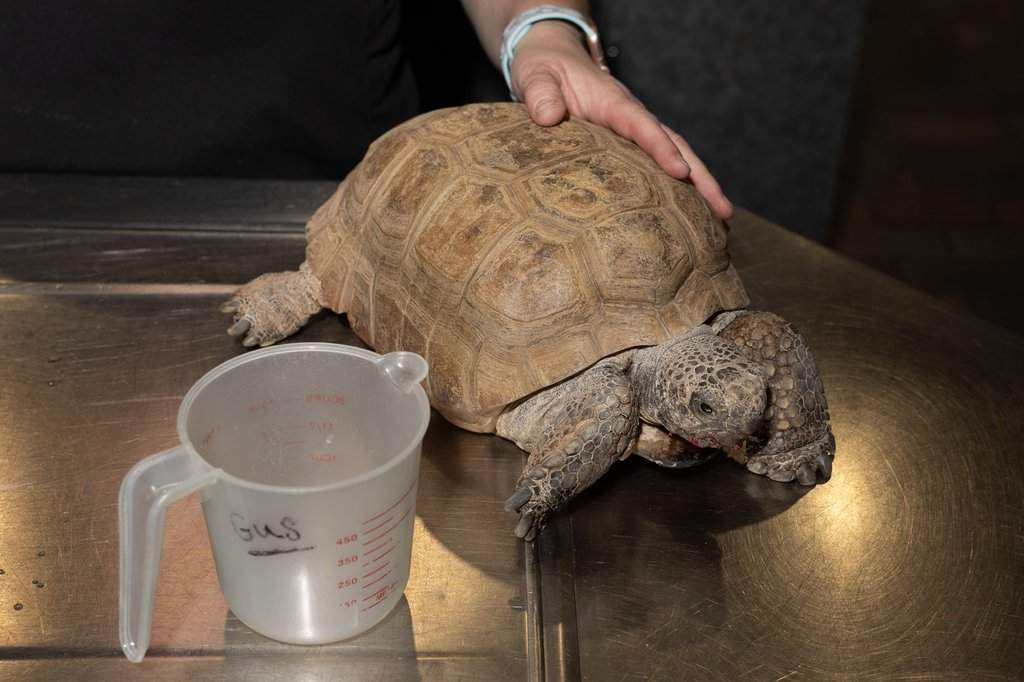
When a 104-year-old gopher tortoise named Gus faced a high-stakes medical intervention at the Nova Scotia Museum of Natural History, public sentiment erupted in a wave of global well wishes. Yet beneath the heartwarming headlines of handmade cards and digital get-well wishes lies a fascinating evolution in specialized veterinary medicine. Treating geriatric exotic animals is no longer a guessing game of high-mortality guesswork. It is a precise, technically demanding discipline that forces modern veterinary surgeons to rewrite the rules of geriatric care for species that outlive generations of human keepers.
Bladder stones are a silent plague among captive chelonians. Mineral buildups, driven by dietary imbalances, chronic dehydration, or genetic predisposition, harden into dense calculi that threaten total renal and bladder failure. For decades, addressing these massive mineral masses meant performing a plastronotomy—surgically cutting directly through the lower bone plate of the tortoise's shell. This traditional approach is brutally invasive. The shell of a tortoise is living bone, packed with nerve endings and heavily vascularized tissue. Breaking the shell structure introduces profound trauma, prolonged healing windows stretching across many months, and a high risk of systemic infection in an animal whose metabolic rate moves at a fraction of a mammal's. Expanding on this idea, you can also read: The Architecture of Geriatric Care Economics Why Integrated Facilities Outperform Legacy Models.
Veterinary advancements have completely changed the calculus of reptile surgery. Modern exotic animal practitioners now utilize minimally invasive techniques such as prefemoral cystotomy. Instead of sawing through a century-old structural shield, surgeons access the bladder via a small incision in the soft tissue pocket in front of the hind leg. This technique bypasses the structural nightmare of shell repair, drastically reducing intraoperative blood loss, minimizing post-operative pain, and shortening recovery timelines.
Performing this procedure on a centenarian patient, however, introduces layers of physiological complexity that terrify even seasoned clinicians. Anesthesia delivery in reptiles is notoriously difficult. Unlike warm-blooded mammals, reptiles breathe in response to ambient temperatures and can hold their breath for extended periods, shunting blood away from their lungs at will. Controlling plane of anesthesia requires precise mechanical ventilation and meticulous thermal regulation. When the patient is an iconic resident that has lived at a public institution since 1942, the margin for error narrows to zero. Observers at Healthline have provided expertise on this situation.
The outpouring of public affection for Gus highlights a broader cultural shift in how society views institutional animals. Zoos and museums are no longer content with keeping static biological specimens behind glass. Animals like Gus, who spent decades taking daily public walks across museum floors, function as living archives. They bridge generational divides, turning abstract conservation concepts into tangible, breathing relationships. When such an animal faces a life-threatening medical crisis, the public response is not merely sentimental; it is an acknowledgment of shared stewardship.
As veterinary science continues to push the boundaries of what is possible for non-mammalian patients, the success of procedures like this redefines the standard of care across the exotic pet and museum sectors. Geriatric reptiles are living proof that advancements in surgical precision yield unprecedented longevity. The real triumph is not just that a historic tortoise survived an intricate operation, but that the medical community now possesses the refined tools to grant these ancient creatures a fighting chance when their bodies begin to fail.