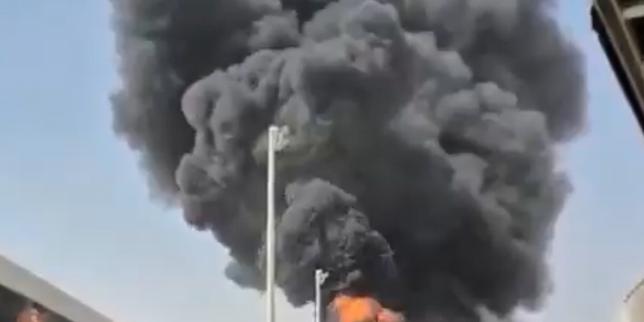
The warning sirens along Nepal's northern river corridors do not sound for long before the water arrives. When a catastrophic slope failure on the Lirung massif triggered a massive rock-ice avalanche, the resulting debris flow tore down the valleys of Rasuwa and Nuwakot with terrifying speed. Witnesses described walls of mud and water travelling at highway speeds, wiping out homes, bridges, and hydropower facilities in mere minutes. For communities already grappling with the wreckage of prior flash floods, the repeated evacuations are not temporary disruptions. They are symptoms of a profound ecological realignment playing out across the Hindu Kush Himalaya.
Geography dictates destiny in this region, and the topography of the roof of the world is shifting beneath the feet of its inhabitants. Global heating warms high-altitude ice masses at rates far exceeding the planetary average. As glaciers retreat, they leave behind unstable moraine dams holding back millions of cubic meters of meltwater. When these natural barriers fail, or when massive rock-ice avalanches plunge into high-altitude lakes, the resulting Glacial Lake Outburst Floods (GLOFs) transform steep river channels into destructive torrents.
Government agencies and international observers face an uncomfortable truth. Standard disaster response playbooks, built around seasonal monsoon forecasting and rainfall tracking, fail completely against high-altitude geological collapses. A heavy monsoon brings rising river levels over hours or days, allowing authorities time to mobilize. A glacial outburst or debris avalanche acts like an inland tsunami. It sends a turbulent slurry of boulders, ice, and silt racing down narrow gorges with virtually no warning.
Downstream communities live in a state of chronic anxiety. In settlements along the Bhote Koshi and Trishuli river basins, residents who spent years rebuilding after past shocks find their new houses swept away a second time. Livelihoods tied to local trade, farming, and micro-enterprises vanish overnight under meters of grey silt. The destruction of local infrastructure, including dozens of bridges and major stretches of vital roadways, isolates mountain communities from medical care and economic lifelines. Transporting reconstruction materials from Kathmandu becomes an expensive, logistically complex obstacle course.
Rebuilding requires more than emergency food packages and temporary tarps. Engineers and hydrologists argue that long-term survival demands a complete redesign of Himalayan infrastructure siting. Reconstructing homes and commercial buildings on low-lying river terraces guarantees future tragedies. Yet, moving entire settlements away from ancestral lands collides with deep economic and cultural ties to the river valleys.
At the policy level, a stark mismatch exists between local vulnerability and global responsibility. Mountain nations like Nepal contribute a negligible fraction of global greenhouse gas emissions, yet they absorb the violent consequences of planetary warming. International funding appeals for post-disaster recovery routinely fall short of actual needs, leaving local governments to stretch thin budgets across continuous emergency response cycles.
Early-warning systems offer a glimmer of hope, but they require technological upgrades that can detect seismic tremors from slope failures rather than just downstream water levels. Sensor arrays placed near high-risk glacial lakes can buy precious minutes, but minutes mean little if evacuation routes lead only to other unstable slopes.
As winter approaches, thousands of displaced families remain in temporary camps, racing against freezing temperatures while wondering where the next wall of water will strike. The mountains are no longer a stable backdrop to rural life. They are dynamic, unpredictable hazards demanding an unprecedented level of engineering foresight and international accountability.