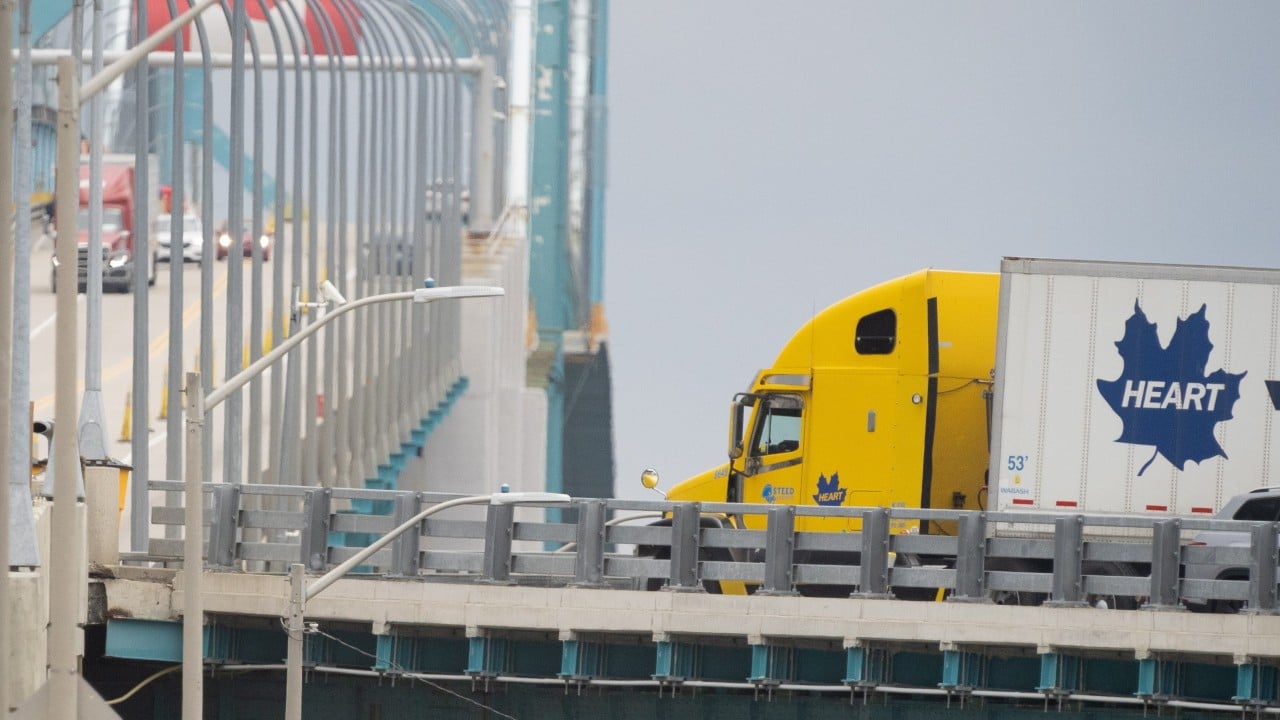
President Donald Trump’s announcement of a planned 50% tariff on Canadian automobiles, light and heavy trucks, automotive components, and steel starting January 1, 2027, marks an aggressive escalation in an ongoing trade conflict. Following the sudden collapse of bilateral trade negotiations, the administration has signaled that North American supply chains, deeply integrated over decades of free trade, face a structural upheaval. While the public rhetoric focuses on trade deficits and national sovereignty, the mechanics of these impending levies expose a complex web of economic friction that will fundamentally alter how vehicles are built, priced, and sold across the continent.
The Mechanics of the Border Tax
Tariffs are frequently misunderstood as a direct penalty paid by a foreign treasury. Decades of reporting have obscured a basic fiscal reality. The invoice for a border tax is settled at the port of entry.
For an automotive component crossing from Ontario into Michigan, the entity responsible for coughing up the duty is the American importer of record. This means automotive dealerships, assembly plants, and tier-one suppliers operating on U.S. soil absorb the initial financial blow.
When the levy hits 50% on parts and fully assembled vehicles, the financial burden cascades downstream. A Michigan showroom importing a finished vehicle or critical powertrain components cannot simply absorb a half-value tax without passing the cost directly to the American consumer.
The policy functions less as a penalty on Ottawa and more as a massive structural tax on domestic automotive distribution networks. It redefines the cost of doing business for companies that rely on cross-border manufacturing efficiency.
The Myth of Instant Reshoring
The stated policy objective is straightforward: compel manufacturers to build within the United States to secure zero tariffs. Yet industrial manufacturing does not operate like a light switch. Modern vehicle assembly depends on hyper-specialized component ecosystems that take years to design, finance, and construct.
Consider a hypothetical example to understand the physical constraints of the sector. A modern transmission plant requires millions of dollars in precision robotics, specialized metallurgical foundries, and a localized workforce trained in micro-tolerances. Replicating that infrastructure inside the U.S. border requires a multi-year timeline.
During the interim period between announcement and execution, automakers face an impossible dilemma. They can pay the punitive 50% levy, severely compressing their margins, or attempt to decouple from Canadian suppliers who provide essential parts that lack immediate domestic substitutes.
Industry veterans note that automotive supply chains cross national boundaries multiple times before a vehicle ever rolls off the line. Raw steel moves south, stamped parts move north for specialized coating, and completed sub-assemblies return south for final installation. Introducing a 50% penalty into a loop like that creates immediate operational paralysis.
The Retaliatory Spiral
Ottawa has made it clear that unilateral pressure will meet direct resistance. Canadian Prime Minister Mark Carney characterized the trade actions as an aggressive assault, warning that Canada possesses the resilience and the strategic planning to fight back.
With retaliatory measures scheduled to target American goods dollar-for-dollar, the friction threatens to expand beyond the automotive sector into agriculture, energy, and consumer goods. Trade wars rarely remain contained within a single industry. Once retaliatory cycles begin, political incentives on both sides favor escalation over compromise.
The political rhetoric from Washington asserts that the United States can afford to sever economic ties entirely, anchored by the premise that Canada relies more heavily on American consumers than vice versa. Yet this perspective ignores the acute pain localized American manufacturing hubs will experience when assembly lines stall for lack of specialized northern parts.
Automotive assembly lines in the Midwest operate on strict just-in-time inventory models. Halting the flow of even a single obscure bracket or wiring harness can shut down an entire plant within hours.
As the calendar ticks toward January, the industry stands at a precarious crossroads. Automakers must choose between betting on a last-minute diplomatic rescue or radically restructuring supply chains built over the course of half a century. The true cost of this trade rupture will not be measured in diplomatic talking points, but in the final sticker price on dealership lots and the stability of the industrial backbone of North America.