The Air Force's Industrial Bottleneck
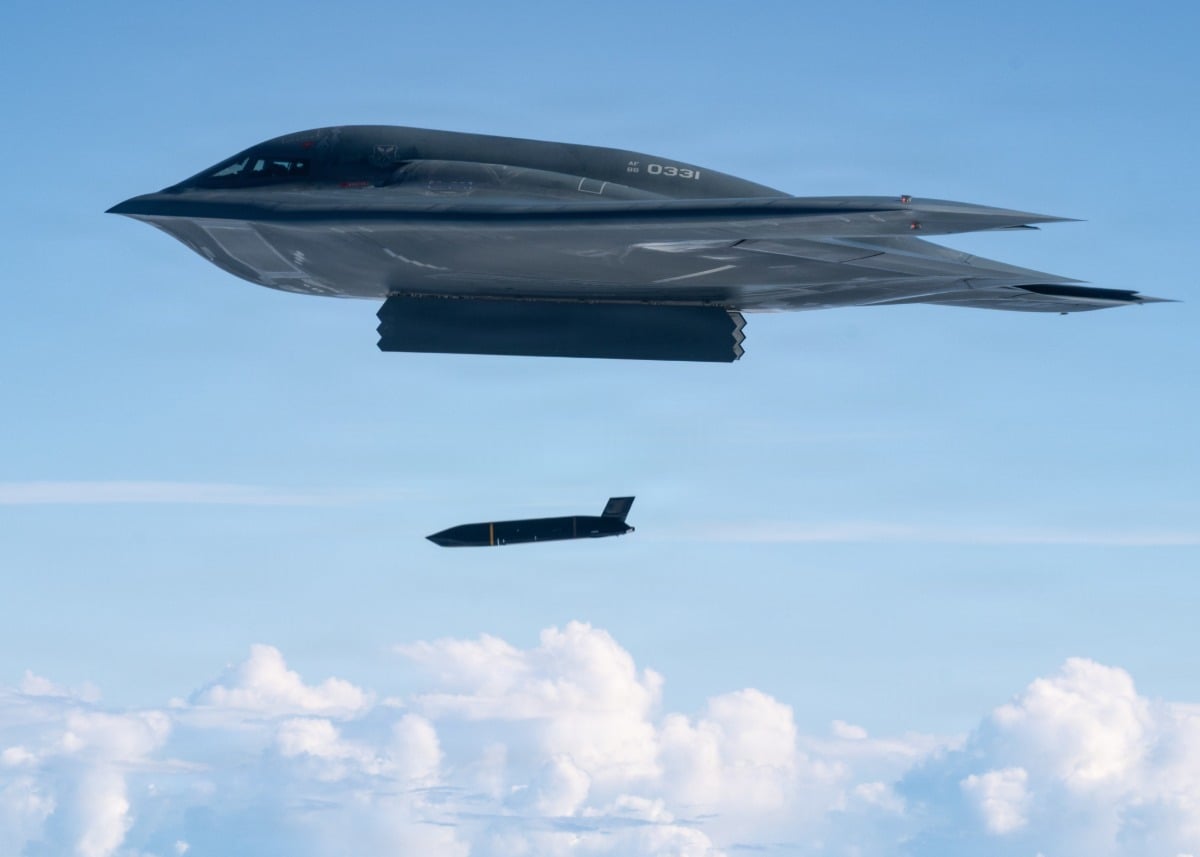
The U.S. Air Force wants 16,450 long-range precision missiles, and it wants them immediately. The procurement target spans critical munitions, including Joint Air-to-Surface Standoff Missiles (JASSM) and Long Range Anti-Ship Missiles (LRASM). The core motive is straightforward: military planners face severe stockpile deficiencies in the Indo-Pacific region, where contested airspace makes close-range strikes suicidal. Yet behind the urgent demand lies a stark reality. Asking for thousands of complex, GPS-denied precision weapons on paper is simple. Manufacturing them fast enough to deter a major conflict is a completely different challenge.
The Pentagon's aggressive buying plan isn't just about beefing up inventories. It represents a massive shift in how the military prepares for high-intensity warfare against peer adversaries. For two decades, counter-insurgency operations demanded small volumes of specialized precision weapons. A high-end conflict requires massive salvos to penetrate sophisticated anti-access/area-denial (A2/AD) networks.
Why the Production Lines Are Stalled
Defense contractors cannot simply press a button to double production. Modern anti-ship and standoff missiles rely on intricate, single-source supply chains that span hundreds of sub-tier suppliers.
Consider a hypothetical missile production line. If a single machine shop that manufactures specialized radar-absorbent tail fins hits a bottleneck, the entire assembly facility halts. Thousands of workers wait on one part.
- Microelectronics dependencies: Specialized radiation-hardened chips face months-long procurement backlogs.
- Solid rocket motor shortages: Industrial capacity for mixing, casting, and curing solid propellants remains bottlenecked across the domestic defense base.
- Tooling limitations: Advanced composite airframes require custom tooling rigs that take over a year to build and validate.
Defense primes have operated under lean manufacturing models for years. They kept inventory low to maximize profits and satisfy Wall Street. That efficiency eliminated the surge capacity required for sudden, massive scale-ups.
The Cost of Stockpiling Standoff Munitions
Precision weapons carry exorbitant price tags. A single JASSM-ER costs over $1 million, while an LRASM pushes past $3 million. Securing over 16,000 of these weapons requires tens of billions of dollars upfront.
Budget fights in Congress routinely disrupt multi-year procurement contracts. Defense contractors hesitate to build new factories or buy raw materials without multi-year buying commitments from the government. Year-to-year funding cycles force suppliers to build in small, inefficient batches.
Multi-year procurement contracts give suppliers the financial stability to invest in tooling, expand footprint, and hire workforce ahead of time. Without guaranteed long-term buys, industry will not absorb the risk.
| Missile Variant | Primary Role | Estimated Unit Cost | Key Challenge |
|---|---|---|---|
| JASSM-ER | Land Attack Standoff | ~$1.2 Million | Supply chain components for low-observable airframes |
| LRASM | Maritime Anti-Ship Strike | ~$3.5 Million | Complex multi-sensor seeker integration |
| SiAW | Suppression of Enemy Air Defenses | ~$1.5 Million | Rapid flight testing and integration schedules |
The Vulnerability of Logistics in Contested Airspace
Buying the missiles is only half the battle. Getting them into the launchers during a conflict presents an extraordinary logistical nightmare.
Long-range air-launched missiles must be shipped, stored, maintained, and loaded under strict security protocols. Strategic air bases in the Pacific sit directly within range of enemy ballistic missiles. Moving thousands of heavy munitions to dispersed island bases requires massive airlift and sealift capacity.
If ground crews lack specialized loading equipment or secure storage bunkers, the missiles become target practice on the tarmac before ever flying a mission.
Can Mass Procurement Really Deter Conflict
Military leaders bet that large, visible stockpiles act as a deterrent. If a potential adversary knows American bombers carry thousands of long-range anti-ship weapons, the cost of aggression spikes dramatically.
Yet deterrence depends entirely on credibility. An empty promise of 16,000 missiles five years from now does little to deter an action happening next month. Until defense suppliers expand production lines, clear microelectronics bottlenecks, and secure propellant supplies, the Air Force's massive order remains a ambition on paper rather than a ready inventory in the field.