Congressional Democrats have formally escalated their demands for a dedicated special counsel to investigate the historical and financial intersections between Donald Trump and convicted sex offender Jeffrey Epstein. While headline-grabbing letters to the Department of Justice dominate the news cycle, the core of this maneuver is actually about institutional insulation. Lawmakers are attempting to bypass standard executive branch friction by forcing the appointment of an independent prosecutor with statutory authority to subpoena sealed grand jury transcripts, unredacted flight logs, and complex corporate records that have remained locked away through multiple administrations.
Washington loves a good letter. Every few months, a coalition of House or Senate members drafts a sternly worded demand to the Attorney General, calls a press conference on the Capitol steps, and watches cable news chew on the soundbites for forty-eight hours before moving on to the next outrage. If you have covered the Justice Department long enough, you learn to separate the theatrical noise from the actual mechanics of federal prosecution.
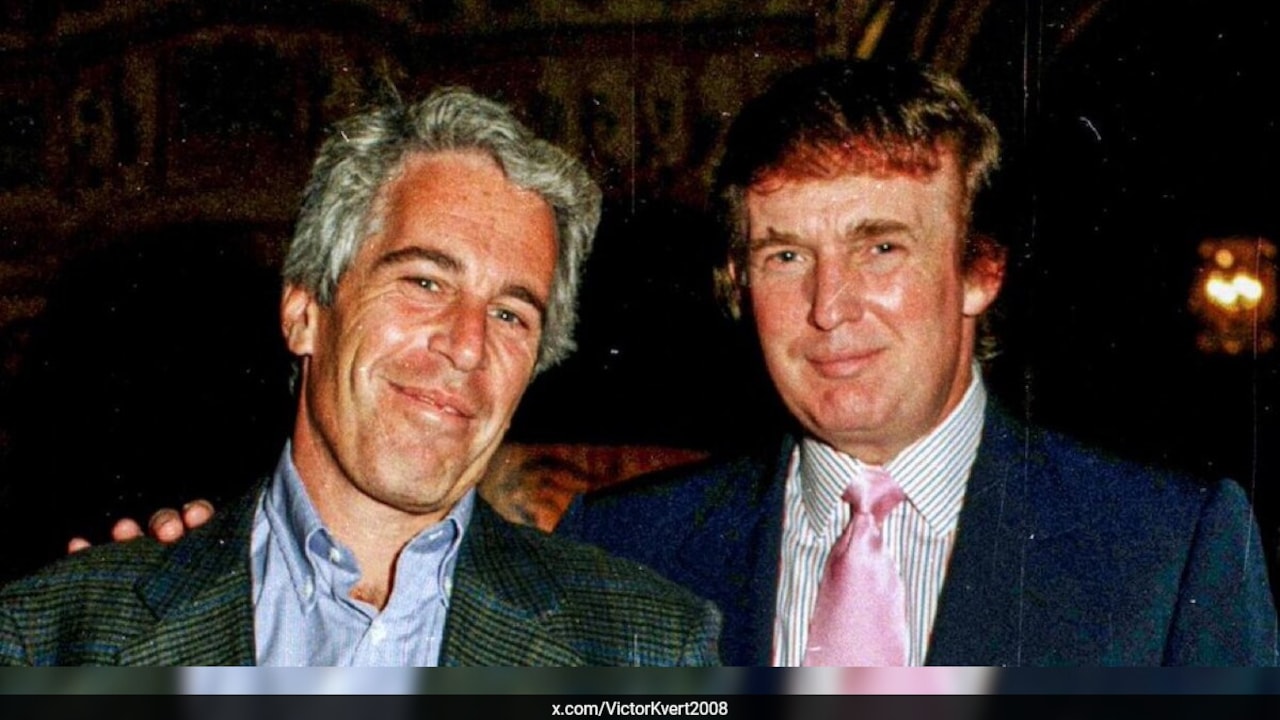
This push, however, sits right on the fault line between political theater and a genuine legal bottleneck. The public record surrounding Trump and Epstein has been dissected for years, yet massive blind spots persist. We know they moved in the same Palm Beach and Manhattan social circles during the 1990s and early 2000s. We have seen the archival video from Mar-a-Lago in 1992 and read Trump’s infamous 2002 quote to New York magazine describing Epstein as a "terrific guy" who liked women "on the younger side." We also know they had a public falling-out around 2004, reportedly over a Palm Beach real estate auction, long before Epstein’s first arrest in Florida.
What we do not have is a complete, unredacted accounting of the federal government’s own files on how Epstein operated, who protected him, and whether any high-profile associates were shielded from scrutiny during his 2008 non-prosecution agreement or his 2019 federal indictment.
Why Standard DOJ Oversight Hits a Brick Wall
To understand why lawmakers are screaming for a special counsel rather than just holding another committee hearing, you have to look at the statutory handcuffs placed on Congress. Congressional committees have oversight authority, not prosecutorial power. When a House committee subpoenas sensitive law enforcement files from the Department of Justice, the DOJ routinely invokes ongoing investigative privileges, grand jury secrecy under Federal Rule of Criminal Procedure 6(e), or privacy protections for third parties.
A special counsel changes the rules of engagement. Under 28 CFR Part 600, the regulations governing special counsels, the Attorney General can appoint an outside prosecutor when an investigation presents a conflict of interest for the Department of Justice or other "extraordinary circumstances," and when appointing an outside prosecutor would be in the public interest.
Once appointed, a special counsel operates with the full power of a United States Attorney. They do not have to beg the DOJ for documents; they sit inside the house. They can convene grand juries, issue criminal subpoenas, compel testimony from reluctant witnesses, and examine unredacted FBI 302 interview summaries that would never survive a Freedom of Information Act (FOIA) request or a congressional document production.
The Architecture of Secrecy
The Epstein paper trail is uniquely fragmented across jurisdictions. You have the 2008 deal brokered in the Southern District of Florida by then-U.S. Attorney Alexander Acosta—who later served as Trump’s Secretary of Labor before resigning in 2019 over his handling of that exact case. You have the 2019 sex trafficking prosecution brought by the Southern District of New York (SDNY), which abruptly ended when Epstein died in a Manhattan jail cell. And you have sprawling civil litigation, including the Giuffre v. Maxwell defamation suit, which has released thousands of pages of depositions in drips and drabs.
Each of these buckets is governed by different protective orders and sealing rules. A standard congressional inquiry gets bogged down in years of litigation over whether lawmakers can even view the underlying evidence. Democrats pushing for a special counsel are betting that a dedicated federal prosecutor could cut through those jurisdictional walls in months rather than years.
The Political Calculus Behind the Timing
Timing in Washington is never an accident. Demanding a special counsel is a high-stakes gamble that cuts both ways, and veteran operatives on both sides of the aisle know it.
For Democrats, the demand serves an immediate strategic purpose: it forces the Department of Justice onto the defensive while keeping a deeply damaging association in the public consciousness. By framing the issue around institutional accountability and the protection of trafficking victims, lawmakers elevate a tabloid-adjacent scandal into a question of constitutional governance. Even if the Attorney General declines to appoint a special counsel—which is historically the most likely outcome when the request comes from outside the department—the refusal itself becomes a talking point. Lawmakers can argue that the justice system operates on two tiers, one for ordinary citizens and another for the ultra-wealthy and politically connected.
Yet there is a massive flaw in this strategy, and it comes down to precedent.
The special counsel mechanism has been deployed so frequently over the last decade that it is suffering from severe institutional fatigue. From Robert Mueller to John Durham, Jack Smith, and Robert Hur, the American public has watched one special counsel investigation after another get swallowed whole by partisan warfare. Instead of delivering a definitive, universally accepted set of facts, these probes almost always end up becoming Rorschach tests where voters see whatever they already believed before the investigation started.
The Weaponization Counter-Argument
Republicans and Trump’s legal allies have already built a well-oiled rhetorical machine designed to neutralize this exact line of attack. Their counter-argument relies on three main pillars:
- Lack of a Criminal Predicate: Under DOJ guidelines, a criminal investigation requires a valid factual predicate—credible evidence that a federal crime may have been committed. Critics argue that social proximity in the 1990s, without specific, corroborated allegations of criminal conduct tied to Epstein’s trafficking ring, does not meet the threshold for launching a massive federal probe.
- Selective Enforcement: GOP lawmakers point out that Epstein cultivated relationships with dozens of powerful figures across the political and financial spectrum, including former President Bill Clinton, prominent scientists, and Wall Street executives. Singling out one political figure for a special counsel while ignoring others looks less like blind justice and more like targeted lawfare.
- Exhausted Jurisdictions: Trump’s defenders emphasize that both the SDNY and the FBI already conducted exhaustive investigations into Epstein’s network following his 2019 arrest, seizing hard drives, financial ledgers, and flight logs. If actionable criminal evidence against Trump existed in those vaults, they argue, prosecutors in New York would have surfaced it years ago.
This counter-narrative is effective because it exploits genuine gray areas in the public record. In the unsealed documents from the Ghislaine Maxwell civil case, Trump’s name appears in depositions, yet the witnesses who mentioned him—such as Johanna Sjoberg—explicitly testified that they never saw him engage in any improper conduct with Epstein’s victims, nor did they ever give him a massage.
What a Special Counsel Would Actually Investigate
If the Attorney General were to shock Washington and actually sign an order appointing a special counsel to examine Trump’s ties to Epstein, what would that prosecutor actually do? It wouldn't look like a cable news panel. It would look like a forensic accounting audit combined with a cold-case homicide investigation.
Following the Real Estate and Financial Wire Transfers
The real story of Jeffrey Epstein was never just about planes and islands; it was about money. Epstein moved hundreds of millions of dollars through opaque shell companies, offshore trusts, and major financial institutions like JPMorgan Chase and Deutsche Bank—both of which ended up paying massive settlements over their failure to flag his suspicious transactions.
A special counsel would immediately subpoena the Suspicious Activity Reports (SARs) filed with the Treasury Department’s Financial Crimes Enforcement Network (FinCEN) involving Epstein’s entities and any overlapping real estate or business ventures. In 2004, Trump and Epstein famously competed over Maison de l'Amitié, a sprawling oceanfront estate in Palm Beach. Trump outbid Epstein, paying $41.35 million, and later sold the property in 2008 to Russian billionaire Dmitry Rybolovlev for $95 million. Transactions of that scale, sitting right at the intersection of two figures who later had a bitter falling-out, are exactly the kind of financial intersections forensic investigators pull apart to see if there was more to the relationship than meets the eye.
Scrutinizing the 2008 Non-Prosecution Agreement
Another major avenue would be revisiting the mechanics of the 2008 Florida deal. The DOJ’s own Office of Professional Responsibility (OPR) released a report in 2020 concluding that Alexander Acosta exercised "poor judgment" in granting Epstein federal immunity, though it stopped short of finding professional misconduct.
A special counsel with broader mandate could examine whether political pressure, back-channel lobbying by Epstein’s high-powered defense team, or undisclosed relationships influenced the decision to shut down the federal probe in Florida—and whether any of those dynamics played a role years later when Acosta was vetted for a Cabinet position in the Trump administration.
The Structural Flaw in Modern Special Counsel Probes
Even if a prosecutor were handed a blank check and unlimited subpoena power tomorrow, the history of these investigations suggests we should temper our expectations. There is an inherent paradox built into the special counsel framework.
The regulations require the special counsel to operate largely within the existing rules and policies of the Department of Justice. They are not rogue agents; they report to the Attorney General, who retains the authority to review major investigative steps and decide how much of the final report is ever released to the public.
Furthermore, the statute of limitations is a ruthless enemy. Federal sex trafficking charges generally carry no statute of limitations today, thanks to legislative updates passed in the mid-2000s, meaning crimes committed after those changes can still be prosecuted. However, many other potential offenses—such as obstruction of justice, witness tampering, campaign finance violations, or financial fraud tied to events from the 1990s and early 2000s—are heavily constrained by five- to ten-year statutory clocks. A prosecutor can spend three years uncovering a mountain of unethical or deeply compromising behavior only to realize that the legal window to bring an indictment closed a decade ago.
When that happens, the special counsel is left with only one tool: the final report. And as the Mueller and Hur reports demonstrated, a prosecutorial report that stops short of bringing criminal charges immediately becomes a political football. Without a trial, a jury, and a verdict, there is no definitive resolution—just hundreds of pages of dense footnotes that both sides cherry-pick to claim total vindication.
The Transparency Alternative Nobody Wants to Take
If the goal is truly to give the American public the unvarnished truth about who enabled Jeffrey Epstein and what the federal government knew, appointing a special counsel might actually be the slowest route possible.
Under standard DOJ policy, the moment an active criminal investigation or special counsel probe begins, all related documents become locked down tight. FOIA lawsuits are frozen. Congressional subpoenas are stonewalled on the grounds that releasing records could taint a potential jury pool or compromise ongoing witness interviews. In effect, demanding a special counsel can unintentionally guarantee that the public won't see a single new page of evidence for another two to four years.
There is a much more direct mechanism sitting right in front of lawmakers, though it lacks the dramatic flair of a special prosecutor. Congress has the power to pass targeted transparency legislation—similar to the JFK Records Act—mandating the declassification and public release of all federal records related to Jeffrey Epstein’s 2008 and 2019 cases, subject only to strict redactions to protect the identities of victims.
Lawmakers could also use the power of the purse to compel the Department of Justice and the Treasury Department to turn over unredacted FinCEN files and internal OPR investigative records directly to the Senate Judiciary and House Oversight committees for review in a secure facility (SCIF).
That approach wouldn't produce a headline-grabbing prosecutor marching up the steps of a federal courthouse. It would simply put the primary source documents on the table and force the institutions involved to answer for what is inside them. Until Congress decides whether it wants raw transparency or another prolonged prosecutorial proxy war, the files will remain right where they have been for years—locked inside federal vaults while Washington argues over who gets to hold the key.