The release of political figures associated with Hindu nationalist factions in India has triggered a fresh wave of public outrage, pulling the country's delicate social fabric back into the global spotlight. Street mobilization continues to swell across major urban centers, driven by citizens who view the legal reversals as an endorsement of impunity. This latest judicial development is not merely an isolated court ruling. It represents a critical stress test for democratic institutions in the world's most populous nation, exposing deep fractures between state authority and civil resistance.
Understanding the current upheaval requires looking past the immediate courtroom drama. When high-profile figures walk free despite charges tied to communal incitement, the signal sent to the grassroots is unmistakable. Observers tracking South Asian politics note that legal mechanisms frequently become entangled with shifting political alignments. The state apparatus operates under immense pressure, balancing the demands of law enforcement with the raw realities of electoral math.
The Mechanics of Mass Mobilization
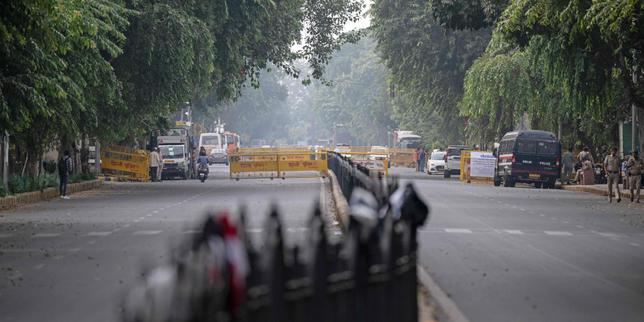
Public anger in this context does not materialize out of thin air. It is forged through years of cumulative grievances, economic anxiety, and a growing perception that justice is applied selectively. When citizens take to the boulevards of New Delhi, Mumbai, and regional capitals, they are expressing a fundamental loss of faith in institutional safeguards.
Protest organizers have adapted to heavy-handed state surveillance by decentralizing their communication networks. Traditional street marches now coordinate alongside encrypted messaging channels, making it difficult for authorities to preemptively neutralize demonstrations. This digital agility mirrors similar protest movements across the globe, where decentralized groups outmaneuver centralized policing structures.
Yet, mobilization carries severe personal costs for participants. Tear gas, water cannons, and preventive detentions are standard responses from law enforcement agencies tasked with maintaining public order. The willingness of ordinary citizens to brave these tactics underscores the depth of the current crisis. People are no longer acting out of fleeting passion; they are participating in a sustained campaign of resistance against what they perceive as authoritarian drift.
The Economic Toll of Civil Unrest
Beyond the political rhetoric and the clashes on asphalt, persistent instability carries a heavy price tag for India's ambitions as a global economic powerhouse. Foreign investors watch closely when streets erupt in violence. Capital is notoriously risk-averse. Prolonged social friction disrupts supply chains, delays infrastructure projects, and forces municipal governments to divert critical funds toward security operations rather than public development.
Markets crave predictability. When the rule of law appears malleable, commercial confidence wavers. Small business owners in commercial districts bear the immediate brunt of shutdowns and curfews, watching their daily revenues evaporate amid the smoke of burning tires and police blockades. The friction between nationalist politics and economic growth creates a paradox for national leadership, which seeks to project an image of modern stability while managing internal sectarian pressures.
Institutional Resilience Under Fire
Courts remain the ultimate arbiters in this conflict, yet their decisions increasingly become the focal point of public cynicism. When bail is granted in high-stakes political cases, legal experts often point to procedural technicalities and evidentiary thresholds under existing criminal statutes. However, the public rarely distinguishes between legal nuance and political favoritism.
This erosion of trust in the judiciary poses a long-term threat to governance. If citizens cease to view the courts as neutral referees, alternative forms of conflict resolution—often violent or extra-judicial—tend to fill the vacuum. The democratic machinery relies on voluntary compliance and institutional legitimacy. Once those pillars weaken, governance requires raw coercion to maintain order.
The Road Ahead
The calls for renewed demonstrations show no sign of abating. Opposition parties and civil society coalitions are attempting to channel the localized anger into a unified national front ahead of upcoming legislative cycles. Whether this coalition can sustain its momentum remains an open question, given the historical fragmentation of opposition politics in the country.
History suggests that mass movements either institutionalize their demands into lasting political change or dissipate under the weight of state pressure and internal exhaustion. For now, the streets of India remain the primary theater where the future of the nation's democratic identity is being contested, block by block, headline by headline.