The independent review of Saskatchewan’s catastrophic 2025 wildfire season, quietly released by the provincial government on a Friday afternoon, reads less like a bureaucratic audit and more like a post-mortem of systemic operational failure. Conducted by accounting firm MNP, the 107-page report details how the Saskatchewan Public Safety Agency (SPSA) was left fundamentally unprepared for a disaster that was entirely predictable. While political leaders point to the historic volume of the fires to excuse the breakdown, the data points to a far more uncomfortable truth. The province did not fail because the 2025 season was unprecedented. It failed because its internal emergency infrastructure was fractured, understaffed, and governed by obsolete policies long before the first match was struck.
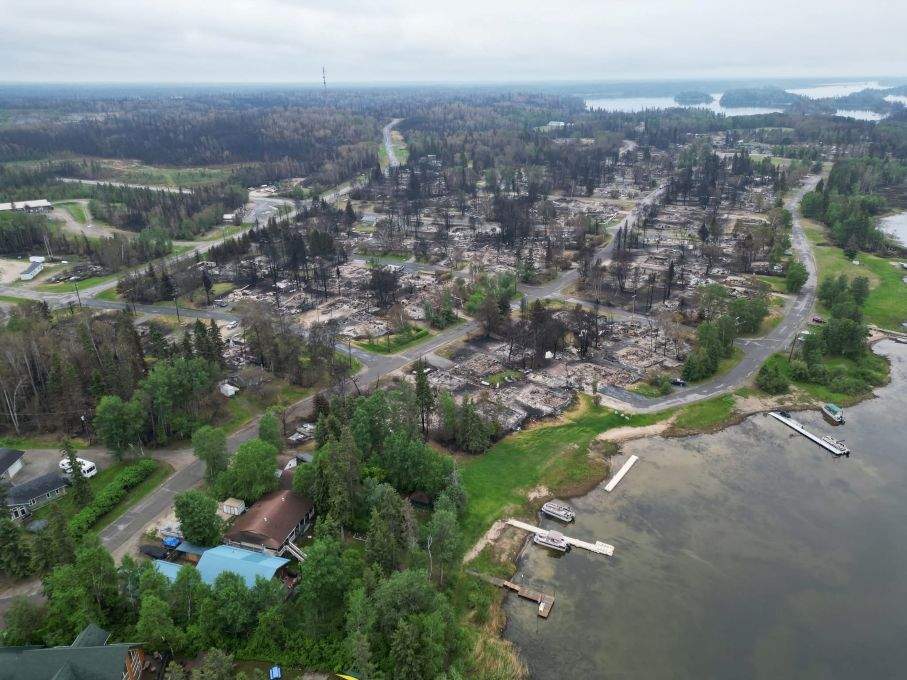
The sheer scale of the 2025 disaster is undeniable. More than 500 wildfires consumed roughly 2.9 million hectares of land, displacing over 10,000 residents from 50 communities and leveling hundreds of homes in regions like Denare Beach. Yet, the independent review reveals that the subsequent chaos was entirely preventable.
Instead of an agile, modern emergency response, the province relied on a skeleton mitigation crew, outdated manuals that staff could barely access, and a top-heavy command structure that choked under pressure. The cost of this structural paralysis was borne entirely by the rural and northern communities left to burn in the path of the flames.
The Myth of the Unforeseeable Catastrophe
For months, the official narrative surrounding the 2025 season centered on unpredictability. Government officials frequently cited the fact that the scorched acreage eclipsed the 10-year provincial average by more than three times. However, the MNP audit dismantles this defense in a single, sharp observation: the weaknesses exposed during the summer of 2025 were intensified by the severity of the season, rather than caused by it.
Saskatchewan’s emergency framework had been experiencing significant strain for years following consecutive extreme fire seasons across western Canada. The warning signs were flashing red, but provincial targets for removing dry fuel from forests remained entirely detached from modern fire science and formal risk assessments.
Nowhere was this administrative neglect more visible than on the ground. The review highlights that the province’s core fire mitigation team consisted of exactly four individuals. While the SPSA insisted this tiny unit met provincial staffing standards, the audit exposes those very standards as dangerously out of touch with reality. A four-person team tasked with managing fuel mitigation across millions of hectares of highly combustible boreal forest is a statistical absurdity. It represents a policy of managed decline, assuming that luck will hold where strategy has failed.
A Chain of Command Frozen by Bureaucracy
When the fires converged, the SPSA's internal organization crumbled into a web of overlapping mandates and legislative confusion. According to survey data embedded in the report, only a small minority of agency staff reported strong familiarity with the provincial emergency plan. Pre-season planning was virtually non-existent, delayed recruitment left frontline crews short-handed, and emergency exercises had been neglected.
SPSA Preparedness Gaps (2025 Audit Findings)
├── Structural Confusion: Overlapping mandates across legacy legislation
├── Policy Inaccessibility: Outdated internal guidelines, rarely followed
└── Operational Friction: Zero standardized triggers for community evacuations
When field officers attempted to execute the Incident Command System, they found themselves stymied by a lack of clear authority. Internal policies were either completely outdated, buried in hard-to-access databases, or applied so inconsistently that decision-making ground to a halt. Frontline staff simply did not know who had the power to authorize critical expenditures or reallocate heavy equipment.
This administrative gridlock directly impacted public safety. The report notes "limited evidence" that the provincial response aligned with its own established emergency management framework. Rather than acting as a cohesive, centralized command, the SPSA operated in silos, starved of reliable data and hindered by a complete failure of internal communication.
The Human Cost of Reactive Evacuations
The breakdown within the SPSA hierarchy manifested as terrifying confusion for local municipalities. The audit found that the province lacked standardized, data-driven triggers for ordering evacuations. Consequently, alerts were issued erratically, often lagging far behind the actual progression of the fires.
Host communities, tasked with absorbing thousands of traumatized evacuees, were routinely left completely in the dark. Mayors and local volunteers received little to no advance notice of incoming populations, forcing municipal centers into a chaotic, reactive scramble for food, cots, and medical supplies.
In communities like Denare Beach, where the Wolf Fire destroyed roughly 400 homes, residents were left wondering if the provincial apparatus had abandoned them entirely. The MNP report explicitly validates those fears, pointing out a total absence of a coordinated provincial recovery strategy. Once the immediate threat subsided, the SPSA effectively packed up, leaving devastated northern towns to navigate the complex, costly realities of rebuilding through ad hoc, uncoordinated local efforts.
Promising Reform Without a Price Tag
In the wake of the report's public release, newly appointed Community Safety Minister Michael Weger announced a suite of 11 immediate actions designed to overhaul the province's emergency approach. The proposed fixes include the creation of a new tier of "Community Wildfire Reservists" to leverage local knowledge, a $40,000 FireSmart grant program, and the integration of advanced predictive fire-modelling technology.
Yet, for all the political urgency on display at the press conference, the provincial government pointedly refused to provide a cost estimate or a definitive timeline for these initiatives. Promising systemic structural reform without allocating a clear, legislated budget is a well-worn political maneuver. Hiring seasonal personnel to double as winter mitigation workers sounds practical on paper, but without dedicated, long-term funding, it remains a nominal fix for a structural deficit.
Furthermore, the political fallout surrounding the report’s timeline has severely eroded public trust. While Premier Scott Moe claimed as late as early June that the review was not yet finalized, the opposition NDP revealed that the government had actually received the finished MNP document on May 22. Holding a critical public safety document for nearly three weeks, only to drop it on a Friday afternoon in the middle of the next wildfire season, suggests an agency more focused on political damage control than immediate operational transparency.
For the residents of northern Saskatchewan who watched their communities burn while a provincial agency struggled to read its own outdated manuals, an apology has yet to materialize. The SPSA leadership has accepted formal responsibility, but accountability without concrete, funded structural change means very little to those living on the front lines of an escalating climate reality. The province cannot afford another season of bureaucratic inertia. The forests are dry, the climate is shifting, and a four-person mitigation team cannot stop a province from burning.