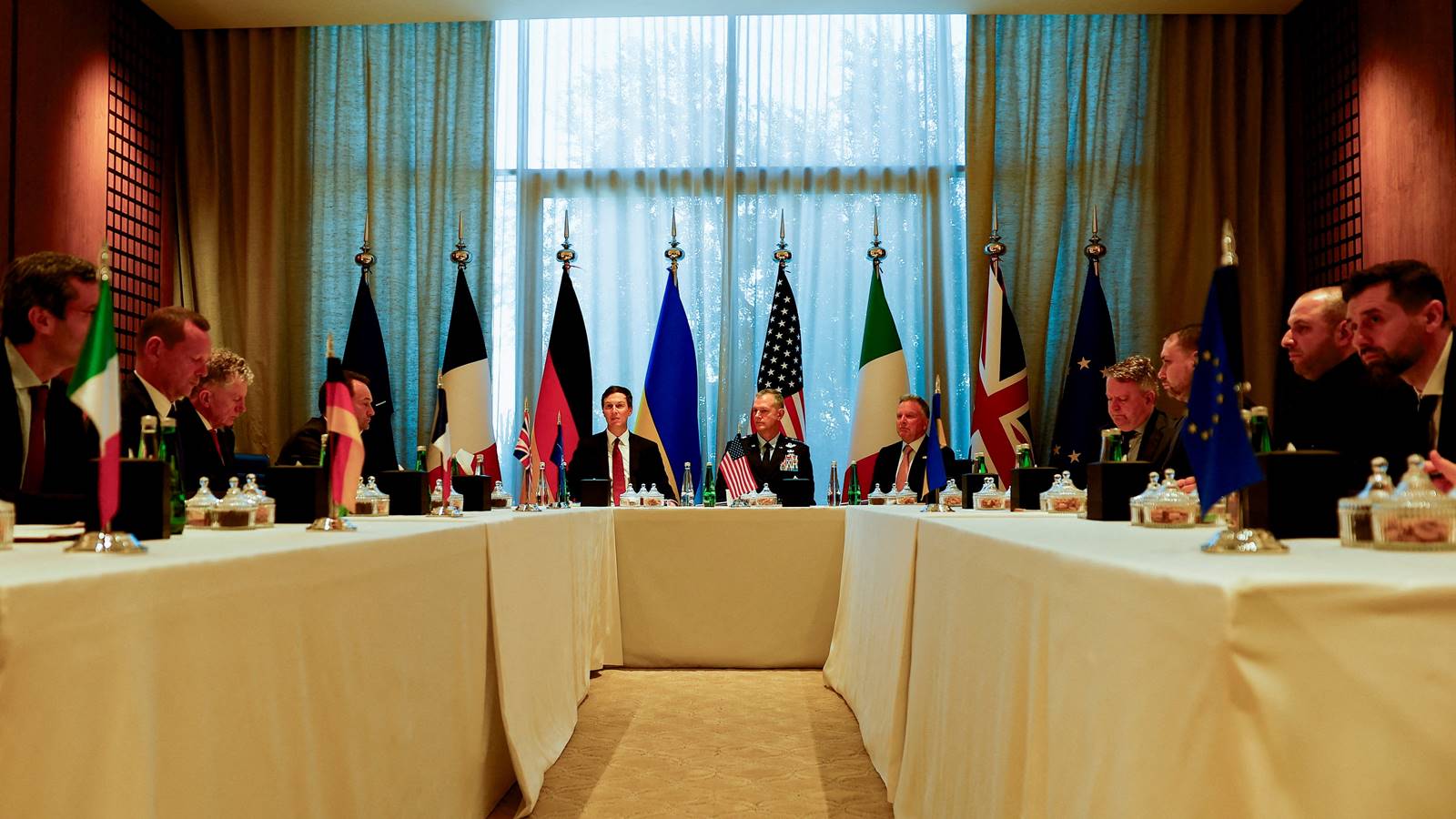
Diplomats from the United States, Russia, and Ukraine are locked behind closed doors in the United Arab Emirates for a second consecutive day of high-stakes negotiations, attempting to hammer out a viable framework to end the war in Eastern Europe. While official communiqués remain tightly scripted and deliberately vague, the very existence of this trilateral gathering in Abu Dhabi signals a sharp departure from years of diplomatic deadlock. The core objective of these talks is not an immediate, sweeping treaty, but rather a granular, verifiable de-escalation mechanism—starting with energy infrastructure protection, maritime transit security in the Black Sea, and prisoner exchanges—designed to test whether any durable trust can be built between Moscow and Kyiv under American supervision.
To understand why these delegations are sitting across from one another in the Persian Gulf rather than Geneva, Vienna, or Istanbul, you have to look at the shifting geometry of global power. Traditional European diplomatic hubs have lost their neutrality in the eyes of the Kremlin. Switzerland, once the gold standard for discreet mediation, aligned itself with Western sanctions, effectively disqualifying itself as an honest broker for Moscow. Turkey, which hosted the ill-fated 2022 talks, carries too much geopolitical baggage of its own, balancing NATO membership with complex bilateral friction with Russia over Syria and the Caucasus.
Enter the United Arab Emirates. Over the past several years, Abu Dhabi has quietly transformed itself into the indispensable backchannel of the twenty-first century. By maintaining open financial arteries with Moscow while simultaneously serving as a major security partner for Washington and a humanitarian donor to Kyiv, the Emiratis achieved something few nations could manage. They became trusted enough by all three parties to host the room where the real talking happens.
The Anatomy of a Backchannel
Most coverage of peace negotiations focuses on the theatrical moments—the handshakes, the motorcades, the carefully worded statements released to the press pool at the end of the day. That is the surface layer, and it is largely irrelevant. The real work in Abu Dhabi happens in working groups staffed by mid-level intelligence officials, military logisticians, and sanctions lawyers.
When delegations enter a second day of talks, it means the initial posturing phase has been survived. Day one in any conflict resolution scenario is almost always dedicated to maximalist demands. Each side lays down its non-negotiables to appease domestic hardliners. For Kyiv, that means the restoration of territorial integrity and ironclad security guarantees. For Moscow, it means recognition of territorial realities on the ground and strict limits on Ukraine’s future military alliances. For Washington, it means preventing a wider regional war while ensuring the credibility of Western deterrence.
If the talks had collapsed on day one, the delegations would already be on planes back to their capitals. Continuing into a second day indicates that the negotiators found enough overlapping technical ground to justify staying at the table.
In diplomacy, technical ground is where wars actually begin to end. You do not start by drawing borders on a map; you start by agreeing on how to keep the lights on during the winter. One of the primary focal points of the Abu Dhabi discussions revolves around a mutual moratorium on strikes against energy infrastructure. Both sides have suffered immensely from long-range drone and missile campaigns targeting power grids and oil refineries. A verifiable pause in these strikes offers immediate, tangible relief to civilian populations while serving as a low-risk confidence-building measure. If neither side cheats on an energy truce for sixty days, the diplomats suddenly have a foundation to discuss heavier issues.
What Washington Actually Wants from Abu Dhabi
The presence of senior American officials in the room alters the entire calculus of the negotiations. For much of the conflict, Washington’s official stance was that nothing about Ukraine should be decided without Ukraine, placing the burden of defining victory squarely on Kyiv. While that principle remains the public baseline, the strategic reality facing American policymakers has grown considerably more complicated.
The United States is managing multiple overlapping crises across the globe, from the Indo-Pacific to the Middle East, while facing domestic fiscal pressures over endless foreign aid packages. A prolonged, grinding war of attrition in Eastern Europe drains munitions stockpiles and ties down diplomatic bandwidth that Washington desperately needs elsewhere. Consequently, the American objective in Abu Dhabi is to engineer a sustainable off-ramp that freezes the conflict on terms Kyiv can survive politically, without handing Moscow a strategic victory that would embolden future aggression.
This puts the American delegation in a delicate position. They must act simultaneously as Ukraine’s primary patron and as a mediator pushing both sides toward compromise. To bring Russia to the table, Washington holds the ultimate bargaining chip: sanctions relief.
Financial restrictions, export controls on dual-use technologies, and the freezing of Russian sovereign assets have inflicted long-term structural damage on the Russian economy, even if they failed to trigger an immediate collapse. In the quiet corridors of Abu Dhabi, American treasury officials and legal experts are likely outlining the exact sequence of actions Moscow would need to take to see targeted sanctions lifted. Conversely, they are also signaling what additional economic pain awaits if the Kremlin walks away from the table in bad faith.
The Kremlin’s Calculus of Attrition
Why is Russia engaging seriously now? For months, Moscow operated under the assumption that time was on its side, betting that Western political will would fracture before the Russian economy buckled under the weight of wartime mobilization.
While Russia has managed to sustain its military industrial base through sheer state spending and alternative supply chains, the hidden costs are mounting. Interest rates in Russia have climbed to punishing levels to combat persistent inflation. Labor shortages across civilian sectors are acute, driven by military recruitment and the exodus of skilled workers. Furthermore, the sheer human and material toll required to capture incremental territory in eastern Ukraine is unsustainable over a multi-year horizon.
Moscow recognizes that negotiating from a position of perceived battlefield momentum yields far better terms than waiting until economic exhaustion sets in. By participating in the Abu Dhabi talks, the Kremlin aims to lock in its territorial gains, secure relief from the most crippling financial sanctions, and drive a wedge between the United States and its European allies, many of whom remain deeply skeptical of any accommodation with Vladimir Putin.
Yet, a major gray area remains: does the Kremlin view Abu Dhabi as a genuine path to a permanent settlement, or merely as an operational pause to rearm and regroup? History offers sobering warnings. The Minsk agreements of 2014 and 2015 failed precisely because they were treated by Moscow as tactical truces rather than binding peace treaties. Any agreement emerging from the UAE will face intense scrutiny on how it prevents a repeat of that failure.
Kyiv’s Impossible Tightrope
For the Ukrainian delegation, the stakes in Abu Dhabi are existential. Negotiating while foreign troops occupy roughly a fifth of your sovereign territory is an agonizing exercise in realpolitik. The Ukrainian leadership must balance the exhaustion of a population battered by years of relentless warfare against the fierce determination of a military and civil society that has sacrificed too much to accept a bad peace.
If Kyiv agrees to a ceasefire that leaves occupied territories under de facto Russian control without securing airtight security guarantees, it risks severe domestic political upheaval. Worse, it invites a future Russian invasion once Moscow has rebuilt its forces. Therefore, Ukraine’s non-negotiable demand in Abu Dhabi is not necessarily the immediate military recapture of every square inch of land—a goal many military analysts privately concede is out of reach in the short term—but rather deterrence.
What does credible deterrence look like outside of immediate NATO membership, which remains politically blocked? In Abu Dhabi, negotiators are exploring alternative architectures. These include:
- Bilateral security treaties backed by binding congressional or parliamentary approvals in Washington and major European capitals, guaranteeing automatic weapons deliveries and financial support in the event of renewed Russian aggression.
- Demilitarized buffer zones monitored by neutral third-party peacekeepers or advanced automated surveillance technologies, removing the risk of accidental skirmishes escalating into full-scale war.
- Long-term defense industrial integration, ensuring Ukraine can manufacture its own advanced missile systems and air defenses domestically, reducing its vulnerability to shifts in foreign political winds.
The Silent Stakeholders
While the headlines focus on the three flags on the negotiating table, the outcome of the Abu Dhabi talks will reverberate far beyond Washington, Moscow, and Kyiv. European capitals are watching the proceedings with a mixture of hope and profound anxiety. Having borne the brunt of the energy shock and refugee crisis, European leaders fear being sidelined by a bilateral US-Russia arrangement that dictates the future security architecture of their continent without their input.
China is also closely monitoring the room. Beijing has positioned itself as a self-styled peacemaker while quietly providing the economic lifeline that has kept the Russian war machine running. A successful American-brokered de-escalation in Abu Dhabi would restore significant diplomatic prestige to Washington at Beijing's expense, demonstrating that the United States still possesses the unique convening power required to resolve major global conflicts.
Finally, the global south—represented directly by the Emirati hosts—has a massive stake in the maritime component of the talks. Securing safe passage for grain and fertilizer exports through the Black Sea is not an abstract geopolitical goal for nations in Africa and the Middle East; it is a direct determinant of food prices and domestic stability. The UAE’s willingness to expend immense diplomatic capital on these talks is driven largely by a desire to stabilize global trade routes and cement its status as an indispensable middle power.
The Verification Trap
Even if the delegations emerge from their second day of meetings with a draft framework, the hardest work lies ahead. Diplomacy does not fail because people cannot agree on lofty principles; it fails in the trenches of verification.
Consider a hypothetical example of how an energy truce breaks down. Suppose both sides agree to halt strikes on electrical substations. Three days later, a transformer explodes in a border region. One side claims it was hit by a covert drone strike; the other insists it was an internal mechanical failure caused by an aging grid. Without an independent, unimpeachable mechanism on the ground to inspect the wreckage within hours, trust evaporates, retaliatory strikes follow, and the ceasefire collapses before the ink is dry.
In modern warfare, where plausible deniability is weaponized through commercial drones, cyberattacks, and proxy forces, traditional peacekeeping models are obsolete. The technical teams in Abu Dhabi are tasked with designing a monitoring regime capable of operating in a high-tech, deeply distrustful environment. This requires sharing satellite intelligence, establishing direct military-to-military hotlines to de-escalate incidents in real time, and empowering third-party inspectors with unrestricted access to sensitive sites.
None of the parties involved have a strong track record of permitting that level of transparency. Russia has historically obstructed international monitors, from chemical weapons inspectors to nuclear watchdogs. Ukraine is understandably reluctant to allow foreign observers into sensitive military zones where operational security could be compromised. Overcoming this mutual paranoia is the true test of the Abu Dhabi summit.
Beyond the Press Releases
As the second day of talks progresses, observers should ignore the inevitable leaks designed to paint one side as stubborn and the other as reasonable. Information warfare does not stop when negotiations begin; it simply moves into the press briefing rooms of luxury hotels.
Instead, watch the concrete indicators. Look for announcements regarding the expansion of prisoner swaps to include civilian detainees. Watch for subtle shifts in the rhetoric of state media in Moscow and official statements in Kyiv, signaling to their respective populations that compromise is no longer synonymous with capitulation. Pay close attention to whether the delegations schedule a third round of talks before departing the Emirates.
Ending a war of this magnitude is rarely a single dramatic event. It is a slow, agonizing, and deeply imperfect process of trading blood for ink, accepting uncomfortable compromises, and building fragile guardrails against further catastrophe. Whether the diplomats in Abu Dhabi succeed or fail will not be known when they step in front of the cameras, but months later, in the quiet absence of air raid sirens.