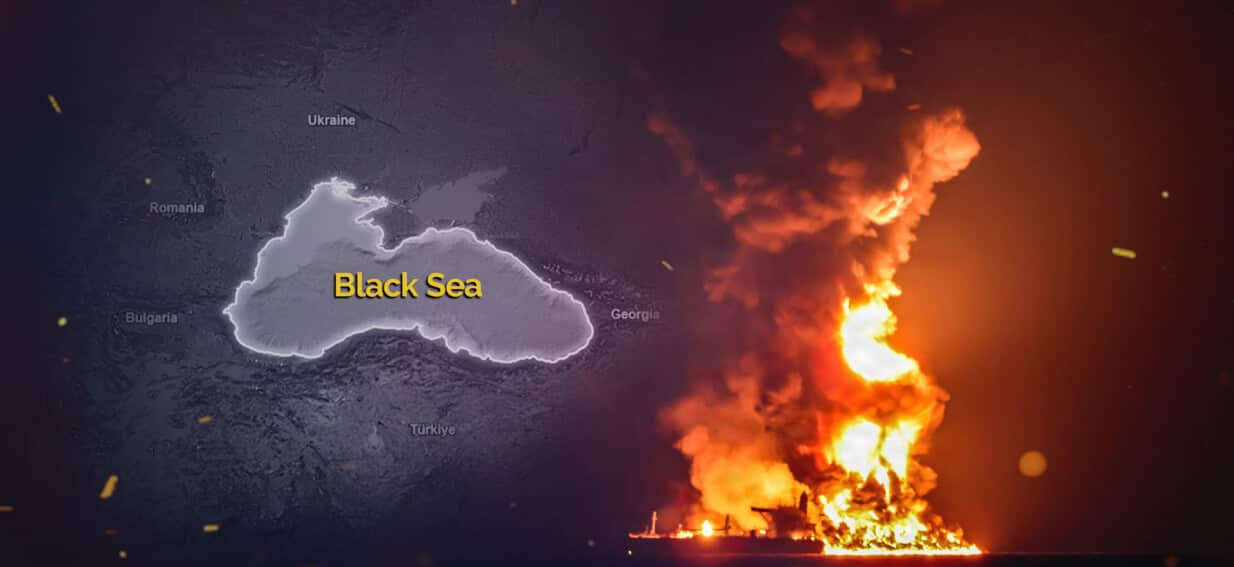
Two vessels sit at the bottom of the Black Sea, their twisted hulls serving as grim monuments to a maritime conflict that has fundamentally rewritten the rules of naval warfare. More ships have been struck, crippled, or forced into evasive maneuvers as maritime trade routes through one of the world's most vital grain corridors turn into contested flashpoints. This is not just a regional dispute over territorial boundaries. It is an evolving laboratory for asymmetric naval combat, where low-cost aerial drones and anti-ship missiles dictate the terms of engagement against multi-million-dollar merchant fleets.
Understanding the crisis requires looking past the daily casualty reports and examining the structural breakdown of maritime security. Commercial shipping in the region operates under a constant shadow. Insurance premiums have skyrocketed to prohibitive levels, crews demand hazard pay, and shipowners weigh the thin margins of grain and fertilizer export against the catastrophic risk of total hull loss. When naval power projection shifts from heavy cruisers and traditional blockades to loitering munitions and coastal defense batteries, the entire economic calculus of maritime transit shatters. If you liked this piece, you should look at: this related article.
The Asymmetric Equation That Broke Naval Doctrine
Traditional naval doctrine spent decades preparing for blue-water engagements involving carrier strike groups, submarine wolfpacks, and coordinated air defense shields. That doctrine was obsolete the moment land-launched anti-ship missiles and uncrewed surface vessels entered the theater.
The math of modern maritime conflict heavily favors the aggressor. Building a sophisticated bulk carrier takes years and tens of millions of dollars, while manufacturing a long-range explosive drone requires consumer-grade components and a fraction of that budget. When a high-value commercial asset is targeted by inexpensive asymmetric tools, defenders face an impossible economic imbalance. Intercepting every incoming threat with high-end surface-to-air missiles burns through stockpiles faster than industrial bases can replenish them. For another look on this event, refer to the latest update from The Guardian.
This reality has forced a profound tactical retreat. Commercial operators no longer rely on traditional freedom of navigation guarantees. Instead, they hug territorial waters where possible, utilize electronic spoofing, switch off Automatic Identification System transponders, and rely on real-time intelligence feeds to navigate maritime corridors that resemble active minefields.
Grain, Insurance, and the Weaponization of Logistics
Beyond the immediate theater of operations, the violence in the Black Sea exerts a suffocating pressure on global food security. Ports across the region serve as primary arteries for wheat, corn, and sunflower oil moving from Eastern Europe to markets across Africa and the Middle East.
When freight vessels are struck at anchor or intercepted on the high seas, the shockwaves ripple straight through international commodity exchanges. Insurance syndicates in London and Zurich recalculate risk overnight. Policies that once covered routine voyages now carry war-risk surcharges that can exceed the value of the cargo itself.
Shippers face an agonizing dilemma. Absorb the crippling insurance costs and risk financial insolvency, or halt operations entirely and surrender vital market share to competitors. Many choose the latter, creating severe supply chain bottlenecks that artificially inflate food prices globally. The weaponization of trade routes has turned routine agricultural logistics into a high-stakes geopolitical leverage point.
The New Reality of Contested Waters
Naval analysts spent the post-Cold War era assuming that globalization and international maritime law provided an impenetrable shield for commercial shipping. That illusion has vanished. The Black Sea serves as the proving ground for a grim new epoch where maritime choke points can be disrupted by dispersed, land-based forces operating at a fraction of traditional naval budgets.
As long as the underlying geopolitical conflict remains unresolved, commercial vessels will continue to navigate a gauntlet of invisible threats. The traditional guarantees of open-sea transit are gone, replaced by a permanent state of operational paranoia where every voyage is a calculated gamble against the next hidden strike.