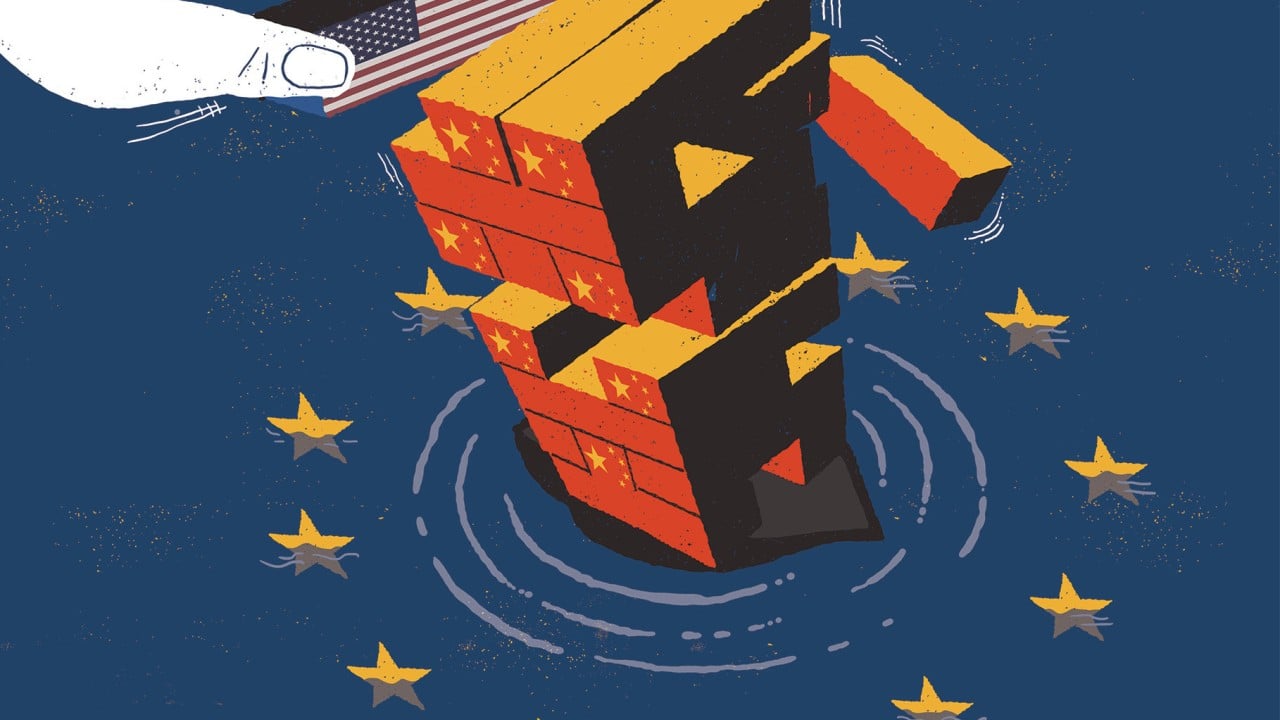
Western leaders are assembling their most coordinated economic coalition in decades, tightening export controls and locking down critical supply chains. In response, Beijing is not merely reacting to Western pressure; it is systematically re-architecting its economy for total containment.
The strategy hinges on a calculated shift toward economic self-reliance, agricultural stockpiling, and a alternative global payment framework designed to withstand direct sanctions. As Washington and Brussels align their trade policies to curb Chinese technological advance, planners in Beijing have spent the last three years running stress tests on their domestic industrial base. They are actively preparing for a scenario where trade with the West slows to a crawl or breaks entirely.
This confrontation is no longer about tariffs or standard diplomatic maneuvering. It is a fundamental division of the global economy into isolated spheres of influence.
Western Unity Is Realigning Global Trade Rules
The speed with which transatlantic policy merged over the past three years caught many analysts off guard. What began as scattered bilateral disputes over telecom infrastructure expanded into unified export controls on high-end semiconductors, manufacturing machinery, and artificial intelligence hardware.
The G7 nations, alongside key allies like the Netherlands, Japan, and South Korea, have increasingly coordinated their export restriction frameworks. Rather than relying on broad trade bans, this coalition uses hyper-targeted choke points to restrict access to specialized inputs. A single advanced lithography system or specialized chemical compound can stall an entire domestic industry.
This coordinated posture marks a structural break from previous decades. For thirty years, economic interdependence was viewed by Western powers as a stabilizing force that would prevent major conflict. Today, that same interdependence is treated as a security exposure that must be managed, audited, and systematically reduced.
Western strategy relies on three main tools:
- Extended export controls targeting foundational manufacturing equipment.
- Outbound investment screening mechanisms designed to choke off foreign capital to defense-adjacent technology sectors.
- Strategic subsidies intended to bring critical manufacturing back to domestic soil.
These measures sent a clear message to Beijing. The international trading environment that fueled China's rapid rise over four decades is being dismantled.
The Machinery of Chinese Self Reliance
Inside the Chinese central planning bureaucracy, the response to Western containment has a specific name: Dual Circulation. First introduced as a broad policy concept, it has transformed into an aggressive operational blueprint.
The dual circulation model prioritizes domestic consumption and indigenous manufacturing capability while keeping foreign trade as a secondary driver. Beijing recognizes that relying on Western markets for demand and Western companies for technical components leaves its domestic stability vulnerable to foreign political decisions.
To counter this, state planners are directing hundreds of billions of dollars into domestic substitution programs. The goal is simple: replace every foreign component in critical supply chains with a locally produced alternative, regardless of short-term cost inefficiencies.
Consider the domestic semiconductor sector. Chinese chipmakers are buying up every piece of older-generation fabrication equipment available on the global market while state laboratories work around the clock to develop native alternatives to Western lithography tools. While these indigenous tools remain generations behind the current state of the art, they provide a baseline level of operational capability. If an embargo hits, the domestic industrial base will keep running.
This drive extends far beyond microchips. State-backed directives now mandate that government agencies and state-owned enterprises swap out foreign hardware and software for native options. Operating systems, enterprise database software, and basic office servers are being systematically replaced by domestic platforms.
The process is often clunky. Early iterations of native software lack the polish and efficiency of Western products. Yet efficiency is no longer the primary metric. Survivability is.
Financial Insulation and the Alternative Payment Network
Economic sanctions against third-party nations provided Beijing with a stark lesson in financial vulnerability. The total isolation of targeted foreign financial institutions from the SWIFT messaging system demonstrated the immense power held by Western financial centers.
Beijing realized that its massive holdings of foreign reserves could become an liability overnight in a severe crisis. To neutralize this threat, China has spent years building a parallel financial architecture capable of operating completely outside the dollar system.
The centerpiece of this strategy is the Cross-Border Interbank Payment System, or CIPS. While CIPS still relies partially on standard international messaging channels for certain global transactions, its core architecture is independent. Settlement volumes through CIPS have expanded steadily, driven by trade with non-Western partners in Eurasia, South America, and the Middle East.
Simultaneously, the People's Bank of China has aggressively expanded its network of bilateral currency swap lines. By settling trade directly in local currencies, Beijing eliminates the need for dollar clearinghouses altogether. Energy imports from foreign suppliers are increasingly priced and settled in renminbi, securing vital fuel supplies against potential Western sanctions.
Central bank gold purchases tell a similar story. For consecutive quarters, China's central bank has quietly increased its bullion reserves while systematically reducing its exposure to US Treasury debt. This is not merely a portfolio rebalancing act. It is a structural exit from assets that could be frozen or seized during a major international dispute.
The Critical Raw Material Vulnerability
To build an economic fortress, a country must secure its foundational resources. China enjoys a dominant position in the processing of rare earth elements, battery materials, and industrial metals, but it remains deeply vulnerable in two crucial areas: food and energy.
Beijing imports vast quantities of soybean shipments, corn, and crude oil through maritime trade routes that are easily intercepted by foreign navies. A naval blockade or severe trade embargo could cripple domestic livestock production and energy grids within months.
To mitigate this weakness, Chinese state planning has shifted toward emergency stockpiling on an unprecedented scale.
| Commodity Sector | Strategic Response Mechanism | Vulnerability Level |
|---|---|---|
| Grains & Food Inputs | Expanding state reserves, diversifying import origins to non-aligned nations | High import dependency on Western agricultural exporters |
| Crude Oil & Gas | Underground strategic storage expansion, overland pipelines through Central Asia | Dependence on maritime supply bottlenecks |
| Critical Minerals | Export licensing restrictions, absolute domestic processing monopoly | Low domestic risk; high export leverage against Western manufacturers |
Strategic grain reserves inside China are currently at historic highs. Silos across the country hold enough wheat and rice to feed the population for well over a year. At the same time, agricultural planners are pushing for higher domestic yields through government-funded agricultural research and strict protection of arable farmland.
On the energy front, China is pursuing a dual-track strategy. It is aggressively expanding overland pipeline networks with Central Asian neighbors and Russia, securing fuel routes that do not cross vulnerable maritime chokepoints. At the same time, the massive domestic deployment of solar, wind, and nuclear power serves a dual purpose: it reduces carbon output while decreasing dependency on imported seaborne oil.
If a maritime trade disruption occurs, China's massive domestic renewable capacity ensures that its power grid keeps running, even if transport sectors are forced to ration liquid fuel.
Why Western Strategy Might Backfire
The prevailing assumption in Western capitals is that technological and financial isolation will force Beijing to moderate its policies or accept economic stagnation. That assumption overlooks the sheer scale of China's domestic market and its unique political structure.
When Western firms are forced out of Chinese supply chains, they lose access to revenues that previously funded their research and development budgets. Meanwhile, Chinese competitors are handed a captive domestic market without foreign competition. This guaranteed revenue stream allows domestic firms to iteratively improve their technology, eventually reaching commercial viability.
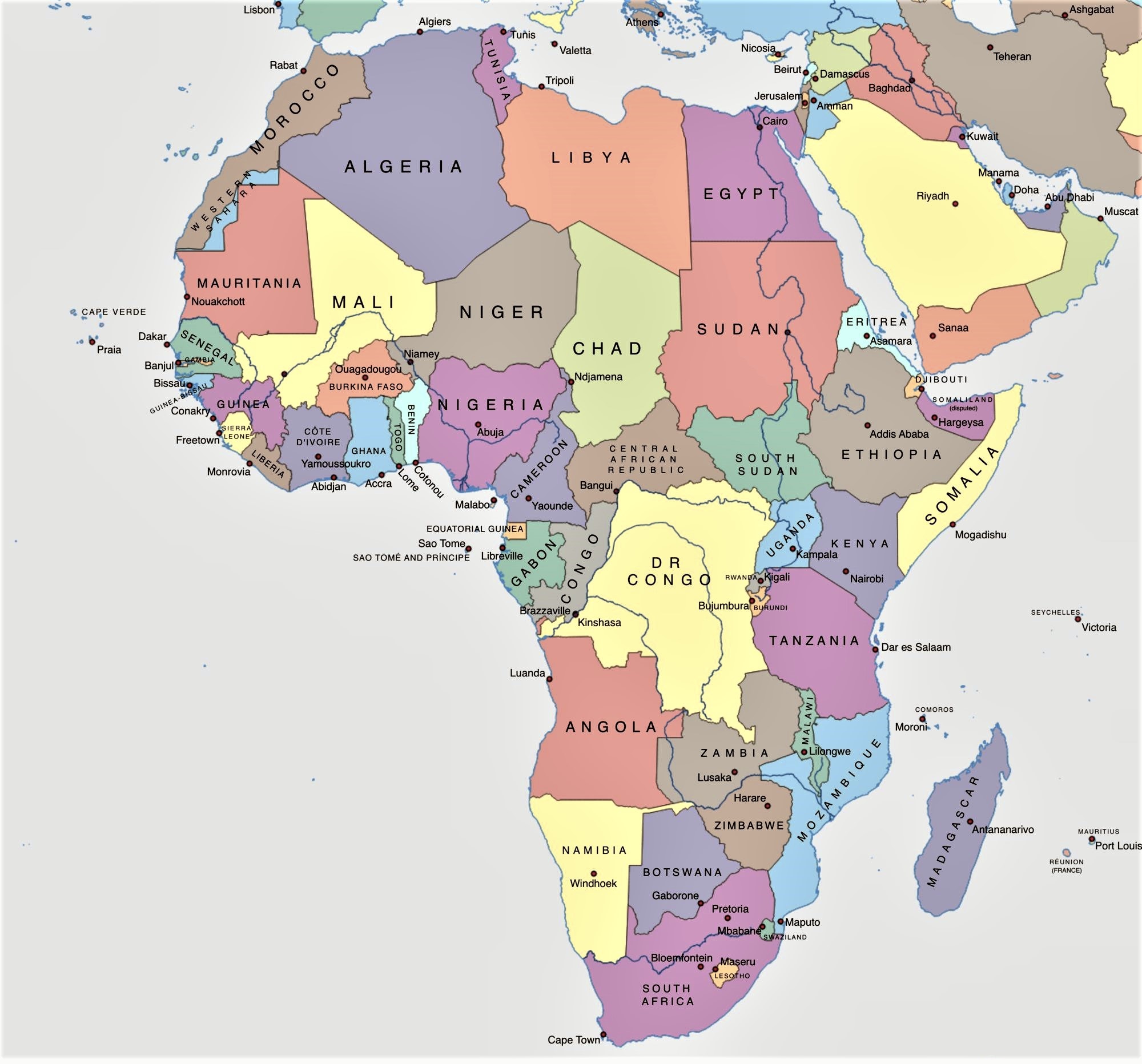
Furthermore, isolating China does not mean isolating it from the rest of the planet. While relations between China and Western nations have chilled, trade between China and the Global South is expanding. Chinese industrial exports are flooding into Southeast Asia, Africa, and Latin America, offering lower-cost hardware, infrastructure, and vehicle manufacturing to developing economies.
A two-tier global market is forming. One tier consists of high-cost Western economies with restricted access to Chinese supply chains. The second tier consists of developing markets that utilize cheaper Chinese technology and infrastructure, unconcerned with Western security reservations.
By attempting to seal China off from advanced technology, the West has incentivized Beijing to create a completely parallel technological ecosystem. Once that ecosystem becomes self-sustaining, the West loses its primary point of diplomatic and economic leverage.
The assumption that economic pressure inevitably leads to capitulation ignores historical precedent. Driven by existential pressure, state-directed economies can endure immense financial pain while redirecting resource allocation toward critical national security objectives.
Beijing is intentionally sacrificing maximum economic efficiency to guarantee survival in a fragmented global order. Every sanction imposed, every export control signed into law, and every trade restriction enacted accelerates the construction of this isolated economic fortress. The global trade integration that defined the past half-century is over, replaced by an era where self-reliance is the absolute metric of national strength.