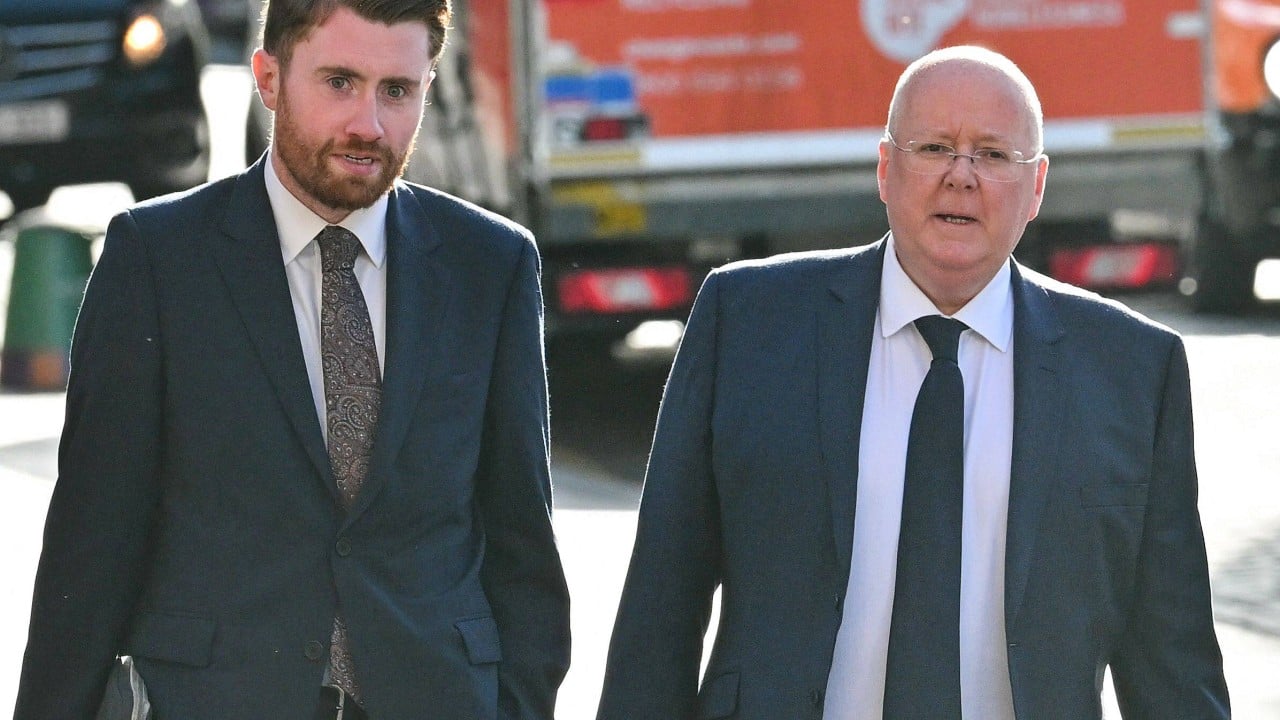
Peter Murrell, the former chief executive of the Scottish National Party and estranged husband of former First Minister Nicola Sturgeon, has pleaded guilty to embezzling £400,310.65 from party coffers. Arriving at the High Court in Edinburgh, the 61-year-old former political kingpin admitted to a systematic, 12-year plundering of party donations to bankroll a hidden life of luxury. Lord Young remanded Murrell into custody, branding the operation a gross breach of trust. He faces a substantial prison sentence when he returns for sentencing on June 23.
The admission has sent shockwaves through the independence movement, but the conviction exposes a much deeper systemic vulnerability than a simple story of personal greed. For over a decade, the SNP operated less like a modern democratic institution and more like a closed family business. The total convergence of personal life and party administration allowed Murrell to siphon off six-figure sums completely unchecked, raising urgent questions about the institutional rot that permitted such a prolonged fraud. Also making news in this space: Why Security in Kwara State is Crumbling Faster Than You Think.
The Mechanic of the Monarchy
To understand how Murrell extracted nearly half a million pounds over twelve years, one has to examine the unique corporate architecture of the SNP during his tenure. Murrell was not just an employee. He was the chief executive for 22 years, a span of time that saw the party transform from a fringe independence movement into a formidable electoral machine.
When Nicola Sturgeon became First Minister and party leader in 2014, the final checks and balances evaporated. The two most powerful positions in Scottish politics—the leader of the government and the manager of the party machine—shared a household, a breakfast table, and separate financial accounts. Further insights on this are explored by NBC News.
In a traditional corporate or political structure, a chief executive answers to a powerful board or an independent chairman. In the SNP, internal critics who raised questions about the party’s financial transparency were routinely sidelined, ignored, or publicly rebuked. The party’s governance structure concentrated financial control in an incredibly small circle.
The indictment documents paint a picture of deliberate deception. Murrell managed to mask his tracks through a variety of manipulation techniques:
- Falsifying ledger entries and party accounts to hide discrepancies from internal auditors.
- Using company credit cards issued under the names of junior party staff members who worked directly beneath him.
- Submitting completely fabricated invoices to justify large personal outlays as legitimate political expenditures.
By the time internal party whistleblowers forced the launch of Police Scotland's Operation Branchform, the financial boundaries between the chief executive’s personal desires and the donations of working-class independence supporters had been entirely erased.
The 119 Page Manifest of Indulgence
The public image of the Sturgeon-Murrell partnership was one of austere devotion to public service. They rarely socialised, seldom took foreign holidays, and lived in a modest suburban home in Uddingston.
The 119-page list of items Murrell purchased with stolen funds tells a completely different story. The money did not go toward funding alternative political strategies or supporting local campaigns. It funded an insatiable appetite for consumer luxuries.
Stolen funds paid for a £124,550 luxury motorhome, which spent its days parked quietly on his mother’s driveway in Fife. Party cash subsidised the purchase of a high-end Jaguar I-PACE SUV and a Volkswagen Golf.
The list extends into bizarre domestic micro-luxuries. Murrell spent £2,618 on a Lalique Feuilles salt and pepper set, over £4,000 on a gold Montblanc fountain pen, and thousands more on upscale Miele coffee machines, iPads, high-end cosmetic items, and a robotic lawnmower.
The sheer pettiness of some purchases juxtaposed against the grandeur of the political cause highlights the psychological disconnect at the heart of the scandal. While rank-and-field members on tight budgets sent £5 and £10 donations to fund a second independence referendum, the man running the machinery was busy using their cash to upgrade his domestic appliances.
The Plausible Deniability Paradox
Following the guilty plea, Nicola Sturgeon released a highly personal statement on Instagram seeking to distance herself entirely from the criminal fallout. She described herself as utterly appalled, claiming she had been deceived and let down by a husband she loved and trusted. She maintained she had zero knowledge or suspicion of the embezzlement, noting that the couple maintained separate bank accounts and lived highly segregated professional lives.
Her political opponents have been quick to reject this defense. Scottish Labour deputy leader Jackie Baillie argued that it is simply inconceivable that a large-scale fraud of this scale could take place under her nose for over a decade without provoking a single question.
This creates an inescapable political paradox for Sturgeon’s legacy. If she truly did not know that a luxury motorhome had been bought with party funds, or that her husband was driving vehicles financed by donations, it suggests a profound, disqualifying lack of awareness regarding her immediate domestic and financial environment. If she did have suspicions and chose not to press her husband, it implies complicity.
The reality likely sits in the gray zone of institutional culture. Under Sturgeon and Murrell, the SNP operated on strict internal loyalty. Disloyalty was punished, and curiosity was treated as a factional attack. When you build an organization where nobody is allowed to ask questions, it becomes inevitable that eventually, nobody notice when the vault is being emptied.
The Long Road to Recovery
Current First Minister John Swinney did not mince words, stating he felt horrified, gutted, and deeply betrayed by the revelation. He apologised to the members whose money had been stolen, though he admitted the party is in no financial position to offer refunds.
The timing of the plea could not be worse for the current leadership. Swinney had intended to use this period to launch a fresh, structured push for Scottish independence. Instead, the party must now navigate the visual disaster of its former chief executive being transported to a prison cell in a security van.
The political damage is already quantifiable. The long-running cloud of Operation Branchform contributed directly to the SNP's catastrophic defeat in the 2024 general election, where Scottish Labour swept back to power across the central belt. While Swinney managed to secure a baseline victory in the recent parliamentary elections, the party's moral authority has been severely depleted.
Fixing the structural defects that allowed Murrell to operate with impunity requires more than just changing the personnel at the top. The party has updated its internal financial controls, but the underlying culture of secrecy remains an ongoing vulnerability. A political movement built entirely around the personal authority of a charismatic leader will always find its administrative structures warped to serve that leader's inner circle.
Peter Murrell’s downfall is a reminder that institutional rot rarely starts from the outside. It begins quietly, in the spaces where accountability is traded for convenience, and where those in power decide that they are no longer subject to the rules they enforce on everyone else.