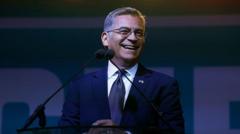
Xavier Becerra has successfully parlayed his Washington pedigree into a frontrunner spot for the California gubernatorial race, advancing through the high-stakes jungle primary to secure a general election berth. The former Health and Human Services Secretary and California Attorney General capitalized on high-profile union backing and the sudden exit of key rivals to consolidate the state’s Democratic base. He will face Republican commentator Steve Hilton in November.
Yet, beneath the triumphal press releases lies a fractures-and-all political reality. While Becerra pitches his federal executive tenure as the ultimate credential to govern the world’s fifth-largest economy, his record in the Biden administration remains a deeply polarizing battleground.
The Washington Record Under Scrutiny
To the average primary voter, a cabinet-level title signals gravitas. Becerra leaned heavily into this during his campaign, framing his leadership of HHS as a masterclass in managing massive institutional machinery. He regularly reminds audiences of his efforts to lower prescription drug costs, protect healthcare access, and bolster mental health services. For a state apparatus grappling with a massive budget deficit and a persistent homelessness crisis, that specific administrative fluency is a potent selling point.
Inside the Beltway, however, his tenure is viewed through a far more critical lens. Several former administration colleagues have broken rank, describing his leadership during critical periods as passive.
Critics point to two major vulnerability points that his opponents are already weaponizing:
- The Pandemic Response: During the height of the COVID-19 pandemic, White House officials reportedly grew frustrated with what they perceived as Becerra’s low profile, arguing that HHS should have taken a more aggressive, visible role in navigating the public health crisis.
- The Migrant Child Crisis: The Office of Refugee Resettlement, an arm of HHS, faced severe blowback over its handling and tracking of unaccompanied migrant children. Investigative reports detailing failures to protect these children from exploitative labor networks have resurfaced, providing ready-made ammunition for conservative attack ads.
Supporters counter that Becerra inherited a broken immigration framework and stabilized a department under unprecedented pandemic pressure. They note his quiet efficiency, contrasting his methodical style with the more theatrical nature of modern politics. But in a general election, nuance is easily buried by aggressive messaging.
How the Jungle Primary Reshaped the Field
The path to the general election ballot was cleared as much by tactical luck as by structural design. California’s top-two primary system allows the highest vote-getters to advance regardless of party, often leading to brutal intra-party warfare.
Originally, the Democratic field was congested with formidable contenders, including progressive favorite Katie Porter and early frontrunner Eric Swalwell. The entire dynamic shifted when Swalwell abruptly exited the race and resigned his congressional seat following allegations of sexual misconduct, which he denied.
Swalwell's departure broke a dam of institutional support. Becerra acted decisively, securing endorsements from massive labor organizations, Planned Parenthood, and Equality California. This institutional fortress effectively choked out other progressive alternatives.
Billionaire Tom Steyer self-funded an inescapable multi-million dollar ad campaign that briefly threatened to upend the race by positioning him as an anti-corporate populist. Despite the deluge of television ads, Steyer’s late surge stalled, leaving him in third place with roughly 20 percent of the vote.
The final primary results tell a story of a deeply divided electorate:
| Candidate | Party | Approximate Vote Share |
|---|---|---|
| Steve Hilton | Republican | 26.9% |
| Xavier Becerra | Democrat | 25.8% |
| Tom Steyer | Democrat | 19.8% |
| Chad Bianco | Republican | 11.2% |
| Katie Porter | Democrat | 4.9% |
A High Stakes Clash of Ideologies
The general election match-up between Becerra and Steve Hilton sets up a stark ideological collision that will test the political identity of modern California.
Hilton, a British-born former political adviser to Prime Minister David Cameron and a former Fox News host, captured the top spot by consolidating the state’s fractured conservative minority. Backed by an endorsement from Donald Trump, Hilton is pitching a radical rollback of Sacramento’s status quo. He has pledged to eliminate state income taxes on the first $100,000 of earnings, slash gas taxes, and aggressively roll back regulations to curb California’s soaring cost of living.
For Becerra, the strategy shifts from a battle over progressive credentials to a referendum on governance. He cannot rely solely on the state's registration advantage. He must convince moderate independents that his steady institutionalism is a safer bet than Hilton’s disruptive populism.
Crucially, some of California’s most prominent Democratic power players, including Governor Gavin Newsom and former House Speaker Nancy Pelosi, conspicuously declined to endorse anyone during the primary. Whether they rally aggressively behind Becerra in the fall will dictate his ability to build a unified front.
The coming months will force Becerra to defend his federal legacy against a dual assault: a conservative opponent labeling him a symbol of big-government failure, and progressive purists who view his record as overly cautious. In a state burdened by an acute affordability crisis and a $4 trillion economy hanging in the balance, the executive room at Sacramento demands more than a polished resume. It requires a willingness to take incoming fire from all sides.
.jpg)