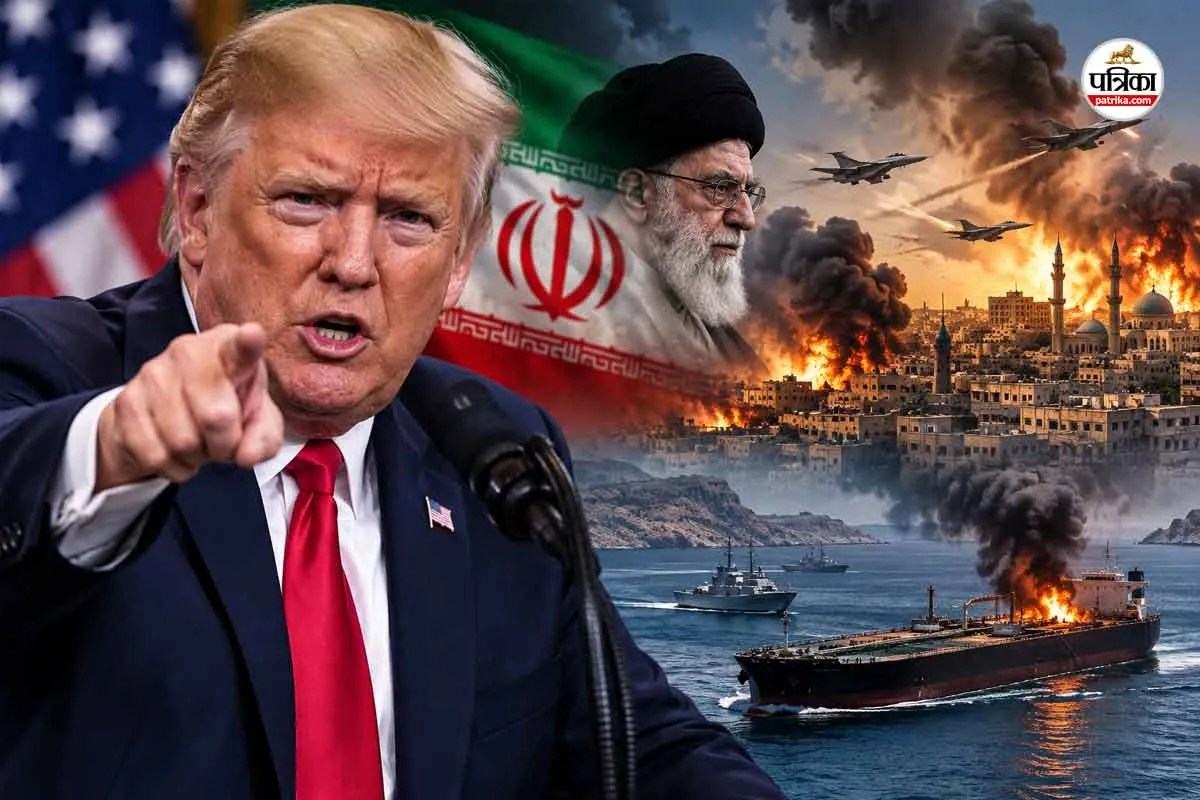
President Donald Trump has kept Washington and Tehran on edge by pairing a months-long naval blockade of Iranian ports with shifting signals about renewed military strikes, leaving markets and regional capitals guessing whether the conflict will escalate before 2027. What looks on the surface like a straightforward countdown to another round of bombing is actually a high-stakes contest over economic strangulation, domestic political fallout after the November midterm elections, and fragile backchannel negotiations.
For months, headlines have treated Trump's public warnings as a binary choice between a sudden deal and another wave of airstrikes. That framing misses how naval blockades work in practice. A blockade is rarely a clean prelude to invasion or a standalone peace tool. It is a slow-burning pressure cooker that reshapes domestic politics inside both target and enforcing states long before the next missile flies.
Why the Naval Blockade Changed the Calculus
The U.S. naval blockade of Iranian ports began in mid-April 2026 after hostilities erupted earlier in the year and traffic through the Strait of Hormuz became a central flashpoint. While initial rhetoric sounded sweeping, CENTCOM narrowed enforcement to vessels traveling to or from Iranian ports, turning maritime interdiction into a targeted economic chokehold.
Blockades punish by friction rather than shock. Shipping insurers hike rates, commercial carriers reroute or walk away, and spare parts become scarce. Inside Iran, shifting freight onto overland routes has proven slower and costlier, compounding severe inflation and straining basic logistics.
A naval blockade buys time without settling the underlying dispute. It squeezes an adversary's treasury while giving the blockading power room to maneuver—or room to get bogged down.
Economic strain rarely produces instant surrender. More often, it forces leaders to ration scarce resources and make hard political choices at home. In Iran, fuel pricing and rationing have remained politically explosive memories tied to past unrest, making any abrupt repricing a gamble for authorities even under intense financial pressure.
Shifting Rhetoric and Strategic Ambiguity
Watch Trump's public statements on the conflict over several months and a clear pattern emerges. One day he projects urgency or hints that a resolution—or renewed force—is close. Another day he insists he is in no rush and could let decisions stretch into 2027.
Critics view those swings as erratic or contradictory. Supporters and seasoned observers often read them differently. Strategic ambiguity keeps adversaries off balance, prevents rivals from pricing in a fixed deadline, and preserves presidential freedom of action.
There is a real cost to that approach. Allies struggle to plan force protection and diplomatic messaging when timelines move weekly. Markets react sharply to every hint of escalation or de-escalation, turning energy prices and shipping costs into political liabilities back in the United States.
What Midterm Fallout Means Before 2027
Domestic politics in Washington now weigh heavily on every military and diplomatic calculation. Following the November 2026 midterm elections, in which Democrats won control of Congress amid voter frustration over the conflict and its economic ripple effects, the White House faces a tighter political calendar ahead of the new session in January.
Vice President JD Vance and other administration figures have publicly grappled with how the war affected Republican voters, even as Trump sought to cast the election results in his own terms and keep negotiators and advisers aligned. Meanwhile, tensions persist over how much pressure regional partners, including Israel, want to apply for further strikes versus letting indirect diplomacy mediated by countries like Qatar play out.
Competing Pressures on the White House
- Military deterrence vs. escalation risk: Renewed strikes could aim to degrade weapons production or signal resolve, yet risk wider retaliation against shipping and regional infrastructure.
- Economic leverage vs. blowback: Keeping the blockade in place pressures Tehran, while prolonged disruption in energy corridors keeps voter sensitivity to fuel and living costs high at home.
- Negotiation tracks vs. hard red lines: Talks over frozen funds, maritime access, and security guarantees face deep mutual distrust and competing preconditions that neither side easily concedes.
Consider a hypothetical scenario to see how quickly these pressures collide. Suppose an incident near a shipping lane triggers calls for immediate retaliation just as indirect mediators report narrow movement on frozen assets. A strike might satisfy hawkish demands in the short term, yet collapse talks that took months to assemble and spike oil prices right before winter.
The Overlooked Fault Lines in Talks and Escalation
Most coverage treats negotiations as a simple checklist of demands. In reality, each demand carries structural traps that make quick breakthroughs rare.
| Core Issue | Washington's Stance | Tehran's Stance | Why It Stalls |
|---|---|---|---|
| Naval Blockade | Maintained as leverage while conflict and shipping risks persist | Demands lifting as a core condition | Each side views its own maritime posture as reactive to the other |
| Sanctions and Assets | Resists broad concessions without verifiable security terms | Seeks sanctions relief, asset access, and compensation | Statutory sanctions and domestic politics constrain rapid unilateral moves |
| Regional Fronts | Rejects open-ended commitments or bearing war costs | Links settlement to broader regional ceasefires and guarantees | Multiple actors and allies complicate enforceable guarantees |
There is also a counter-argument worth taking seriously. Some analysts argue that prolonged economic isolation rarely forces a determined government to abandon core security priorities; instead, it hardens leadership and shifts costs onto ordinary citizens. Others contend that without sustained naval and financial pressure, Tehran would face far less incentive to compromise on maritime transit or weapons programs.
Both arguments point to the same uncomfortable truth. Neither a blockade alone nor a fresh round of strikes guarantees a durable settlement.
What to Watch Next
Ignore the loudest daily soundbites and track three concrete indicators instead. Watch whether maritime interdiction tightens or eases around key ports, whether indirect mediators announce tangible movement on frozen assets and shipping safety, and whether congressional oversight in January alters the administration's room for military action. Those shifts—not theatrical rhetoric—will show whether this standoff is heading toward a fragile truce or another violent turn.


