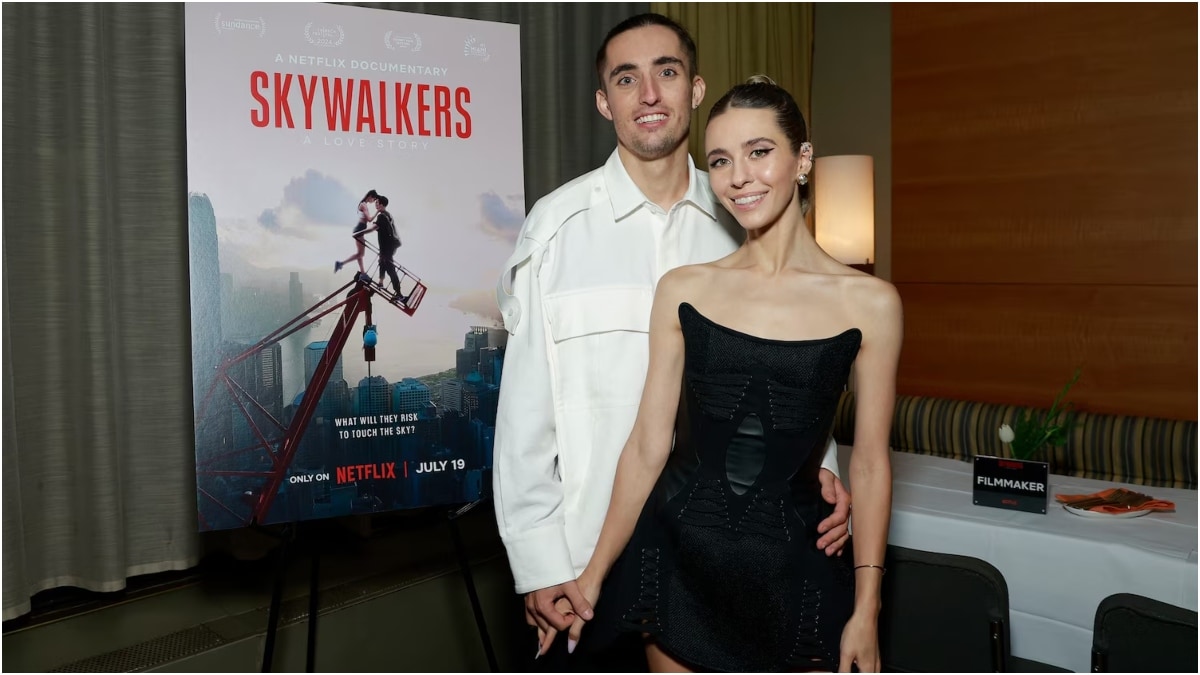
On July 1, 2026, Russian urban climbers Angela Nikolau and Ivan Beerkus scaled the 1,454-foot antenna of the Empire State Building, unfurled a world peace banner, and staged a high-altitude marriage proposal. The stunt ended with their immediate arrest on multiple charges, including burglary and reckless endangerment. While casual observers viewed the viral event as a romantic spectacle tied to their recent Netflix documentary, the breach exposes a much deeper issue. It highlights a massive breakdown in high-profile corporate security and the dark mechanics of an attention economy that rewards life-threatening trespassing.
Corporate Security Failures in Plain Sight
The immediate question reverberating through law enforcement and real estate circles is simple. How did two foreign nationals walk past layers of post-9/11 security checks with masks, cameras, and a massive fabric banner?
The Empire State Building is not a local apartment complex. It is a hardened commercial asset with metal detectors, mandatory bag screenings, and a heavy security footprint. Witnesses reported seeing the couple bypass mesh gates leading to restricted zones on the upper observation decks. They wore no tethers or safety equipment, relying entirely on the element of surprise and the passivity of bystanders who assumed they were maintenance workers.
This security failure reveals a vulnerability in modern infrastructure. Security guards are trained to look for explosive devices and active shooters, not social media influencers wearing Catwoman masks. By blending into the crowd and moving with absolute confidence, Nikolau and Kuznetsov—his legal surname—exploited the psychological gaps in corporate defense systems. The building management issued a brief statement asserting that the stunt did not endanger anyone inside the skyscraper. That response misses the mark entirely. If two content creators can access the most sensitive broadcasting infrastructure in New York City with zero resistance, the existing security protocols are functionally useless.
The Economics of Extreme Attention
To understand why a couple would risk a 1,400-foot plunge into midtown Manhattan, one must look at the balance sheets of modern celebrity. This was not a spontaneous act of love. It was a calculated marketing activation.
Nikolau and Beerkus are professionals. They were the centerpieces of a high-profile streaming documentary, and their entire livelihood depends on escalating the stakes of their trespasses. Previous climbs in China and Malaysia established their brand, but New York City offers a different tier of global visibility. The banner they unfurled quoted Jimi Hendrix, appealing directly to a broad, international audience.
The attention economy functions on an escalation model. Yesterday's viral rooftop photo becomes today's forgotten content. To maintain sponsorships, streaming deals, and digital engagement, creators must continually raise the physical risk. The Empire State Building itself leaned into the media frenzy, using the incident on social media to promote its official, legal marriage proposal packages. This corporate reaction underlines a hypocritical reality. High-rise management publicizes the romanticism of the tower while ignoring the structural failures that allowed the illegal climb to happen in the first place.
The Legal Consequences and the Illusion of Deterrence
The NYPD Emergency Service Unit intercepted the couple as they descended the antenna latticework. The charges filed against them are severe, spanning criminal mischief, criminal tampering, possession of burglar's tools, and disorderly conduct.
Arrests are rarely a deterrent for elite rooftoppers. For these individuals, a night in a Manhattan holding cell and a stack of legal fees are simply operational expenses. The subsequent media coverage, court appearance photos, and spike in follower counts far outweigh the misdemeanor penalties usually handed down in these cases. The legal system remains ill-equipped to handle defendants who view criminal prosecution as a form of PR optimization.
True deterrence would require real estate conglomerates to sue for civil damages regarding brand disruption, or for cities to implement mandatory jail time for high-altitude trespassing. Until the financial and personal costs of these stunts outweigh the digital payouts, iconic skylines will remain unprotected playgrounds for the internet's most desperate thrill-seekers.
Watch this Associated Press Bodycam Footage to see the exact moment NYPD officers intercepted and arrested the climbers inside the antenna structure.