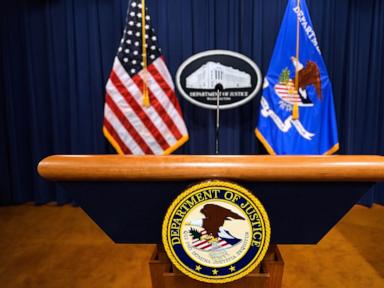
Federal pressure on California over alleged noncitizens on voter rolls has escalated from bureaucratic correspondence to the brink of courtroom litigation. Washington is signaling that state maintenance practices face direct federal enforcement if officials do not tighten verification and purge disputed registrations. California officials counter that federal demands rely on incomplete data matching and risk stripping eligible citizens of their franchise.
Seen this movie before. Every election cycle brings a fresh wave of outrage over voter rolls, followed by dueling press releases, statutory citations, and lawsuits that move slower than a county clerk's office at midnight on election night. Yet the collision between the Justice Department and California exposes deeper mechanics than cable news soundbites capture. It tests how federal election statutes interact with state motor vehicle agencies, how database cross-checks produce false positives, and why both sides treat noncitizens on voter rolls as a proxy battle for control over election administration.
How Motor Vehicle Agencies Feed the Rolls
Most Americans encounter voter registration through a mundane transaction. You renew a driver's license, update an address, or apply for a state identification card, and a prompt asks about registering to vote. Under the National Voter Registration Act, commonly known as motor voter legislation, states must offer registration opportunities alongside driver licensing services.
California added its own layer through automatic voter registration, known as CalVR. Under this system, eligible citizens who complete a driver's license or state ID transaction at the Department of Motor Vehicles are automatically registered unless they opt out. That design is convenient for citizens and administratively neat for the state. It also creates a structural vulnerability whenever DMV databases mix records of people with different legal statuses.
Licensing agencies issue documents to both citizens and lawful noncitizens. A noncitizen who holds a valid driver's license or work authorization may interact with the same agency infrastructure that feeds registration queues. In theory, automated filters and citizenship verification checks screen out ineligible applicants before a name ever reaches a county election database. In practice, software glitches, coding errors, or manual clerical mistakes have occurred in multiple states over the years, occasionally routing ineligible records into registration pipelines.
A single misclassified data field at a licensing counter can ripple across dozens of county election offices before anyone spots the error.
Consider a hypothetical example to see how a data mismatch happens in plain sight. Suppose a lawful permanent resident renews a driver's license at a local branch, and a clerk or legacy form field is misread by an intake script that flags the applicant as a citizen. Weeks later, a voter registration record is generated unless a downstream check catches the discrepancy. If the person never votes, the error may sit dormant for years. If they do cast a ballot, critics point to that single vote as proof of systemic failure, while election administrators point to the rarity of the event compared with millions of ballots cast.
State officials argue that voter roll maintenance is a continuous engineering task, not a static checklist. Databases update daily as residents move, die, change names, or naturalize. When a naturalized citizen updates a record or interacts with a government agency before citizenship data is synced across systems, an automated query can misread their status. Relying on a snapshot from a single agency without cross-checking federal citizenship records invites confusion.
Why Federal Enforcement Targets State Lists
When the Justice Department threatens legal action over noncitizens on voter rolls, it reaches into a toolkit shaped by federal statutes and competing interpretations of federal authority. Two laws sit near the center of modern disputes over voter registration lists: the National Voter Registration Act and the Help America Vote Act.
The National Voter Registration Act sets rules for how states register voters and how they remove names from lists. It restricts systematic removal programs within a set window before federal elections to prevent last-minute purges that could disenfranchise eligible voters. At the same time, it requires states to conduct general programs that make reasonable efforts to remove registrants who become ineligible due to death or change of residence.
The Help America Vote Act requires states to maintain a computerized, centralized, interactive statewide voter registration list at the state level. It also mandates verification procedures for certain applicants and requires list maintenance to be performed on a regular basis. Federal agencies and outside groups frequently debate how aggressively states must audit existing rolls and what triggers an obligation to remove a registrant.
Critics of California's approach contend that state officials move too slowly to verify questionable registrations or share data requested by federal authorities. From the federal enforcement perspective, ensuring that only eligible citizens remain on active rolls protects the integrity of federal elections and reinforces public confidence. If a state resists data requests or delays remediation after discrepancies are identified, Justice Department lawyers argue that litigation is the logical next step to compel compliance.
California leaders see the same statutory framework through a very different lens. They argue that federal demands often push states toward aggressive list-trimming tactics that risk removing lawful voters. Under federal law, removing an eligible citizen due to a flawed match or an unverified assumption violates statutory protections. State officials emphasize that citizenship verification often requires access to federal records controlled by agencies like U.S. Citizenship and Immigration Services or the Social Security Administration, which states cannot always query unilaterally with complete precision.
That tension creates a classic intergovernmental standoff. Washington says the state is not doing enough to scrub questionable names; Sacramento says Washington is demanding sweeping remedies without providing clean, indisputable proof of ineligibility for individual voters.
The Hidden Mechanics of Database Matching
Anyone who has worked with large public records knows the hardest problem is rarely collecting data. It is matching records across systems that were never built to speak the same language.
Voter files are organized primarily around names, residential addresses, dates of birth, and driver's license numbers or partial Social Security numbers. Immigration and citizenship files are built around alien numbers, naturalization certificates, visa categories, and federal case histories. Comparing the two requires data matching rules that balance sensitivity and specificity.
Loose matching rules cast a wide net. If a system flags every voter whose name and birth date resemble a noncitizen record without verifying middle names, suffixes, or unique identifiers, it generates a long list of potential matches. Most of those flags turn out to be false positives—citizens who share a common name with a noncitizen or whose naturalization happened after the comparison dataset was pulled.
Tight matching rules reduce false positives but can miss real discrepancies. If a system requires an exact match across multiple fields that are entered inconsistently—such as hyphenated last names, apartment numbers, or transliterated names—it may overlook genuine mismatches.
False Positives and Naturalization Lag
One of the thorniest technical issues in voter roll audits is timing. Citizenship is not a permanent label fixed at birth for everyone on the rolls; lawful permanent residents can apply for and receive naturalization.
Between the day a person takes the oath of citizenship and the day every state and federal database reflects that change, there can be a lag. A cross-check run during that window might flag a newly minted citizen as a noncitizen based on outdated records. If an election office sends a removal notice or suspends a registration without confirming current citizenship status, an eligible voter faces hurdles right when they try to cast a ballot.
Conversely, what if someone registered or appeared on a roll before becoming a citizen, and later naturalized? Legal scholars and election administrators often distinguish between a person who votes while ineligible and a person who is currently an eligible citizen whose past record contains an anomaly. Sorting out those nuances requires careful review rather than blunt automated purges.
County Autonomy Versus Statewide Oversight
Another factor that rarely gets enough attention is how decentralized American election administration actually is. Even when a state has a centralized voter registration database, day-to-day list maintenance, voter outreach, and registration processing happen across county offices.
California spans 58 counties, ranging from vast urban systems serving millions of residents to small rural counties with tiny staffs. County elections officials work with state-level tools and guidance, yet local workflows vary. When federal officials demand action or threaten suit over noncitizens on voter rolls, the legal pressure lands on state leadership, while the operational legwork—sending notices, reviewing records, updating statuses—touches local systems across the entire state.
What Is Actually at Stake in Court
A legal threat from the Justice Department is not yet a final court judgment. Before a judge rules on the merits, there are threshold questions about standing, statutory authority, administrative procedure, and factual proof.
In court, a plaintiff challenging a state's list maintenance practices generally needs more than broad generalizations or isolated anecdotes. Judges look for concrete evidence of statutory violations, clear standards for what constitutes reasonable maintenance, and practical remedies that do not unlawfully sweep in eligible voters.
State defendants typically push back on several fronts. They argue that federal agencies cannot rewrite statutory timelines or removal rules through enforcement letters. They contend that states have discretion over how they administer registration systems so long as they follow federal baseline requirements. They also warn that court-ordered purges based on incomplete matching lists could trigger separate lawsuits from voters and civil rights groups alleging wrongful removal.
There is also a practical reality that shapes litigation strategy on both sides. Court battles over voter rolls often stretch across election cycles. By the time motions are briefed, discovery is fought, and appellate rulings are issued, voters have already gone to the polls under existing rules, or election calendars have shifted. That timeline turns legal threats into immediate political and administrative leverage long before any final verdict arrives.
Gray Areas Nobody Likes to Admit
Honest reporting on voter roll integrity requires acknowledging where simple narratives break down. Neither side holds a monopoly on good intentions or technical perfection.
On one side, voters deserve confidence that eligibility rules are enforced consistently and that administrative errors in automatic voter registration or database synchronization are caught quickly. When a state agency handles millions of transactions, pretending that clerical mistakes or software bugs never happen strains credibility. Ignoring credible red flags simply fuels suspicion and erodes trust in election outcomes.
On the other side, rushing to purge registrations based on imperfect data carries real harm. A citizen who shows up to vote only to learn their registration was canceled or flagged due to a bad match faces confusion, delay, and potential disenfranchisement. Fixing a wrongful removal after an election does not restore a missed vote.
There is no silver bullet that eliminates every clerical error overnight without creating new risks. Better inter-agency data sharing, clearer audit trails, transparent reporting on discrepancies, and careful verification before any voter is removed are hard, unglamorous work. Yet that painstaking plumbing—not partisan shouting—is the only way to keep voter rolls accurate without breaking the right to vote.