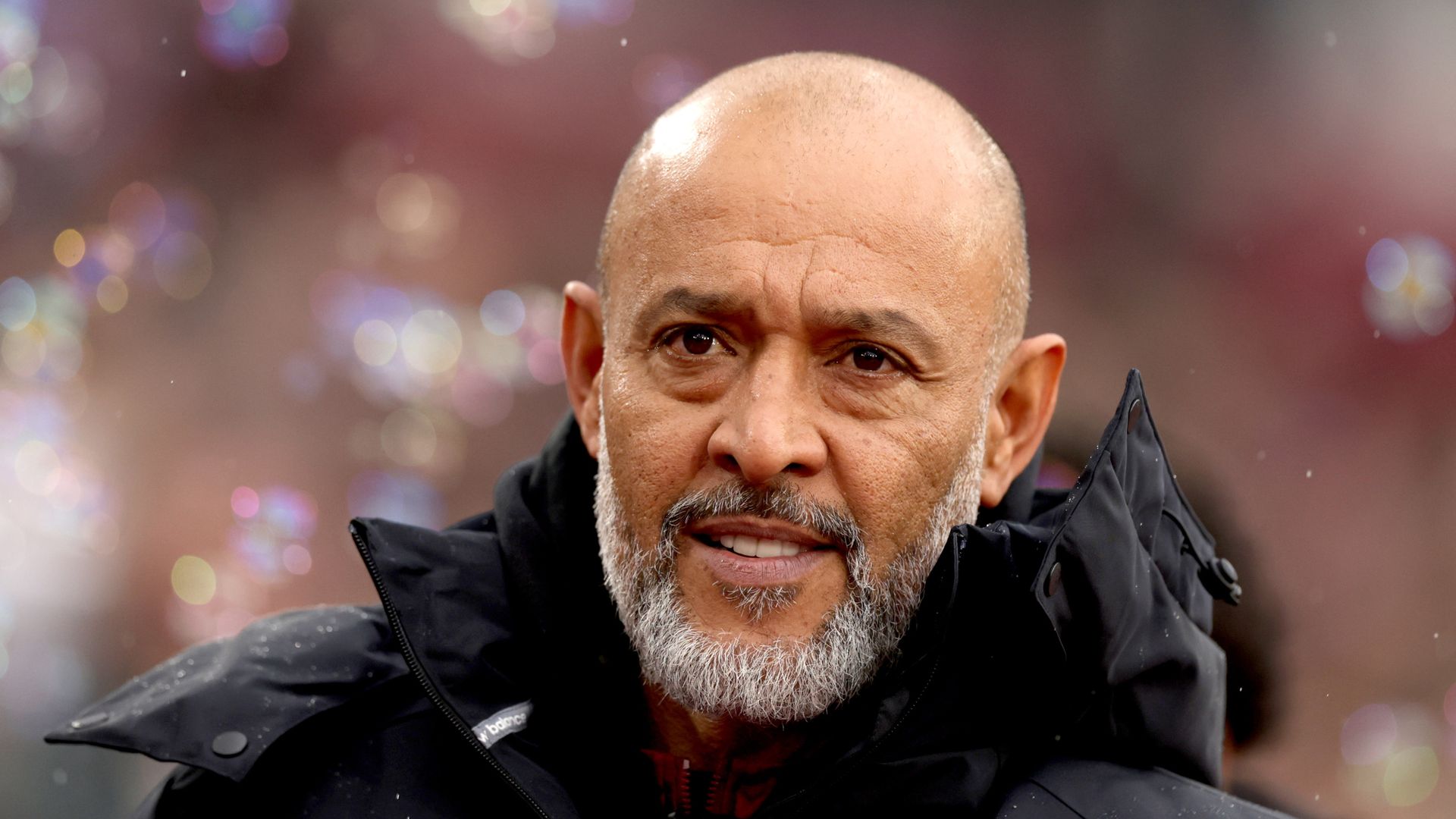
West Ham United have sacked head coach Nuno Espirito Santo following a dismal start to the Premier League campaign, bringing an abrupt end to a tenure defined by tactical friction and boardroom impatience. The decision comes after a string of damaging league defeats left the East London club hovering dangerously near the relegation zone, forcing the hierarchy into a familiar panic mode. While the surface narrative blames poor results on the pitch, the dismissal exposes a far deeper structural failure at the London Stadium—one where managerial appointments are routinely divorced from squad construction and long-term sporting identity.
To understand why Nuno failed in East London, you have to look at the fundamental mismatch between his coaching DNA and the environment he inherited. Football clubs love to talk about philosophies. Rarely do they actually fund or protect them. Nuno built his reputation at Wolverhampton Wanderers and later restored his credibility at Nottingham Forest using a very specific blueprint: compact defensive blocks, ruthless counter-attacking transitions, and an unwavering reliance on rapid, direct wide players. It is a system that requires total buy-in from a disciplined dressing room and an executive board willing to tolerate low possession metrics in exchange for structural security.
West Ham wanted something else entirely.
The Tactical Collision at the London Stadium
When the club moved away from the pragmatic era of David Moyes, the explicit mandate from the boardroom—and the vocal demand from the terraces—was progressive, front-foot football. Supporters paying some of the highest ticket prices in English football grew tired of watching their team cede 70 percent of the ball at home against mid-table opposition. Turning to Nuno Espirito Santo was always a curious pivot. It represented a reversion to low-block pragmatism dressed up as a fresh start.
The cracks appeared almost immediately. In modern Premier League football, a transition-based tactical model only functions if the central midfield possesses the recovery pace to screen the back four and the vertical passing range to spring attackers within three seconds of winning possession. West Ham’s recruitment over several transfer windows had assembled an expensive, technically gifted, yet physically unbalanced roster. You had creative midfielders who wanted the ball to feet, operating alongside aging defenders exposed whenever the line pushed ten yards too high.
Nuno tried to compromise. That was his fatal error.
Instead of enforcing his non-negotiable defensive shape, he attempted to hybridize his approach to appease critics, asking a squad ill-suited for a high press to step up the pitch while simultaneously maintaining rigid positional discipline off the ball. The result was tactical purgatory. The pressing triggers were disjointed, leaving cavernous gaps between the midfield and defensive lines. Opponents sliced through the center of the pitch with alarming ease. When West Ham did win the ball back, the distance between their isolated center-forward and the supporting cast was too vast to sustain meaningful attacks.
Boardroom Impatience and the Illusion of the Quick Fix
Sacking a manager early in the season is the oldest trick in the football executive playbook, and usually the least effective. It acts as an immediate pressure valve, redirecting supporter anger away from ownership and onto a solitary figure in the technical area. Yet when you examine the timeline of West Ham’s managerial churn over the past decade, a clear pattern emerges. The club operates on a reactive cycle rather than a proactive strategy.
Consider how sporting director alignment actually works at elite clubs. Organizations like Brighton, Brentford, or even Aston Villa under Unai Emery establish a clear game model first, recruit players to fit specific positional profiles second, and hire coaches who specialize in maximizing those exact traits. At West Ham, power dynamics in the transfer market have historically been murky, split between majority shareholders, external recruitment advisors, and whichever manager happens to occupy the hot seat at that particular moment.
When Nuno arrived, he was handed tools designed for a different carpenter. He wanted athletic, relentless runners capable of covering 12 kilometers a game; he was given technical ball-carriers who thrived in slow-tempo build-up play. During the transfer window, compromises were struck that satisfied nobody. Targets were missed, squad depth in critical positions like full-back and defensive midfield remained paper-thin, and the manager was left to patch holes with players operating out of position.
Once the losses began to mount, the silence from the upper tiers of the stadium spoke volumes. In football, a manager rarely survives once the narrative shifts from "work in progress" to "irreversible decline." The board saw empty seats appearing before the final whistle, heard the growing hostility during home fixtures, and calculated that the financial catastrophe of relegation far outweighed the cost of paying off another coaching staff.
The Dressing Room Dynamic and the Erosion of Authority
Managers do not lose dressing rooms overnight. Authority erodes slowly, millimeter by millimeter, through awkward substitutions, public deflections, and training ground monotony. Nuno is notoriously intense, a coach who demands absolute focus and repetitive tactical drilling. That methodology works wonders when the team is winning 1-0 away from home and climbing the table. When you are losing 3-0 and conceding cheap goals from set pieces, that same intensity feels suffocating.
Senior players begin to question the plan. Why are we defending so deep at home? Why are our most creative outlets spending 70 minutes chasing shadows in their own half?
Hypothetically, imagine an established international midfielder arriving at a club expecting to dominate games, only to spend every Friday afternoon practicing shadow-play defensive shifts without a ball. If that player sees positive results on Saturday, he buys in completely. If the team gets dismantled anyway, skepticism turns into quiet rebellion. Body language on the pitch deteriorates. Second balls go uncontested. The marginal gains that separate a mid-table finish from a relegation scrap vanish completely.
Nuno’s communication style did little to insulate him from the storm. Unlike managers who use press conferences to charm the media and rally the fanbase with charismatic rhetoric, Nuno is measured, guarded, and occasionally prickly. When results go south, stoicism is easily misread by frustrated supporters as apathy or stubbornness. Without a charismatic shield or a clear stylistic identity to point toward, he became an easy target.
The Financial Reality Behind the Trigger
To understand the timing of this dismissal, follow the money. The Premier League’s financial ecosystem is brutally unforgiving, and the gap between top-flight survival and Championship relegation represents hundreds of millions of pounds in lost broadcast revenue, commercial sponsorships, and player valuation depreciation.
West Ham carry one of the highest wage bills outside the traditional "Big Six." That cost structure is predicated entirely on Premier League status and regular pushes for European qualification. Dropping out of the division—or even enduring a protracted relegation battle that depresses the market value of key assets—poses an existential threat to their financial model. Under current Profit and Sustainability Rules (PSR), clubs have very little margin for error. You can no longer simply spend your way out of trouble in the January transfer window without risking point deductions.
Because the board cannot sack twenty-five players, and because PSR restricts their ability to overhaul the squad mid-season, firing the head coach becomes the only high-leverage move left on the board. The logic is brutally simple: bring in a new voice, trigger the statistical "new manager bounce," and pray that an injection of psychological energy unlocks the latent talent already sitting in the dressing room.
The Myth of the "West Ham Way"
Every club has a mythology, and few cling to theirs quite as tightly as West Ham United. The ghost of the "West Ham Way"—that romanticized ideal of swashbuckling, fearless, academy-driven attacking football—haunts every manager who walks through the doors at Rush Green. It is a standard that almost no modern pragmatism can survive.
The reality of the modern Premier League is that playing expansive, open football without elite-level defensive athleticism is tactical suicide. Teams like Manchester City, Arsenal, and Liverpool dominate possession because they possess world-class counter-pressing structures and defenders capable of winning one-on-one duels across 50 yards of open grass. When mid-table clubs attempt to mimic that style without the requisite personnel, they get shredded on the counter-attack.
Yet West Ham’s fanbase refuses to accept sterile pragmatism, and the board continually oscillates between trying to satisfy that cultural demand and panicking when the defensive vulnerabilities emerge. Hiring Nuno was an admission that the club needed defensive organization; firing him so quickly is an admission that they never truly had the stomach for the journey required to build it.
What Happens When the Dust Settles
The search for a replacement will immediately spark the usual carousel of familiar names—out-of-work tacticians, progressive coaches from lesser European leagues, and pragmatic firefighters specializing in survival. The candidates will sit in front of the board, present slick slide decks promising high-intensity football paired with defensive solidity, and ask for assurances regarding transfer backing.
None of it will matter unless the underlying operational structure changes.
If West Ham hire an aggressive, high-pressing tactician tomorrow, that coach will immediately run into the exact same squad limitations that doomed Nuno: a lack of recovery speed at center-back, an aging midfield engine room, and forward options better suited to attacking space than breaking down organized low blocks. Conversely, if they hire another defensive pragmatist, the stadium atmosphere will turn toxic the moment the team sits behind the ball at home against a newly promoted side.
True stability in elite football requires alignment from the owner's box down to the academy pitches. It requires a sporting director with genuine autonomy to build a coherent squad over four or five transfer windows, immune to the knee-jerk reactions of a bad month in autumn. It requires patience when a new system experiences growing pains.
Nuno Espirito Santo leaves East London with his reputation bruised, another casualty of modern football’s shrinking attention span. He made plenty of mistakes—his reluctance to rotate fatigued players, his muddled tactical compromises, and his inability to spark an apathetic dressing room all accelerated his exit. He was, however, merely the latest symptom of a chronic organizational illness. Until West Ham United decide what kind of football club they actually want to be, the manager's office at the London Stadium will remain a revolving door.