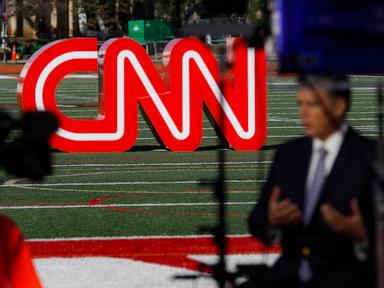
The friction between executive power and the independent media reached a boiling point when a federal judge extended an order preventing the White House from locking out reporters from CNN, MS NOW, and Politico. What began as a sudden social media directive targeting specific news organizations has metastasized into a constitutional standoff over physical proximity to power. For decades, the architecture of political reporting has relied on a shared understanding that access to the executive branch is governed by established protocols rather than political litmus tests. When that architecture cracks, the implications extend far beyond the immediate litigants, raising fundamental questions about how information flows from the highest office in the country to the public.
To understand why this legal battle matters, one must look closely at how modern presidential reporting actually functions. Physical access is currency. When a administration decides to strip credentials from nearly eighty journalists across multiple major outlets, it does not merely inconvenience individual reporters; it alters the mechanics of accountability. Modern governance is defined by micro-interactions—the shouted questions across a South Lawn helicopter pad, the impromptu briefings in the West Wing, and the tight confines of the traveling press pool aboard Air Force One. By shutting out organizations whose coverage it deems hostile, the executive branch effectively redraws the boundaries of who gets to witness history in real time.
The administration’s defense relies heavily on the premise that physical presence within executive facilities is an unregulated privilege rather than a protected right. Government attorneys have consistently argued that presidents possess absolute discretion over who enters their workspace. Yet, this perspective collides directly with decades of jurisprudence establishing that once the government opens a public forum for speech and newsgathering, it cannot selectively eject participants based on viewpoint discrimination. U.S. District Judge Timothy Kelly’s decision to maintain the injunction underscores the judiciary's skepticism toward retaliatory access restrictions. Even so, the administrative workaround has proved potent. While baseline credentials may be restored by court order, the day-to-day mechanisms of the protective pool—such as rotations for confined-space reporting—remain fiercely contested battlegrounds.
Consider the operational reality of the White House press pool. It is a cooperative mechanism designed to ensure that a manageable number of journalists can document presidential movements and share their observations with the broader media ecosystem. When key participants are barred from these rotations, the entire pipeline of information stutters. The administration argues that alternative reporting positions just outside the gates are entirely sufficient for public oversight. Critics and legal scholars counter that reporting on an administration from a sidewalk misses the vital nuance of direct observation, transforming journalism from an active inquiry into a passive reception of official messaging.
This conflict is not occurring in a vacuum. It represents the culmination of a multi-year erosion of norms surrounding the executive press corps. Successive administrations have experimented with various forms of press management, from shrinking briefing rooms to bypassing traditional correspondents entirely via digital channels. Yet, the wholesale revocation of access for entire newsrooms represents a quantitative leap in executive control. It forces a reckoning within the industry itself. When major television networks briefly suspended their pool coverage in solidarity following the initial ban, it signaled that institutional media organizations recognize an existential threat to their mandate.
The legal maneuvering will undoubtedly wind its way through appellate courts, potentially setting a monumental precedent for future executive branches. Every generation of political leaders redefines the terms of engagement with the press, but the digital era has accelerated the friction. When the dust settles on these injunctions and amended complaints, the fundamental tension will remain unresolved. A presidency determined to manage its image by exclusion will continuously test the limits of judicial restraint, leaving the free press to fight not just for headlines, but for the physical space to write them.


