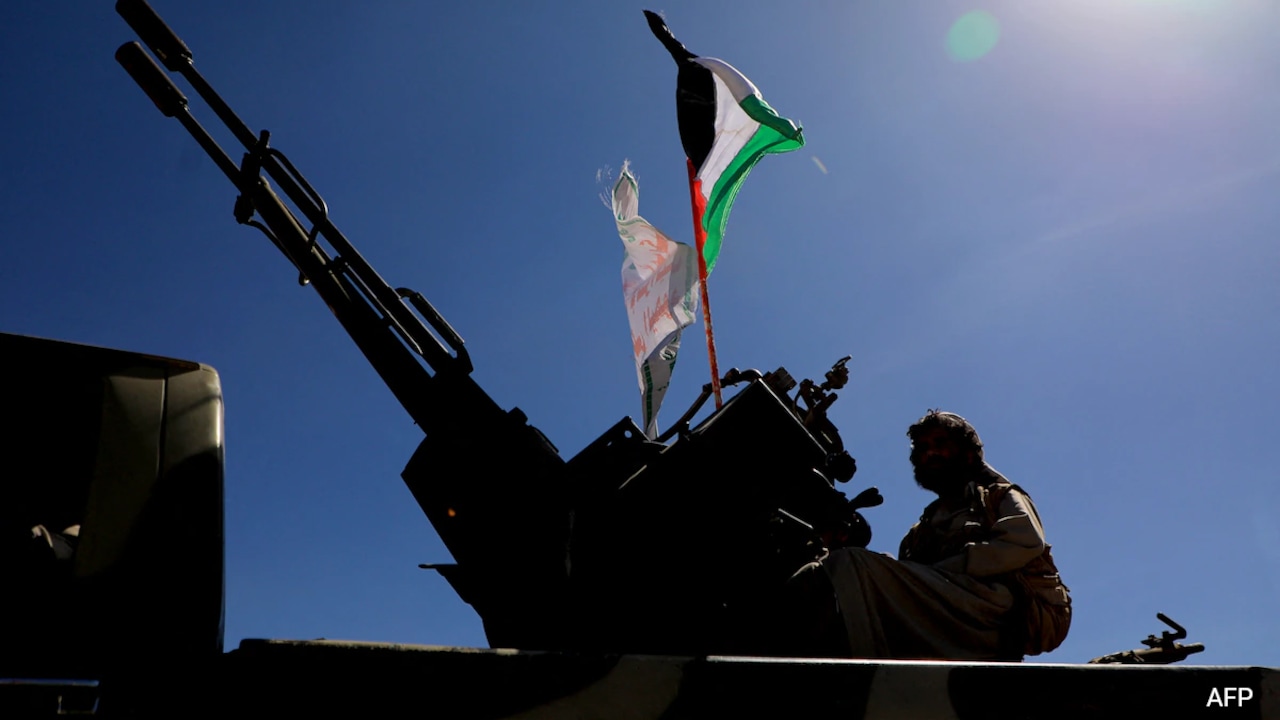
The recent Houthi downing of a Saudi military drone during the heaviest border clashes since the 2022 truce has shattered the quiet in the Arabian Peninsula. This violent flare-up, occurring along the rugged northern border provinces, represents the most significant breakdown of the de facto ceasefire in over three years. For years, regional actors clung to the belief that backchannel negotiations in Muscat had permanently pacified the conflict. The reality is far less comforting. The truce was never a path to peace, but a tactical pause that both sides used to rearm, regroup, and wait for the geopolitical winds to shift.
Now, those winds have shifted.
The Anatomy of a Calculated Escalation
The weapon that brought down the Saudi reconnaissance aircraft was not a makeshift anti-aircraft gun. Analysts tracking Yemen’s military evolution point to the Houthi movement's possession of sophisticated, Iranian-engineered loitering surface-to-air missiles, specifically the system known western intelligence designates as the 358 missile. This is a weapon designed specifically to hunt medium-altitude, long-endurance drones. By deploying this system now, the Houthis sent a direct message to Riyadh.
The message was simple. The skies over northern Yemen are no longer safe for Saudi reconnaissance.
These border skirmishes did not happen in a vacuum. Under the cover of the 2022 United Nations-brokered truce, the Houthis did not demobilize. Instead, they built a highly organized military administration. They integrated tribal militias into a formal command structure and established a reliable domestic assembly line for imported missile and drone components. They waited. When Saudi forces attempted to patrol the border zone to monitor these developments, the Houthi forces reacted with coordinated artillery fire and drone interception.
This was not a misunderstanding. It was a calculated demonstration of strength.
Why Riyadh is Desperate to Keep the Quiet
For Saudi Arabia, the stakes extend far beyond the dry mountain passes of Sa'dah. Crown Prince Mohammed bin Salman has staked his entire political legacy on Vision 2030, an ambitious plan to transform the kingdom into a global tourism, financial, and logistics hub. This economic transformation requires one critical, non-negotiable ingredient. Stability.
Global capital does not flow into countries under threat of ballistic missile attacks.
The memory of the 2019 Abqaiq-Khurais attacks, which temporarily knocked out half of Saudi oil production, still haunts Riyadh. Every drone shot down over Yemen is a reminder of what could easily happen to the futuristic mega-cities currently rising from the Saudi desert if the conflict spills back across the border. This fear has forced Saudi diplomats into a position of strategic patience, often tolerating Houthi provocations that would have triggered massive retaliatory bombing campaigns five years ago.
This asymmetrical dynamic gives the Houthis immense political strength. They understand that Riyadh is willing to pay a high price to keep the peace, which allows the rebel movement to consistently push the boundaries of the truce without fearing a return to the scorched-earth campaign of the mid-2010s.
The Illusion of Iran Control
Western policymakers frequently simplify the Yemen conflict as a straightforward proxy war. They view the Houthis as mere instruments of Tehran, executing orders received directly from the Islamic Revolutionary Guard Corps. This view is dangerously incomplete.
While Iran undoubtedly provides the telemetry data, guidance microchips, and rocket fuels needed for the Houthi arsenal, the political decisions are made in Sana'a, not Tehran.
The Houthis have their own domestic survival instincts and regional ambitions. They recognize that their legitimacy inside Yemen relies heavily on maintaining a state of perpetual mobilization against external enemies. Without a foreign adversary to blame, the Houthi administration would have to answer to the millions of Yemenis living under their rule who lack basic public services, salaries, and clean water. War, or the constant threat of it, is the glue that keeps their regime together.
The Failure of Western Deterrence
The international response to Houthi assertiveness has been predictably ineffective. Naval coalitions led by the United States and the United Kingdom have spent billions of dollars attempting to secure the shipping lanes of the Red Sea and Gulf of Aden. They fired high-end air-defense missiles to intercept cheap attack drones. They launched targeted airstrikes against launch sites and radar installations deep inside Yemen.
It failed.
The airstrikes did not degrade the Houthi military capacity in any meaningful way. If anything, the Western intervention elevated the group's prestige among its domestic base and across the wider region. It allowed the Houthis to frame their domestic struggle as part of a grander regional confrontation, effectively decoupling their political fate from the local economy.
Saudi Arabia watched this Western failure with growing unease. Riyadh realized that if the United States Navy could not secure the Red Sea, the kingdom could certainly not rely on Washington to protect Saudi airspace if a full-scale war resumed. This realization has driven Riyadh even closer to the negotiating table, even as the Houthis continue to shoot down Saudi aircraft and probe border defenses.
The Human Cost of a Frozen War
The tragedy of the "no war, no peace" status quo is borne entirely by the Yemeni population. While major aerial bombardments have stopped, the economic blockade of the country remains largely intact. Salaries for public sector workers in Houthi-controlled territories have gone unpaid for years. The healthcare system has collapsed, leaving millions vulnerable to preventable diseases and malnutrition.
The truce did not solve the humanitarian crisis. It merely made it quiet enough for the rest of the world to ignore.
Foreign aid budgets for Yemen are drying up as international attention shifts to other global crises. The country is split into competing fiefdoms, with the internationally recognized government fractured and weak in the south, and an increasingly authoritarian Houthi state consolidated in the north. This division is hardening into a permanent reality.
The downing of the Saudi drone is a warning. The current arrangement is unsustainable, and the illusion of a frozen conflict is rapidly dissolving, leaving behind a volatile regional reality that no one is prepared to manage.