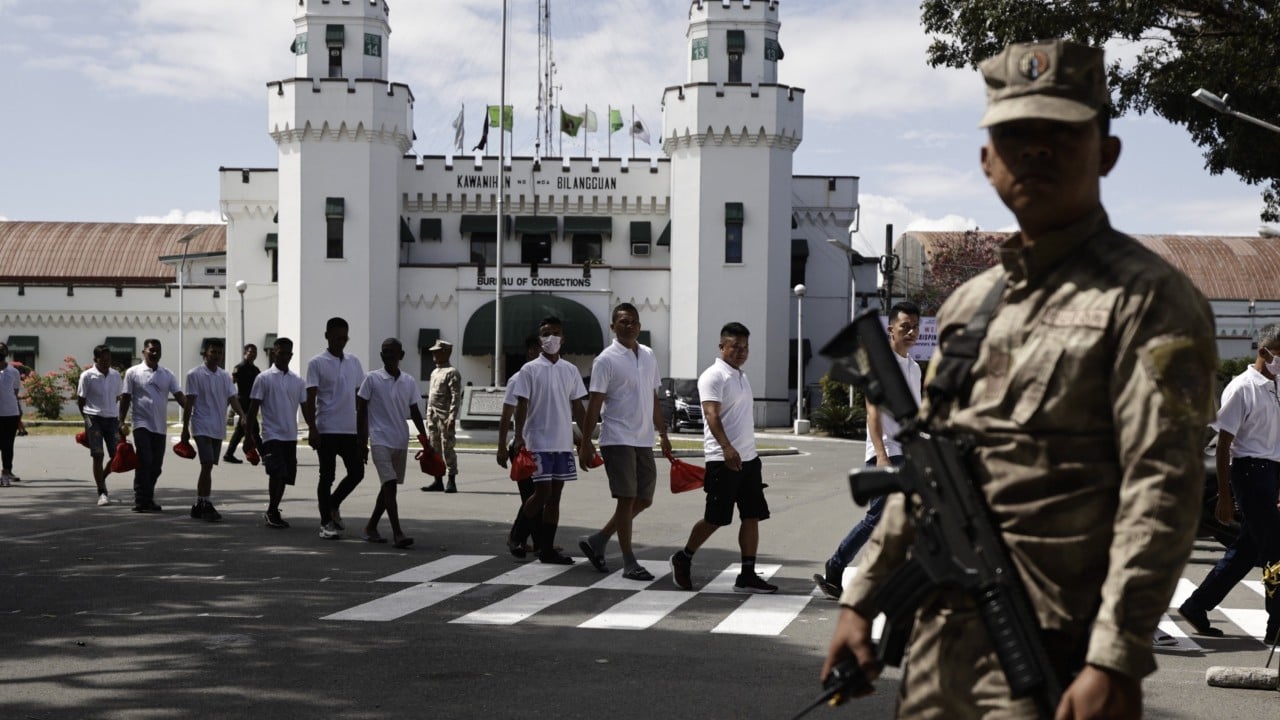
When a judicial decree ordering release collides with bureaucratic paralysis, the state frequently defaults to physical containment. The case of Tang Lung-wai, a Hong Kong national incarcerated in the Philippines for over two decades before a Manila court ruled his sentence fully served, exposes a critical structural failure in cross-border penal and immigration processing. Re-incarcerating an officially freed individual under the pretext of severe weather highlights an institutional breakdown where administrative inertia supersedes judicial mandates. Analyzing this event requires looking past the immediate friction of a tropical storm and examining the operational mechanics governing foreign nationals caught in bureaucratic limbo.
The Jurisdictional Void Between Judiciary and Immigration
The primary point of failure lies in the structural disconnection between criminal courts and immigration enforcement agencies. A criminal court's jurisdiction terminates upon the completion of a sentence, including reductions for good conduct time allowances. At that precise juncture, the legal status of the individual transitions from a convicted felon to a subject awaiting administrative deportation. If you found value in this piece, you might want to read: this related article.
In practice, this transition introduces a hazardous jurisdictional vacuum:
- The correctional facility loses its statutory authority to hold the individual under criminal law.
- The immigration bureau cannot process the physical transfer or intake without direct administrative sign-offs, commissioner-level approvals, and verified travel documents.
- External disruptions—such as weather-related government office closures—freeze the immigration bureaucracy while leaving correctional infrastructure fully operational as a default holding tank.
This creates a perverse incentive structure. Because prisons possess the physical capacity to house individuals indefinitely, they absorb the friction of bureaucratic delays. When the Bureau of Immigration fails to take custody due to administrative bottlenecks or weather shutdowns, the system defaults to the path of least resistance: returning the freed individual to a maximum-security prison cell. For another perspective on this event, check out the recent update from BBC News.
The Cost Function of Administrative Backlogs
Deportation processing speeds in nations with strained penal and immigration infrastructures are bound by predictable operational bottlenecks. Foreign nationals facing deportation do not experience a linear queue; rather, their timelines are dictated by discretionary commissioner approvals, inter-agency document verification, and consular coordination.
When external shocks hit—such as seasonal typhoons that suspend civil service operations—the processing queue suffers exponential delays rather than linear extensions. The backlog compounds because immigration offices operate under fixed human capital constraints. When administrative days are lost to weather events, the backlog of pending deportations creates a cascading wait time that routinely stretches from weeks to months, and in severe cases, beyond a year.
For an individual whose freedom has been legally restored by a court order, every day spent trapped in this backlog represents an unconstitutional deprivation of liberty. The operational failure is the absence of an intermediate housing mechanism. By relying on maximum-security correctional facilities as holding zones for non-offenders awaiting administrative transit, the state conflates penal detention with immigration logistics, shifting the cost of its administrative inefficiencies directly onto the detained individual.
Diplomatic Intervention and Structural Leverage
Resolving cases involving transnational prisoners requires navigating complex diplomatic channels. When local administrative apparatuses stall, the intervention of home governments and consular offices becomes the primary mechanism to accelerate processing.
The mechanics of diplomatic leverage rely on three distinct vectors:
- Formal diplomatic inquiries initiated by the home territory's security and immigration branches via local embassies.
- High-level executive appeals, historical precedents of which include direct correspondence between regional chief executives and national presidents.
- Consular identity verification and emergency travel document issuance to bypass domestic administrative foot-dragging.
Yet, these diplomatic vectors are constrained by sovereignty principles. Host nations retain the unilateral administrative right to govern the physical movement of foreign nationals within their borders during deportation proceedings. Former security officials point out that host states operate under broad administrative discretion to confine individuals until exit paperwork is fully realized. This creates a diplomatic standoff where home governments advocate for human rights and immediate release to alternative non-penal housing, while host authorities prioritize procedural compliance and risk mitigation over individual liberty.
Operationalizing Alternative Transit Protocols
To eliminate the recurrence of illegal detention masked as weather delays, institutional frameworks must decouple immigration processing from penal infrastructure. The standard operating procedure of returning cleared individuals to maximum-security prisons must be replaced with designated administrative holding facilities or monitored third-party accommodations, such as secure immigration hostels or supervised hotel transit.
The transition requires a binding statutory mandate: the moment a court executes a release order based on completed time served, the penal facility's legal mandate to detain ceases permanently. If the immigration bureau cannot accept physical custody due to environmental shutdowns or administrative backlogs, the burden must fall on the state to provide non-penal transitional housing rather than defaulting to the prison system. Establishing this operational firewall ensures that administrative inefficiency and meteorological disruptions never again translate into the unauthorized re-imprisonment of a free individual.