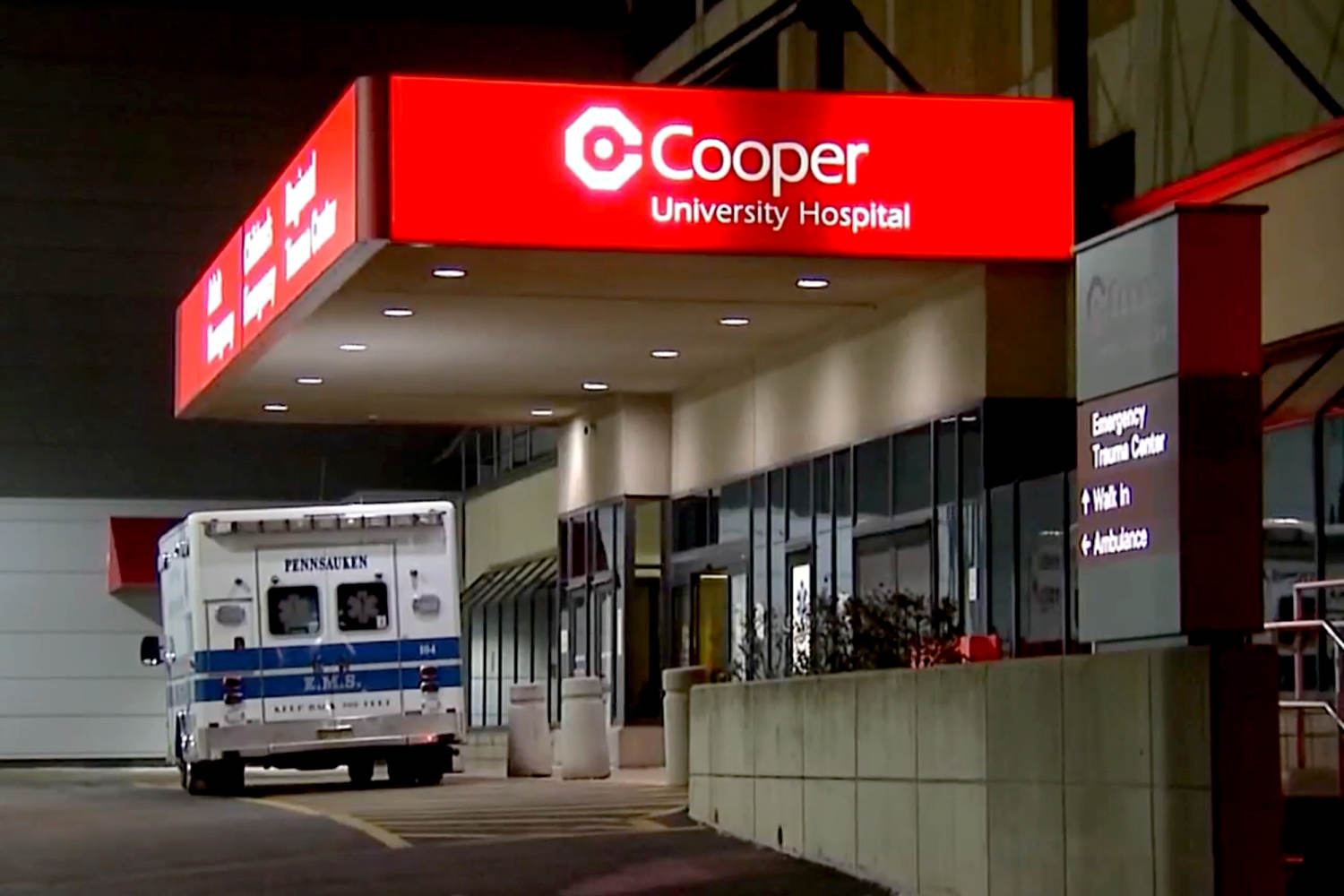
The air inside a sterile supply room has a specific, metallic stillness. It smells of rubbing alcohol, vacuum-sealed plastic, and the faint, ozone scent of high-grade electronics. In a large hospital like Clara Maass Medical Center in Belleville, New Jersey, these rooms are the quiet cathedrals of modern medicine. Every item on the shelf—from a simple suture to a high-end surgical stapler—represents a moment of crisis held at bay.
But for more than half a decade, a ghost was haunting these aisles.
This wasn’t a supernatural presence. It was a man named Peter Sclafani. As a former procurement manager, he wasn't just a cog in the machine; he was the gatekeeper. He held the keys to the kingdom of gauze, blades, and life-saving tech. While doctors were fighting to keep hearts beating and lungs breathing, Sclafani was allegedly busy engineering a massive, slow-motion heist that would eventually total $2.5 million.
Think about that number for a second. Two and a half million dollars. It is a figure that feels abstract when printed on a balance sheet, but in the context of a hospital, it is visceral. It is the cost of countless surgeries. It is the salary of dozens of nurses. It is the difference between a facility that thrives and one that has to cut corners on the very people it serves.
The Art of the Invisible Exit
How do you walk out of a hospital with millions of dollars in supplies without anyone noticing? You don't do it all at once. You don't back a semi-truck up to the loading dock in the middle of the night like a scene from a heist flick.
Instead, you use the paper trail as your camouflage.
Between November 2017 and August 2023, the federal government alleges that Sclafani mastered the art of the "ghost order." As the person in charge of buying, he could dictate what the hospital needed—or what he said it needed. Imagine a scenario where a head nurse requests fifty specialized surgical kits for a busy week of gallbladder removals. Sclafani orders sixty. The extra ten never hit the hospital floor. They never touch a patient. They simply vanish into the trunk of a car or a side-street exchange.
Money has a way of blurring the lines of morality when the victim feels like a faceless corporation. A hospital is a massive entity, often part of a multi-billion-dollar network like RWJBarnabas Health. To a thief, skimming a few crates of sutures might feel like taking a cup of water from the ocean. No one will miss it, right?
Wrong.
The ocean is made of drops. When Sclafani allegedly sold these stolen goods to third-party distributors—companies that operate in the "grey market" of medical resale—he wasn't just stealing plastic and steel. He was stealing the hospital’s ability to function at its peak.
The Grey Market Ripple Effect
To understand the weight of this crime, we have to look at where those stolen goods went. The medical supply chain is a delicate, highly regulated ecosystem. When a manufacturer ships a box of orthopedic screws to a hospital, there is a chain of custody. We know exactly where those screws have been, the temperature at which they were stored, and their expiration date.
When supplies are siphoned off into the grey market, that chain of custody snaps.
Picture a patient lying on an operating table, mid-procedure. The surgeon reaches for a specific brand of mesh or a specialized catheter. They trust that this tool is pristine. But if that tool was stolen, stored in a humid garage for three months, and then sold back into the system through a shady middleman, that trust is a lie. This isn't just about a guy making a buck; it’s about the silent introduction of risk into a place where risk is supposed to be managed to zero.
Sclafani’s alleged scheme was a masterpiece of administrative sleight of hand. He was the one who approved the invoices. He was the one who verified the deliveries. In the world of corporate fraud, this is known as the "broken window" theory of internal controls. If the person tasked with fixing the windows is the one throwing the bricks, the house is going to get cold very fast.
A Betrayal of the Blue Scrubs
There is a deep, quiet anger that hums through the hallways of a hospital when news like this breaks.
Consider the hypothetical nurse—let's call her Elena. Elena works the night shift in the ICU. She’s been asking for a new bladder scanner for six months, but the budget is tight. She’s told there just isn't enough capital this quarter. She makes do with an older model that takes twice as long to calibrate. She stays late, she skips her lunch, and she navigates the daily friction of a resource-strapped environment.
Then, she reads the headline.
She learns that while she was stretching every bandage and reusing every piece of equipment possible, a man in a comfortable office was allegedly treating the hospital’s budget like a personal ATM. The $2.5 million Sclafani is accused of pocketing is not just "corporate money." It is Elena’s scanner. It is the extra staff member on the floor during a flu surge. It is the upgraded software that prevents medication errors.
Theft in healthcare is a unique brand of betrayal. It isn't like robbing a bank, where the money is insured and the impact on the customer is a few hours of paperwork. In a hospital, every dollar stolen is a direct hit to the quality of life for the community. It is a tax on the sick.
The Slow Burn of Discovery
The question that always lingers in these cases is: how did he get away with it for so long?
Six years. From 2017 to 2023.
The answer lies in the sheer volume of a modern hospital's operations. A facility like Clara Maass processes thousands of transactions a week. When you are moving mountains of supplies, a few pebbles going missing doesn't immediately set off alarms. It requires a sophisticated audit, often triggered by a small, nagging inconsistency that finally catches an accountant's eye.
Perhaps it was a discrepancy in the inventory during a routine check. Maybe a vendor mentioned an order that didn't show up in the internal logs. Or perhaps the lifestyle of a procurement manager started to look a little too lavish for a Belleville salary.
Once the thread is pulled, the whole sweater unspools.
Sclafani now faces charges of wire fraud, a heavy federal hammer that carries the potential for decades in prison. The U.S. Attorney’s Office doesn't move on these cases until the math is airtight. They have the invoices. They have the bank records. They have the trail of a man who thought he could outrun the system by hiding in its blind spots.
The Invisible Cost of Cynicism
Beyond the dollars and the legal filings, there is a more insidious cost to a crime like this. It breeds cynicism.
When we go to a hospital, we are at our most vulnerable. We surrender our clothes, our privacy, and our very lives to the hands of strangers. We have to believe that the system is built on a foundation of integrity. When a high-level employee is accused of such a massive breach of trust, that foundation cracks.
It makes the donors hesitate before they write a check for the new cancer wing. It makes the taxpayers grumble when public health funding is debated. It makes every honest employee feel like they are being watched with a more suspicious eye.
Sclafani wasn't just taking supplies. He was taking the "health" out of healthcare.
The tragedy of the $2.5 million heist is that it was entirely preventable. It was a failure of oversight, yes, but more importantly, it was a failure of the social contract. We expect the people who work in the business of healing to be guided by something more than greed. We expect them to see the human being at the end of every supply chain.
The Empty Shelf
In the wake of the scandal, the hospital will undoubtedly tighten its belt. New software will be installed. More auditors will be hired. Double-signatures will be required for every box of nitrile gloves. The "Sclafani protocols" will become a standard part of the administrative training, a cautionary tale whispered to new hires.
But for the patients who passed through those doors between 2017 and 2023, there is a haunting thought. Did they wait longer for a procedure because of a "supply chain issue" that was actually a man in a warehouse? Did a doctor have to settle for a second-choice instrument because the first choice had been sold to a distributor in another state?
We will likely never know the full extent of the collateral damage.
The stolen $2.5 million is gone, likely dissipated into the mundane luxuries that fuel a fraudulent life. What remains is a stark reminder that in the high-stakes world of medicine, the most dangerous pathogen isn't always a virus. Sometimes, it’s a person with a clipboard and a plan.
The supplies have been accounted for, the charges have been filed, and the courtroom will eventually have its say. But in the quiet supply rooms of Belleville, the air remains still, a little colder than it was before, carrying the weight of a debt that can't be repaid with a check.
Some things, once stolen, are never truly returned.