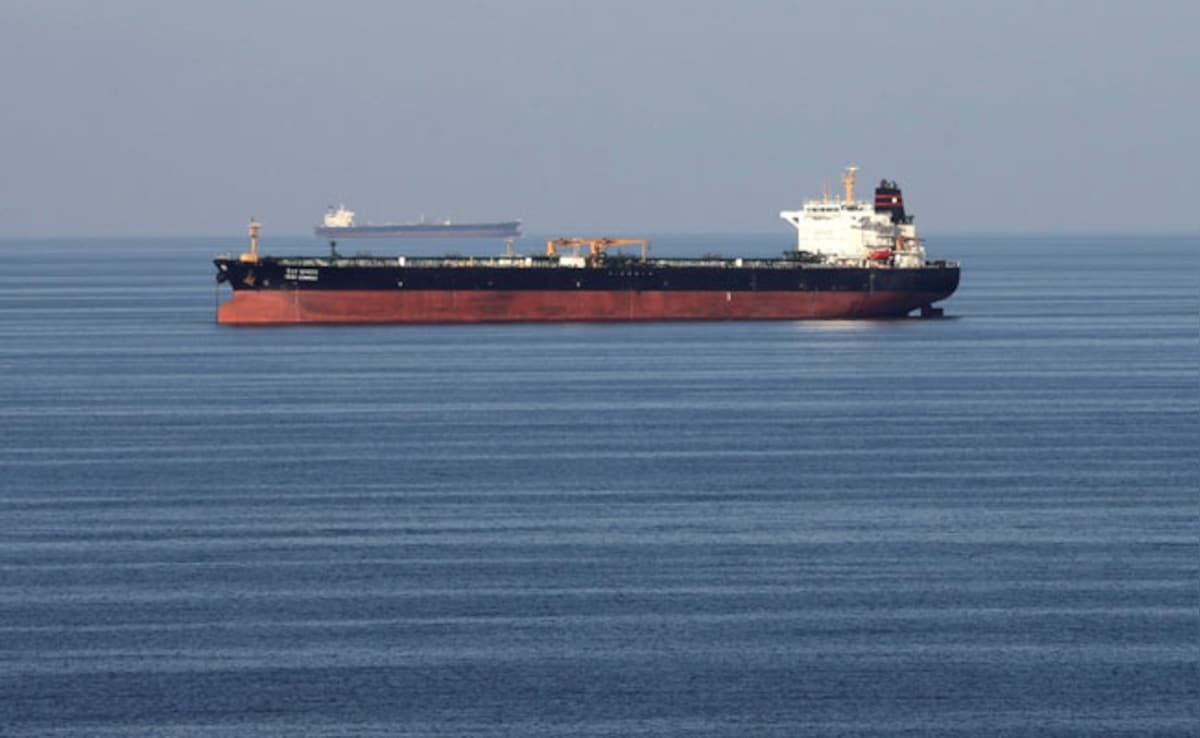
The Strait of Hormuz is not a "passageway" in the way a highway is a route for cars. It is a biological necessity for the global economy, acting more like a jugular vein than a simple transit corridor. If it stops pulsing, the modern world goes into immediate shock. Every day, roughly 21 million barrels of oil pass through this 21-mile-wide strip of water separating Iran and Oman. That represents about one-fifth of the world’s daily petroleum consumption. For the major economies of Asia—China, India, Japan, and South Korea—this water is the literal source of their industrial survival.
The math of a shutdown is brutal. Even a temporary disruption in the Strait would send crude prices skyrocketing toward $150 or $200 a barrel, triggering a global recession that could last for years. While analysts often talk about "diversification" or "green energy shifts," the reality on the ground remains unchanged. The world is addicted to the specific grade of crude coming out of the Persian Gulf, and the Strait of Hormuz is the only door out of the room. Recently making news in this space: The Jurisdictional Boundary of Corporate Speech ExxonMobil v Environmentalists and the Mechanics of SLAPP Defense.
The Geography of Vulnerability
The Strait’s narrowest point consists of two two-mile-wide shipping lanes, one for incoming traffic and one for outgoing, separated by a two-mile buffer zone. This tiny footprint makes the entire global energy market hostage to a geography that favors the asymmetric actor.
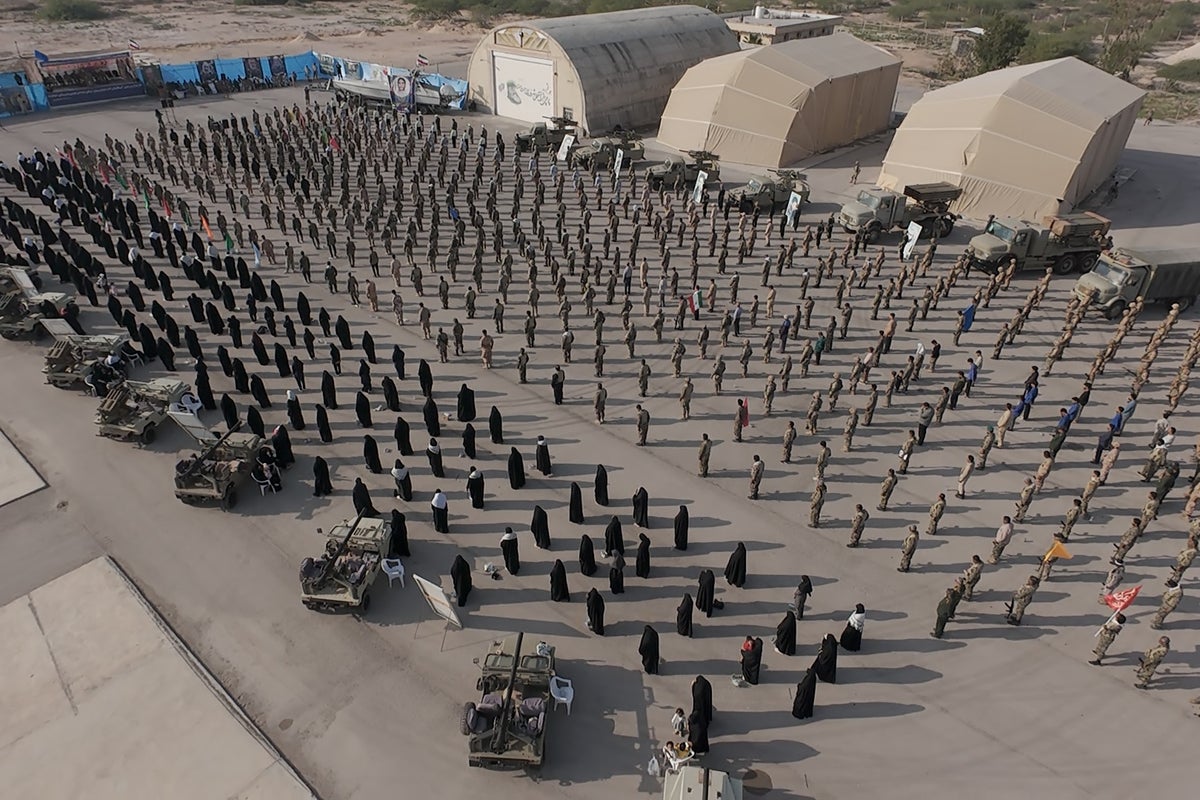
Modern naval warfare typically involves carrier strike groups and high-altitude surveillance, but the Strait of Hormuz negates many of those advantages. In these shallow, confined waters, a billion-dollar destroyer is surprisingly vulnerable to low-tech threats. Iran’s Islamic Revolutionary Guard Corps (IRGC) Navy has spent decades perfecting "swarm" tactics—using hundreds of fast-attack boats armed with missiles and mines to overwhelm sophisticated defenses. More information regarding the matter are detailed by Harvard Business Review.
History shows this isn't theoretical. During the "Tanker War" of the 1980s, more than 500 merchant vessels were attacked or damaged. The United States eventually had to initiate Operation Earnest Will, the largest naval convoy operation since World War II, just to keep the oil flowing. Today, the stakes are higher because the global supply chain is "just-in-time." There is no significant buffer. If a tanker is hit today, the price at the pump in Chicago or Berlin rises tomorrow morning.
The Myth of Pipeline Bypasses
Politicians often point to pipelines as the solution to the Hormuz problem. On paper, these projects look like a way to circumvent the chokehold. Saudi Arabia has the East-West Pipeline, and the United Arab Emirates operates the Habshan–Fujairah line.
However, these alternatives are vastly insufficient. Combined, all existing pipelines that bypass the Strait can handle roughly 6.5 million barrels per day. That leaves nearly 15 million barrels with nowhere to go if the Strait is closed. Furthermore, these pipelines are fixed infrastructure. They are easy targets for sabotage, drone strikes, or cyberattacks.
The physical reality is that there is no replacement for deep-water shipping. You cannot move 20% of the world's energy through a straw. The Strait remains the only viable exit for the massive volumes of crude required to keep the lights on in Shanghai and the factories running in Frankfurt.
The Insurance Crisis Nobody Mentions
When tensions rise in the Gulf, the first casualty isn't a ship; it’s the balance sheet. Shipowners don't just sail into a conflict zone on a whim. They rely on "War Risk" insurance.
In 2019, after a series of attacks on tankers near the Strait, insurance premiums for vessels entering the Gulf spiked by over 1,000% in a matter of weeks. For a standard VLCC (Very Large Crude Carrier), this translates to an additional $200,000 or more per voyage. These costs are never absorbed by the shipping companies; they are passed directly to the consumer.
If a major conflict were to break out, many insurers would simply refuse to cover the region. Without insurance, global shipping grinds to a halt. Even if the Strait remains physically open, the financial risk can effectively "close" it to commercial traffic. This is the "soft" blockade that many analysts overlook—a shutdown triggered by actuaries in London rather than admirals in the Gulf.
The Asia Factor
While the U.S. has achieved relative energy independence through shale, it cannot ignore the Strait. The global oil market is a single pool. If Asia loses its primary supply from the Gulf, it will bid up the price of oil from every other source, including the Atlantic basin.
- China: Imports over 40% of its oil from the Persian Gulf.
- India: Depends on the region for nearly 60% of its crude requirements.
- Japan: Almost 90% of its oil flows through Hormuz.
For these nations, the Strait is a matter of national security. This explains why China, traditionally hesitant to project power far from its shores, has established a naval base in Djibouti and increased its presence in the Arabian Sea. They know that whoever controls the Strait controls the pace of their economic growth.
Asymmetric Leverage and the New Rules of Engagement
The nature of the threat has evolved. It is no longer just about mines and torpedoes. We are now in the era of the Loitering Munition and the Unmanned Surface Vessel (USV).
During recent tensions, we have seen the use of "suicide drones" that can be launched from the back of a pickup truck or a small fishing dhow. These devices are cheap, hard to detect on radar, and capable of disabling a tanker's steering or communication systems. When an actor can cause $50 million in damage with a $20,000 drone, the traditional math of deterrence fails.
The Strait is also a theater for electronic warfare. There have been numerous reports of "GPS spoofing" where ships suddenly find their navigation systems placing them miles away from their actual location, sometimes tricking them into straying into Iranian territorial waters. This creates a pretext for legal seizures, turning a technical glitch into a geopolitical crisis.
The Inevitability of Escalation
The problem with the Strait of Hormuz is that it is a "binary" trigger. There is no such thing as a "small" conflict in these waters. Because the shipping lanes are so narrow, any kinetic engagement—even a minor exchange of fire—risks sinking a vessel in the channel or creating a debris field that makes navigation impossible.
The environmental impact of a major spill in the Strait would be catastrophic. The Persian Gulf is an enclosed sea with a slow flush rate. A massive spill would not only destroy local ecosystems but would also shut down the desalination plants that provide drinking water to millions of people in the UAE, Qatar, and Kuwait. In this scenario, the region loses its energy and its water simultaneously.
The Intelligence Blind Spot
Western intelligence agencies spend billions monitoring the region, but the human element remains the wildcard. The IRGC operates with a degree of autonomy that makes traditional diplomatic signaling difficult. A local commander, acting on his own initiative or misinterpreting an order, could trigger a chain reaction that the leadership in Tehran or Washington cannot easily stop.
We often view the Strait through the lens of rational state actors, but the history of the Middle East is a graveyard of "rational" expectations. Miscalculation is the most likely cause of the next great energy crisis. When two hostile navies are operating within shouting distance of each other in a high-stress environment, the margin for error disappears.
The reality of the Strait of Hormuz is that it cannot be "fixed." It can only be managed. As long as the world's economy is built on carbon, this narrow stretch of water will remain the most dangerous square mileage on earth.
Track the "War Risk" premiums in London. When those numbers start to move, the window for diplomacy is already closing.