A single spark in the Persian Gulf doesn't just stay there. It travels through undersea cables, vibrates across stock exchange floors in New York, and eventually, it lands in your wallet at a local gas station.
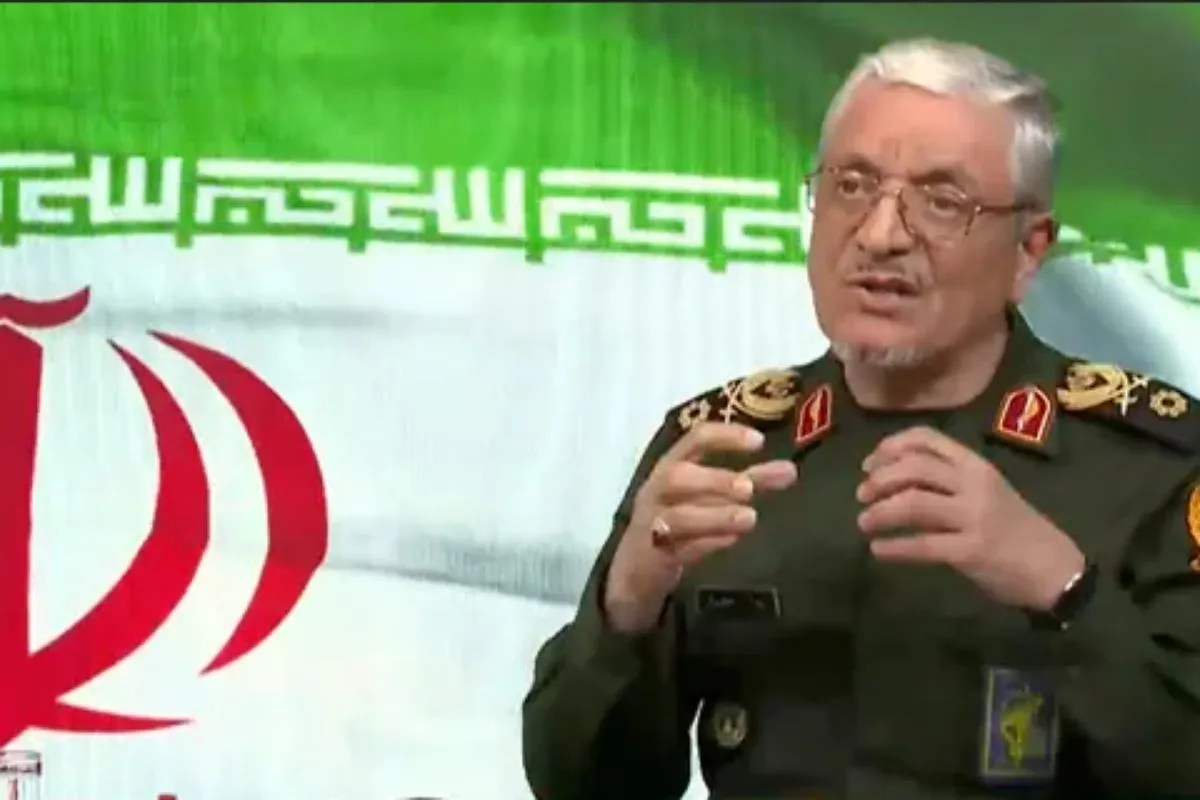
Iran’s Deputy Defense Minister recently delivered a message that was less of a diplomatic note and more of a hand on a pressure point. He suggested that the Strait of Hormuz—the world’s most vital artery for oil—could be squeezed shut if the United States and Israel do not change their trajectory. This isn't just about ships and sailors. It’s about the fundamental mechanics of how our modern world breathes. Read more on a related issue: this related article.
The Knife’s Edge
Picture a narrow hallway. Everyone in the building needs to pass through this hallway to get their lunch, their mail, and their paycheck. Now, imagine a man standing at the end of that hallway with his hand on the light switch. He isn't yelling. He’s speaking calmly, explaining that if the people at the other end of the building don't stop knocking on his door, he might just turn the lights off.
That hallway is the Strait of Hormuz. At its narrowest, it is only 21 miles wide. Additional reporting by The New York Times delves into comparable perspectives on this issue.
Through this tiny crack in the Earth’s crust, roughly one-fifth of the world’s total oil consumption flows every single day. We are talking about millions of barrels. This oil fuels the trucks that deliver your groceries, the planes that carry you to see family, and the plastic manufacturing that creates everything from heart valves to smartphone cases. When Iran speaks about closing this gate, they aren't just threatening a waterway; they are threatening the global pulse.
The Human Cost of a Closed Gate
Let’s look at a hypothetical scenario to ground this geopolitical chess move. Meet Elias, a crane operator in a port city half a world away. Elias doesn't follow Middle Eastern defense ministers on social media. He cares about the cost of eggs and whether he can afford the commute to work.
If the Strait of Hormuz is blocked, the supply of crude oil drops instantly. Markets don't wait for the oil to actually run out; they react to the fear of it running out. Prices spike within minutes. For Elias, this means his weekly fuel bill doubles. For the trucking company he works with, it means profit margins vanish.
This is the "invisible stake." When we read headlines about "tensions in the Gulf," our brains often categorize them as distant political dramas. But the reality is a tether. One end is tied to a naval vessel in the Persian Gulf, and the other is tied to your bank account.
Why the Pressure is Mounting
Iran’s stance is a calculated reaction to a perceived siege. From their perspective, the tightening of sanctions and the military cooperation between the U.S. and Israel are not just policy choices; they are existential threats.
The Deputy Defense Minister’s "two-word" ultimatum—essentially, "back off"—is rooted in the logic of deterrence. Iran knows it cannot win a conventional blue-water naval war against a superpower. However, they don't need to win a war. They only need to make the status quo too expensive for the rest of the world to maintain.
Consider the geography. Iran sits on the northern coast of the Strait. They have spent decades perfecting "asymmetric" warfare. This involves fast boats, naval mines, and shore-to-ship missiles. They have turned the Strait into a tactical minefield where a billion-dollar destroyer has to worry about a $50,000 drone.
The Fragile Illusion of Security
We like to believe the global economy is a solid, immovable mountain. It isn't. It is a complex web of "just-in-time" deliveries and delicate shipping lanes.
For years, the U.S. Fifth Fleet has acted as the guarantor of this passage. They patrol, they monitor, and they project power. But power is only effective if the other side is afraid to lose something. When a nation feels it has been pushed into a corner by sanctions, the "nothing to lose" factor becomes a dangerous variable.
Iran is signaling that they are reaching that point. Their message suggests that the "free flow of commerce" is a privilege they allow, not a right the West possesses by default. By tying the reopening or the "security" of the Strait to the behavior of the U.S. and Israel, they are effectively holding the global economy’s oxygen supply hostage to force a diplomatic concession.
The Ripples Beyond the Pump
The impact wouldn't stop at gas prices. We live in an era of interconnectedness.
If shipping insurance rates in the Gulf skyrocket—which they do the moment a threat is deemed credible—the cost of everything moving by sea goes up. This includes liquefied natural gas (LNG) which heats homes across Europe and Asia.
Imagine a cold winter in a city like Seoul or Berlin. If the Strait is compromised, the cost of heating a home becomes a choice between warmth and food. This is the human element that gets lost in "dry" news reporting. Geopolitics is ultimately the study of how far one person is willing to make another person suffer to get what they want.
The Stalemate of the Century
There is a certain tragic irony in this standoff. Iran needs the oil to flow as much as anyone else; their economy survives on it. Closing the Strait would be a move of "mutual assured destruction," economically speaking.
But history is full of moments where pride and pressure overrode logic.
The U.S. maintains that it will never allow the Strait to be closed. Israel maintains that it will do whatever is necessary to ensure its security. Iran maintains that it will not be bullied. These three immovable objects are currently grinding against one another in a 21-mile wide channel.
The tension is a physical weight. Sailors on tankers passing through the Strait today aren't looking at the sunset; they are looking at the horizon for the silhouette of a fast-attack craft. They are the frontline of a war that hasn't started yet, but whose opening shots have already been whispered in press conferences.
We often think of peace as the absence of war. In the Strait of Hormuz, peace is actually a high-wire act. Every day that a tanker passes through safely is a victory of restraint over impulse.
But restraint is wearing thin.
The words of the Deputy Defense Minister aren't just a headline. They are a reminder that the world we built—the one where you can buy whatever you want and have it shipped from across the globe—relies on a few miles of water staying quiet. If that water starts to boil, the steam will be felt in every home, every office, and every corner of the earth.
The gate is still open. For now. But the hand on the latch is shaking with intent.