The air does not move. It sits heavy, wet, and thick, smelling of sun-baked asphalt and the sharp, metallic tang of sweat cooling on skin before it can even evaporate. At eleven in the morning, the thermometer reads forty degrees Celsius, but the heat index tells the real story: fifty. Fifty degrees of suffocating, crushing pressure.
Consider Somchai. He is a hypothetical worker, but his life is drawn from the raw grain of a thousand real mornings across Bangkok, Jakarta, and Manila. He stands at the edge of a newly poured concrete slab, wearing a faded cotton shirt that is already soaked through, dark patches spreading across his back like ink on blotting paper. He has been awake since four. He will work until dusk. His safety net consists of a torn umbrella duct-taped to a rusty scaffolding pole and a plastic bottle of lukewarm water that turned into soup hours ago.
When people talk about climate change, they talk in grand, sweeping abstractions. They talk about polar ice sheets cracking in the dead of the night, or distant carbon metrics fluctuating on a distant computer screen. They speak of degrees Celsius as if they were lines on a chalkboard.
They rarely talk about Somchai. They rarely talk about the moment his vision blurs at the corner of a construction site, the sudden, terrifying metallic taste in his mouth, and the quiet, desperate calculus every outdoor worker makes every single day: keep moving, or lose the wages that buy tonight's rice.
Southeast Asia is baking. And beneath the glittering glass towers and the booming urban expansion of one of the world's most economically vibrant regions, a profound, systemic fracture is being exposed by the mercury. The region's social safety net was never built for a furnace.
The Weight of the Sun
To understand why extreme heat is uniquely devastating here, you have to understand the geography of survival. This is not dry heat. This is tropical humidity, a relentless blanket of moisture that cripples the human body's primary cooling mechanism. When the air is saturated, sweat cannot evaporate. The body becomes an engine trapped in a room with no exhaust.
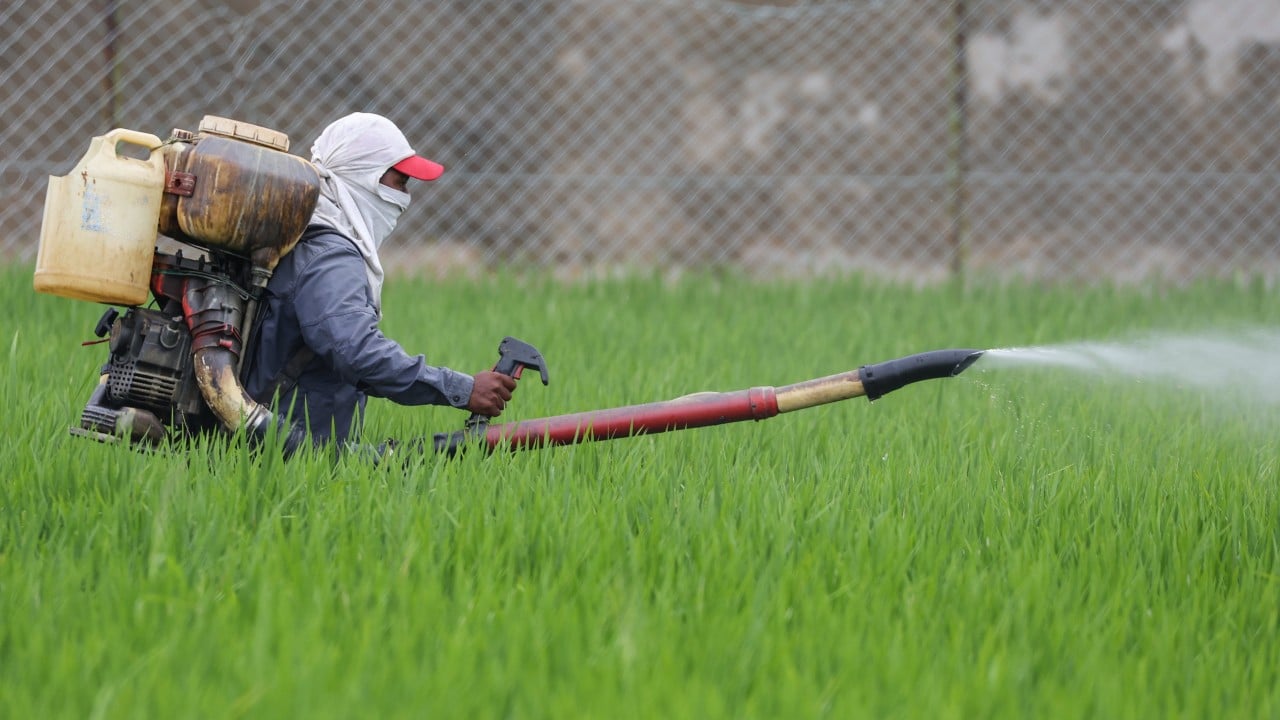
Public health officials track heat stroke and exhaustion, but official statistics capture only the disasters that end in emergency rooms. They miss the slow burn. They miss the chronic kidney disease that creeps up on construction workers and agricultural laborers after years of micro-dehydration. They miss the trembling hands of a street vendor who has stood over a boiling wok for twelve hours straight in an open-air stall with no breeze and no relief.
The economic architecture of the region relies heavily on informal labor. Millions of people work outside the formal protections of labor law. No union negotiates their shaded breaks. No corporate compliance officer mandates hydration stations or monitors wet-bulb globe temperature indices. If they do not step out into the blinding glare of the morning sun, rent goes unpaid.
It is a cruel choice. Die of heat, or starve of hunger.
When researchers examine the holes in the safety net, they find bureaucratic emptiness. Labor codes in many Southeast Asian nations were written decades ago, during a different climatic era, when extreme heat waves were anomalies rather than the brutal baseline of daily life. Today, those laws treat heat as a discomfort rather than an occupational hazard as lethal as falling from a scaffold.
The Anatomy of an Emergency
Step closer to the ground. Watch the delivery riders weaving through the chaotic traffic of Jakarta, their insulated backpacks strapped tight against their spines, acting as miniature ovens. Watch the farmers in the rice paddies of Vietnam bending double under a sky the color of a bruised plum.
The human body sends warnings, but the modern economy teaches us to ignore them. A headache is just a headache. Dizziness is just lack of sleep. Muscle cramps are just hard work. By the time a worker collapses, heat stroke has already begun to unravel their internal organs.
Yet, institutional responses remain sluggish. Early warning systems exist for typhoons and floods. Sirens wail when the water rises, warning communities to move to higher ground. People know what to do when the storm surge threatens their homes.
There are no sirens for heat.
There is no emergency evacuation order when the heat index crosses the lethal threshold of fifty-four degrees. There is only the silent, grinding continuation of life. Businesses keep operating. Construction sites keep pouring concrete. The invisible stakes of this crisis are measured in shortened lifespans, ruined kidneys, and the quiet erosion of human dignity.
Weaving a Stronger Fabric
Fixing this requires abandoning the comforting illusion that weather is a neutral background against which human drama unfolds. Heat is a hazard. It is a physical force as destructive as a flash flood, and it demands an equally robust structural defense.
Some cities are beginning to experiment. Urban planners are mapping "cool corridors," planting dense canopies of native trees, and mandating white roofs to reflect solar radiation rather than absorbing it. Forward-thinking municipalities are exploring mandatory midday work bans during peak heatwaves, backed by emergency income support to ensure that stopping work does not mean stopping survival.
But policy changes alone are hollow if they do not reach the invisible workforce. The gig workers, the migrant laborers, the small-scale farmers—they are the backbone of the region's economic miracle. To let them burn is to hollow out the very foundation of society.
The sun dips below the horizon, but the heat lingers, trapped in the concrete, radiating upward through the dark. Tomorrow, the sun will rise again. The thermometer will climb. And Somchai will tie his boots, pick up his tools, and step back out into the fire.