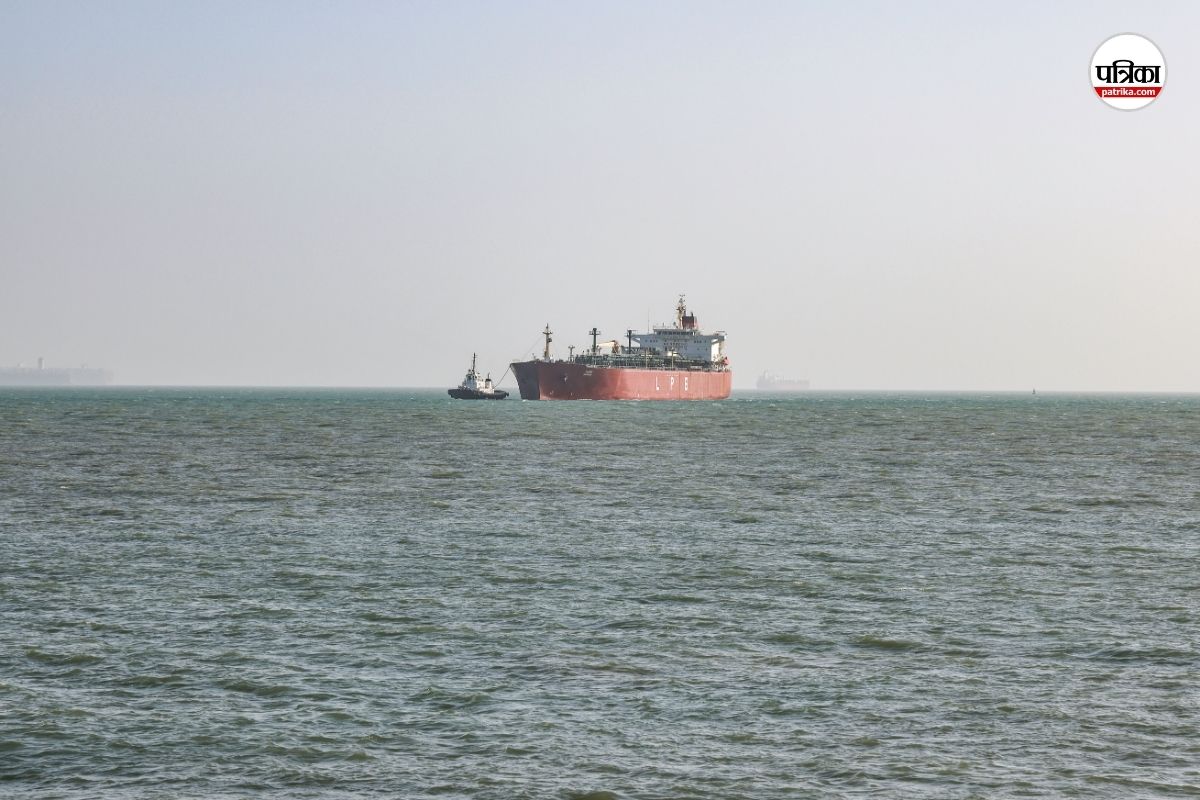
The recent passage of a sanctioned Chinese-linked vessel through the Strait of Hormuz is not just a tactical middle finger to Washington; it is a signal that the global financial and maritime blockade is leaking. While the United States continues to rely on the dollar and the SWIFT system to choke off adversaries, a sophisticated, shadow infrastructure has emerged to ensure the oil keeps flowing. This isn't a story about one ship. It is a story about the systematic dismantling of American economic leverage.
The vessel in question, operating under a veil of shell companies and obscured ownership, bypassed the primary chokepoint of global energy trade despite being on the Treasury Department’s blacklist. This maneuver proves that sanctions are only as effective as the enforcement at the water's edge. When a ship can turn off its AIS (Automatic Identification System) transponders, paint over its name, and swap its flag in the middle of the ocean, the paperwork in D.C. becomes secondary to the reality on the waves.
The Anatomy of the Ghost Fleet
To understand how China successfully challenges these blockades, one must look at the mechanics of the "ghost fleet." This isn't a ragtag group of rusted tankers. It is a highly organized, multi-billion dollar operation. These ships often utilize "spoofing" technology to broadcast false GPS coordinates, making it appear as though they are safely anchored in one port while they are actually loading crude in another.
The logistics are handled through a web of offshore entities. A ship might be owned by a company in the Marshall Islands, managed by a firm in Dubai, and crewed by sailors from across the globe, all while carrying Iranian or Russian oil destined for Chinese independent refineries—known as "teapots." These refineries operate outside the state-run giants, giving Beijing a layer of plausible deniability.
The scale is massive. Industry analysts estimate that hundreds of tankers now operate within this parallel universe. By bypassing traditional insurance markets—usually dominated by Western firms like those in the International Group of P&I Clubs—these vessels remove the primary lever the West uses to ground them. Instead, they rely on sovereign guarantees or obscure, state-backed insurance from nations willing to ignore the U.S. State Department.
Beijing’s Strategic Calculation
China’s willingness to openly facilitate the movement of sanctioned goods isn't an accident. It is a calculated stress test of American resolve. For decades, the threat of being cut off from the U.S. financial system was enough to keep most global players in line. But China has spent the last decade building alternatives.
The development of the CIPS (Cross-Border Interbank Payment System) and the push for the digital yuan are direct responses to what Beijing views as the "weaponization" of the dollar. When a Chinese refinery pays for oil in yuan, the transaction never touches a U.S. bank. If it never touches a U.S. bank, the Treasury Department has no clear legal mechanism to freeze the funds. This creates a closed loop of trade that is completely invisible to Western regulators.
The Failure of the Chokepoint Strategy
The Strait of Hormuz is the most vital oil artery in the world. Roughly twenty percent of the world’s liquid petroleum passes through this narrow stretch of water. By moving a prohibited ship through this specific corridor, China is demonstrating that the U.S. Navy’s presence does not equate to total economic control.
The U.S. faces a dilemma. To stop these ships physically would require a level of maritime intervention that borders on an act of war. Boarding a Chinese-linked tanker in international waters is a massive escalation that the current administration is hesitant to trigger. China knows this. They are betting that the U.S. will choose the safety of diplomatic protests over the risk of a kinetic confrontation at sea.
Technology as a Cloaking Device
The technical sophistication of these operations has moved beyond simple light-switching. Modern "dark" vessels use sophisticated maneuvers to hide their tracks.
- Ship-to-Ship (STS) Transfers: Oil is moved between tankers in the middle of the ocean, often in the dark or under heavy cloud cover, to mix sanctioned oil with "clean" crude.
- Flag Hopping: A vessel may change its national registration multiple times in a single year, moving from registries like Panama to more obscure ones that offer less oversight.
- Identity Theft: Some ships have been caught using the IMO (International Maritime Organization) numbers of scrapped vessels, essentially becoming "zombie" ships that do not officially exist on any active ledger.
This creates a data fog. For a journalist or a maritime analyst, tracking one ship requires cross-referencing satellite imagery, port call logs, and radio frequency data. For the U.S. government, enforcing this on a global scale is like trying to plug a sieve with your fingers.
The Teapot Refineries and the New Silk Road
The destination for much of this oil is China's Shandong province. The independent refineries there are the final link in the chain. These "teapots" are the hungry engines of the Chinese economy, and they thrive on the steep discounts offered by sanctioned nations. Because these refineries are often small and focused on the domestic market, they have little exposure to international banking, making them nearly immune to secondary sanctions.
This trade is the bedrock of the "New Silk Road" in the Middle East. It isn't just about infrastructure; it's about creating a trade ecosystem that functions entirely outside the Western orbit. Every successful transit through the Strait of Hormuz by a prohibited vessel reinforces the idea that the U.S. era of "maximum pressure" is over.
The Cost of the Shadow Market
There is a darker side to this defiance that rarely makes the headlines in Beijing or Washington. The vessels used in the ghost fleet are often aging tankers that should have been sent to the ship-breaking yards years ago. They are frequently maintained poorly and operate without the rigorous safety inspections required by reputable insurers.
This creates a massive environmental risk. A major spill in the Strait of Hormuz or the South China Sea involving an uninsured, untraceable vessel would be a catastrophe. There would be no clear entity to hold accountable for the cleanup costs, and the ecological damage could devastate the regional fishing and tourism industries. The shadow market is efficient, but it is also dangerous.
The Erosion of Hegemony
The U.S. response to these challenges has been largely reactive. When a ship is caught, a new set of shell companies is added to the OFAC (Office of Foreign Assets Control) list. But the list is a static tool in a fluid environment. By the time a company is sanctioned, the operators have already moved the assets to a new entity.
The real shift is psychological. The world is watching. When nations like India, Turkey, or Brazil see China successfully flout U.S. mandates without facing severe consequences, the perceived risk of doing the same diminishes. This is the "contagion of non-compliance." If the world’s second-largest economy provides a blueprint for bypassing sanctions, the effectiveness of the U.S. dollar as a tool of foreign policy is permanently degraded.
The Impotence of Paper Prohibitions
We are entering an era where the digital and physical realities of trade are permanently decoupled. On a screen in Washington, the ship in the Strait of Hormuz doesn't have the right to be there. In the water, the ship is moving, its tanks are full, and the buyer is waiting. The paperwork has become a suggestion rather than a law.
To regain control, the U.S. would have to overhaul its entire approach to maritime enforcement, moving away from financial threats and toward active, persistent monitoring and interdiction. This would require a level of international cooperation that currently does not exist. Allies in Europe and Asia are increasingly wary of being caught in the crossfire of a U.S.-China trade war, and many are quietly looking for their own ways to hedge against the dollar.
The transit through the Strait is a proof of concept. It confirms that the technological and financial walls built around the global economy can be scaled with enough capital and political will. The blockade is not just being challenged; it is being bypassed entirely, rendering the very concept of a "prohibited ship" an artifact of a passing age.
Governments and corporations must now operate in a world where two parallel economies exist: one that follows the rules established after 1945, and one that operates in the shadows, fueled by the needs of a rising superpower and the desperation of those the West has tried to isolate. The shadow is winning because it is faster, more adaptable, and ultimately, more profitable.
The next time a "prohibited" vessel enters the Strait, don't look at the flags or the names. Look at the wake it leaves behind—a clear path for every other nation tired of taking orders from a central bank thousands of miles away. Use of satellite-linked tracking and blockchain-based logs may offer a future solution for transparency, but until those systems are mandatory and universal, the ghost fleet remains the most effective tool in the arsenal of the defiant.