A single drop of oil in the Strait of Hormuz does not stay there. It moves. It flows into the fuel tank of a family sedan in a rainy suburb of Birmingham. It powers the generator that keeps a rural hospital’s lights on in the dead of night. It lubricates the gears of the global economy, a silent, viscous heartbeat that most of us never think about until it stops.
The Strait is a narrow throat of water. On a map, it looks insignificant—a tiny pinch point between the Persian Gulf and the Gulf of Oman. In reality, it is the most vital artery on the planet. One-fifth of the world’s total oil consumption passes through this strip of blue every single day. If that artery clogs, the world goes into cardiac arrest.
The Weight of the Horizon
Consider the commander of a British warship, standing on the bridge as the sun begins to bake the steel deck. Let’s call him Miller. Miller isn’t looking for a fight; he is looking for a shadow. The heat is thick enough to chew. Through his binoculars, the horizon shimmers with a deceptive peace, but he knows the math of modern conflict. A single stray mine, a fast-attack craft moving too close to a tanker, or a sudden seizure of a merchant vessel can send shockwaves through the London Stock Exchange in minutes.
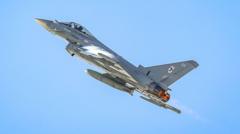
The UK’s recent commitment to deploy advanced jets, high-endurance drones, and a dedicated warship to this region isn't just a military maneuver. It is an insurance policy for the modern way of life. When the Ministry of Defence speaks of "defence missions," they aren't just talking about missiles and radar. They are talking about the price of bread.
The stakes are invisible to the average person, but they are heavy. We live in a world of just-in-time delivery. We expect our shelves to be full and our heaters to work. That expectation rests entirely on the ability of ships to pass through twenty-one miles of water without being harassed or sunk.
Steel and Silicon
The hardware being sent isn’t just for show. The Type 45 destroyers and the accompanying aerial assets represent a shift in how we protect the commons. This isn't the broadside-cannon warfare of the 19th century. This is a game of digital signatures and persistent eyes in the sky.
The drones—unmanned, tireless, and cold—provide what military planners call "persistent stare." While Miller and his crew on the warship have to deal with the limits of human fatigue, the drones simply watch. They record the wake of every dhow. They track the thermal signatures of engines. They turn the vast, chaotic expanse of the sea into a data set that can be analyzed in real-time.
But why now? Why the surge in British presence?
The answer lies in the shifting nature of "grey zone" warfare. It is no longer about total war; it is about the constant, low-level friction that wears down an opponent's resolve. By deploying these assets, the UK is drawing a line in the water. It is a physical manifestation of a psychological truth: if you want to keep the peace, you must make the cost of breaking it visible and certain.
The Human Cost of Quiet
We often talk about "defense spending" as if it were a ledger of lost money. We see the billions of pounds and wonder if that capital could be better spent elsewhere. It is a fair question. It is the kind of doubt that keeps taxpayers up at night.
However, consider the alternative. Imagine the "what if."
If the Strait were to be effectively blocked, even for a week, the global supply chain would fail. It wouldn't just be "expensive" gas. It would be a systemic collapse of logistics. Trucks stop moving. Food stays in warehouses. The intricate, delicate web of international trade, which we have spent decades weaving, would begin to tear.
Miller, on his bridge, understands this. His job is to be the person who ensures that nothing happens. It is a strange, paradoxical profession. If he does his job perfectly, he remains completely anonymous. No one writes a headline about the warship that sailed for six months and fired zero shots. No one celebrates the drone that watched a thousand empty miles of ocean.
Success is measured in silence.
The Geometry of Protection
To understand the scale, you have to look at the numbers, but not as cold statistics. Look at them as a geometry of risk.
$$V_{oil} \approx 21,000,000 \text{ barrels per day}$$
That is the volume passing through the Strait. If even a small percentage of that volume is threatened, the market reacts with panic. Markets hate uncertainty more than they hate high prices. The presence of a British warship acts as a stabilizer. It lowers the "volatility coefficient" of the region.
The jets being deployed—likely F-35s or Typhoons—offer a different kind of protection. They are the "rapid response" element. If a drone spots a boarding party or an illegal mine-laying operation, the jets can be on top of the situation in minutes. They provide the "hard power" that backs up the "soft eyes" of the surveillance assets.
It is a multi-layered shield.
- The Drones: Constant, unblinking observation.
- The Warship: A physical deterrent and command center.
- The Jets: The ultimate enforcement mechanism.
A Legacy of Salt and Iron
There is a historical weight to this mission as well. The UK has navigated these waters for centuries. There is an institutional memory within the Royal Navy that understands the tides, the political undercurrents, and the temperament of the Gulf.
But this isn't about empire or nostalgia. It is about the reality of being an island nation. For the UK, the sea is not a barrier; it is the highway. Everything we consume, from the electronics in our pockets to the coffee in our cups, comes by sea. To ignore the security of these maritime choke points would be a form of national negligence.
The sailors who will spend their months in the sweltering heat of the Gulf are not there for glory. They are there because they understand that the world is smaller than it looks. They know that a crisis in the Strait of Hormuz is a crisis on a high street in Leeds.
The Fragility of the Normal
We have become accustomed to a world that works. We press a button, and light appears. We turn a key, and the engine starts. We assume that the vast machinery of the planet will continue to grind away in the background without our intervention.
But that "normalcy" is fragile. It is a thin crust over a very hot fire.
The deployment of these jets and ships is a reminder that peace is not the natural state of the world; it is a cultivated garden. It requires constant tending, weeding, and protection. The invisible stakes of this mission are the very things we take for granted: the quiet afternoon, the steady job, the predictable tomorrow.
As the sun sets over the Strait, casting long, orange shadows across the hulls of the massive tankers, Miller’s warship remains on station. The drones continue their silent patrol, their sensors humming in the thin air. They are the sentinels of the status quo.
In a world increasingly defined by fragmentation and friction, these assets are the anchors. They are the reason we can afford to forget that the Strait of Hormuz even exists. They watch the horizon so we don't have to.
The true value of a warship is not found in the battles it wins, but in the ones it prevents from ever starting.