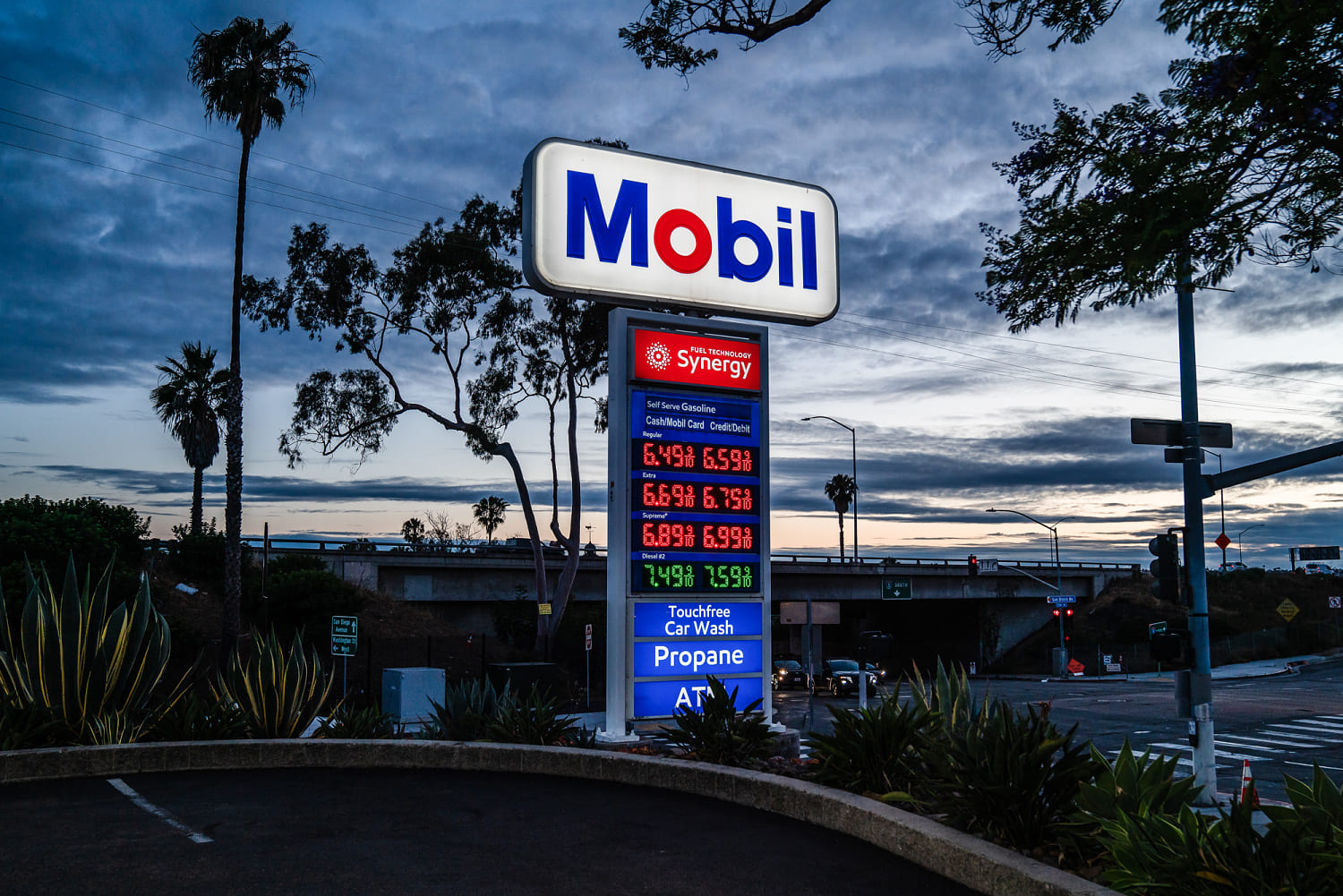
The brass nozzle clicks. It is a sound so familiar you barely register it. You stand on a patch of oil-stained concrete, watching the digital numbers on the pump sprint upward, spinning faster than a slot machine. For a few minutes, you stare into the middle distance, thinking about the grocery list, a project deadline, or the strange rattle in the passenger door. You squeeze the handle, the trigger snaps open, and you drive away.
But a few days later, you are back.
We tend to view gas prices as a temporary weather pattern. We grumble when the storm rolls in, celebrate a sudden sunny drop of twenty cents, and adjust our daily habits at the margins. Yet, when fuel costs climb and stay elevated, the true damage is rarely done in a single, dramatic moment. It happens across months and years through a process of slow, relentless erosion. It is the steady draining of a bank account, dollar by dollar, taking away things you cannot easily calculate on a spreadsheet.
Let us look past the massive macroeconomic charts and focus on a single commuter. We can call her Sarah.
Sarah drives an older midsize SUV. It gets about twenty-two miles per gallon. Her daily commute to her job at a logistics firm is twenty-four miles each way, a standard distance for millions of suburban workers. Five days a week, fifty weeks a year, that routine demands twelve thousand miles of asphalt just to keep her employment intact. Add in weekend errands, grocery runs, and driving her kids to soccer practice, and her odometer logs roughly fifteen thousand miles annually.
When regular unleaded fuel hovers around $3.00 a gallon, Sarah spends roughly $2,045 a year at the pump. It is a hefty line item, but manageable within her household budget.
Then the market shifts. Global supply tightening, geopolitical friction, and refining bottlenecks push the local price up to $4.50 a gallon.
On any given Tuesday, the difference feels minor. Pumping fourteen gallons into her tank now costs $63 instead of $42. A twenty-one dollar increase. It stings, but she pays it. She has to get to work. She taps her card, grabs a travel mug of coffee, and merges onto the highway.
The real problem lies elsewhere. The mathematics of fuel inflation are cumulative, acting like a reverse savings account with high interest.
At $4.50 a gallon, Sarah’s annual fuel bill leaps to $3,068. That minor twenty-one dollar shift at the pump has quietly transformed into a $1,023 annual tax on her mobility. If prices spike further to $5.00 a gallon, her yearly cost reaches $3,409. Suddenly, she is paying nearly $1,400 more each year just to cover the exact same ground she did twelve months prior.
The Math Behind the Margin
To understand why this hurts so deeply, we have to look at disposable income. Economists often discuss rising energy costs as a percentage of gross domestic product, but families feel them as a percentage of what is left over.
Consider what happens next when that extra $1,400 vanishes from a middle-class household budget. It does not typically come out of rent or a mortgage payment; those are fixed, non-negotiable walls. It does not come out of the electric bill. Instead, it eats away at the flexible margins of life.
It is the canceled weekend trip to visit grandparents three states away because the highway miles now cost as much as a plane ticket used to. It is the decision to delay replacing a thinning set of tires, choosing instead to cross your fingers through another rainy season. It is the subtle downgrade in the grocery cart—switching from fresh produce to canned, or skipping the higher-quality protein—to ensure the checking account does not dip into the red before Friday.
This is a hypothetical scenario, but it is grounded in a stark mathematical reality that anyone can calculate for themselves. To find your own invisible number, the formula is straightforward:
$$\text{Annual Added Cost} = \left( \frac{\text{Annual Miles Driven}}{\text{Vehicle MPG}} \right) \times (\text{New Gas Price} - \text{Baseline Gas Price})$$
If you drive a fuel-efficient sedan getting thirty-five miles per gallon over twelve thousand miles a year, a $1.50 price jump costs you an extra $514 annually. If you drive a full-size pickup truck getting fifteen miles per gallon over twenty thousand miles a year, that identical price hike extracts a massive $2,000 from your pocket every single year. Same road. Same job. Vastly different penalties.
The Mirage of the Quick Fix
When the squeeze tightens, the human instinct is to look for an immediate exit ramp. We scour mapping apps for a station charging three cents less per gallon, idling in a long, exhaust-heavy line at a warehouse club to save a grand total of $1.20 on a fill-up. We buy fuel additives that promise miracle mileage improvements, or we alter our driving style, hyper-miling behind semi-trucks to coax an extra fraction of a mile out of a gallon of gas.
These efforts are mostly a coping mechanism for anxiety. They offer an illusion of control over a global commodities market that does not know we exist.
The structural vulnerability remains because our communities are largely built around the automobile. For decades, suburban development expanded under the assumption that fuel would always be cheap and abundant. Housing was built far from commercial centers. Public transit was treated as an afterthought or a localized luxury.
When gas prices rise, we realize how tightly we are locked into our geography. You cannot easily move closer to your job when interest rates are high or housing inventory is low. You cannot easily trade in a paid-off vehicle for a highly efficient hybrid or electric car when vehicle prices are inflated; doing so often introduces a monthly loan payment that dwarfs whatever you would save at the pump.
So, we absorb the blow. We balance the ledger by sacrificing other areas of our lives, watching our purchasing power slip away while the odometer continues its slow, indifferent turn.
The True Value of a Gallon
The next time you pull up to a station and watch the numbers climb, look closely at the total. The real cost isn't just the figure flashing on the pump screen. The real cost is found in the choices you didn't get to make this month because that money was converted into exhaust fumes on your morning commute.
Energy inflation functions as a quiet thief of opportunity. It forces us to run faster just to stay in the exact same place, turning the simple act of driving to work into an increasingly expensive prerequisite for survival. We pay the price not because we want to, but because the alternative is standing still.
The pump keeps running, the numbers keep climbing, and the margin keeps shrinking.