In a quiet kitchen in a suburb far removed from the smoke of the Levant, a woman named Elena watches the blue flame of her stove. It is a small thing. A flicker. She isn't thinking about geopolitics or the price of Brent crude. She is thinking about the fact that her grocery bill has climbed every week for a year, and the news anchor on the television is talking about a war thousands of miles away.
She wonders what one has to do with the other.
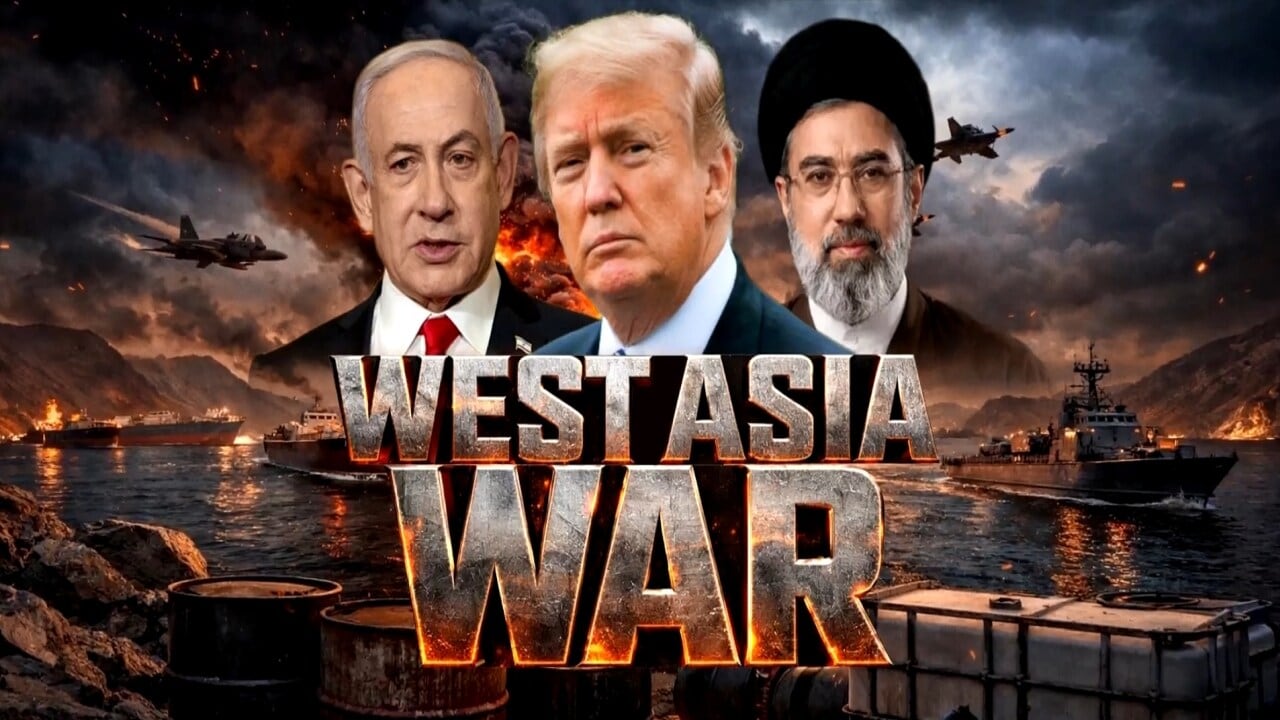
World Bank President Ajay Banga sat in a room recently, staring at the same math Elena feels in her bones. When he speaks, he doesn't use the language of the hearth, but the message is identical. He warns that the conflict in West Asia—what many call the Middle East—is moving beyond a localized tragedy. It is becoming a silent thief, reaching into the pockets of people who will never see a desert or hear the whistle of a rocket.
The world economy is a fragile web of nerves. When one nerve is pinched, the whole body winces. Banga’s concern isn't just about the immediate violence; it is about the "risk premium" that attaches itself to every gallon of fuel and every bushel of wheat when the world gets nervous.
The Weight of a Nervous Market
Investors are not known for their bravery. They are known for their math. When conflict erupts in a region that controls the arteries of global energy, the math changes instantly.
If the conflict expands, the cost of moving goods rises. Insurance premiums for cargo ships spike. Oil prices, which act as the underlying pulse of almost every manufactured good on earth, begin to throb. Banga points out a sobering reality: we were already teetering. The global economy was just beginning to catch its breath after a once-in-a-century pandemic and the shockwaves of the war in Ukraine.
We are out of cushions.
Imagine a marathon runner who has just finished twenty miles. They are dehydrated. Their lungs burn. Just as they see the finish line, someone tells them they have to run another ten miles uphill, carrying a backpack full of stones. That is the global economy right now. We are exhausted, and the stones are being added to the pack.
Inflation is a Shadow That Grows
For the better part of two years, central banks have been waging a brutal war of their own. Their enemy is inflation. They have used the only weapon they have: interest rates. By making it more expensive to borrow money, they hoped to cool the world down, to stop the runaway train of prices.
It was working. Slowly. Painfully.
But a widened conflict in West Asia acts like a bucket of gasoline thrown on a dying fire. If energy prices jump because of regional instability, the work the central banks did is effectively erased. Inflation isn't just a number on a chart at the World Bank. It is the reason Elena puts the expensive butter back on the shelf and reaches for the generic brand. It is the reason a small business owner in Ohio decides not to hire a new assistant this year.
When Banga speaks of "growth down," he is talking about the death of opportunity. High interest rates were supposed to be temporary. If inflation stays high because of geopolitical shocks, those rates stay high. The "higher for longer" mantra becomes a ceiling that prevents young families from buying homes and keeps developing nations trapped in cycles of debt they can no longer service.
The Geography of Fear
There is a specific kind of dread that accompanies uncertainty. Markets can price in a disaster. They can even price in a war. What they cannot price in is a "maybe."
Will the shipping lanes in the Red Sea remain open? Maybe. Will the price of oil stay under ninety dollars? Maybe.
This "maybe" is a poison for investment. When Ajay Banga looks at the data, he sees a world holding its breath. When the world holds its breath, it stops spending. It stops building. The transition to green energy—a Herculean task that requires trillions in steady investment—stutters. The efforts to pull the "bottom billion" out of extreme poverty lose their momentum.
The tragedy of the conflict is, first and foremost, human. The loss of life is a debt that can never be repaid. But the secondary tragedy is the slow, grinding erosion of the future for everyone else. It is a ripple effect that turns a regional explosion into a global recession.
The Broken Ladder
For decades, the promise of the globalized world was a ladder. If a nation worked hard, opened its markets, and invested in its people, it could climb. But that ladder requires a stable ground.
Banga’s warning is essentially a report on the soil beneath that ladder. It is shifting. It is becoming mud.
For a farmer in sub-Saharan Africa, the war in West Asia means the fertilizer he needs—which is often a byproduct of natural gas—is now priced out of his reach. His crop yield drops. His children go hungry. He is not a combatant. He has no stake in the borders being fought over. Yet, he is a casualty all the same.
This is the "invisible stake" that the dry headlines miss. We are so interconnected that there is no such thing as a "faraway" war anymore. We all pay for the bullets. We all pay for the fuel. We all pay for the fear.
The Arrogance of Distance
There is a dangerous temptation to look at the map and feel safe. We see the lines drawn in the sand and think they contain the fire. But the smoke has a way of traveling.
The World Bank isn't just a bank; it’s a lookout tower. From that height, the view is clear. The global growth rate, already sluggish, is staring down the barrel of a significant contraction if the "flicker" in West Asia becomes a conflagration. We are looking at a potential reality where the cost of living remains stubbornly high while the opportunities for earning a living shrink.
It is a pincer movement.
The conversation isn't really about GDP or basis points. It’s about whether a father can afford the bus fare to get to work. It’s about whether a scholarship fund still has the value it did six months ago. It’s about the quiet, desperate math being done at kitchen tables in every time zone.
Ajay Banga’s message is a plea for the world to recognize its own fragility. We are not as resilient as we like to believe. Our systems are optimized for efficiency, not for chaos. When chaos arrives, the efficiency vanishes, leaving us with the bill.
Elena turns off the stove. The blue flame disappears. She checks her bank app on her phone, looking at a balance that seems to buy less with every passing month. She doesn't know Ajay Banga. She doesn't know the intricacies of the Strait of Hormuz. But she feels the wind blowing from the east, and it is cold.
The world is waiting to see if the spark is extinguished or if the wind catches it. Until then, we all sit in the dim light of the "maybe," watching the price of our lives go up while the world around us slows down.


