The steel hull of a merchant vessel hums with a vibration that gets inside your bones. For the crew of a commercial tanker crossing the northern Indian Ocean, that hum is the sound of safety. It means the engines are turning. It means the cargo is moving. It means you are going home. But on a Tuesday afternoon, that rhythm breaks. There is no sirens-blaring warning. There is only a sudden, violent crack that judders through the deck plates, throwing coffee mugs from tables and tearing the quiet monotony of the sea into jagged pieces.
Somewhere above the waves, a drone had been hunting.
When a drone strikes a commercial ship, the headlines thousands of miles away tend to read like chess commentary. They dissect the geopolitics. They analyze the statements from Washington. They debate the diplomatic fallout. But on the water, the reality is distilled down to fire hoses, smoke inhalation, and the terrifying realization that the oceans, which once felt vast and protective, have become very small and very dangerous.
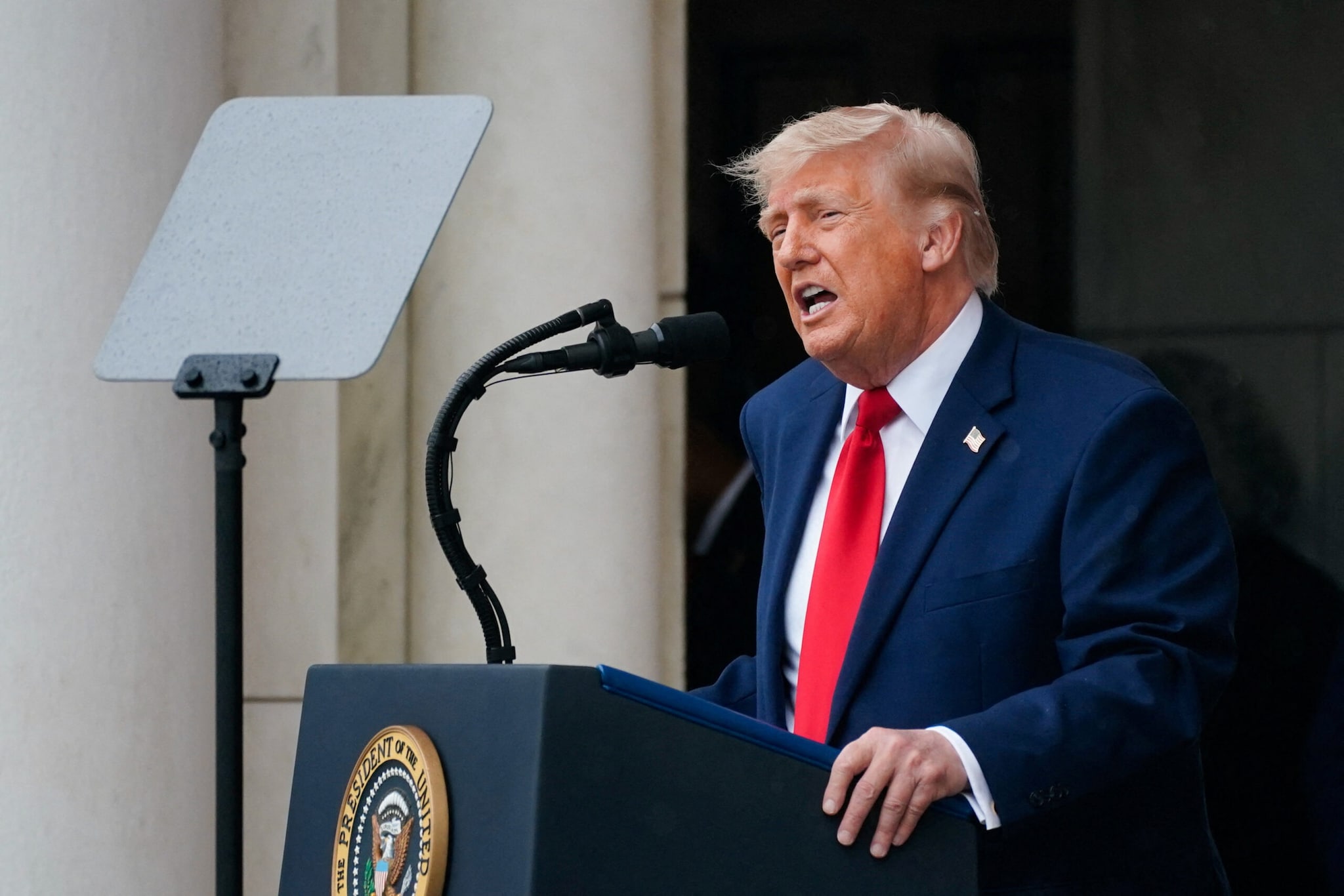
The recent condemnation by Donald Trump regarding an alleged Iranian drone attack on Indian-bound ships is not just another volley in a long-standing political feud. It represents a fundamental fracture in how the world moves goods, how nations talk to each other, and how vulnerable the global economy truly is to a piece of weaponized plastic worth less than a used car.
The Mirage of the Negotiation Table
Diplomats love a boardroom. They love the heavy oak tables, the bottled water, and the carefully drafted communiqués that use thousands of words to say absolutely nothing. For months, the narrative surrounding international relations with Iran has been tethered to these rooms. We are told about progress. We are told about frameworks.
It is a comforting fiction.
While the suits argue over commas in Vienna or Geneva, the reality is being written in the saltwater of the Arabian Sea. The accusation is clear: Iran is participating in these high-level talks in bad faith, using the diplomatic process as a smokescreen while asymmetric warfare continues unabated on the high seas.
Consider the mechanics of a bad-faith negotiation. It functions exactly like a magician’s sleight of hand. One hand is extended in a gesture of cooperation, inviting you to look at the terms of a deal, while the other hand is slipping a knife between your ribs. Donald Trump’s critique cuts straight through the diplomatic politeness to point out this duality. You cannot separate the diplomat in the air-conditioned room from the operator launching a loitering munition from a barren coastline. They are two limbs of the same body.
The stakes here are not abstract. They are measured in dead reckoning and insurance premiums. When a state acts in bad faith during international talks, it destroys the underlying currency of global stability: trust. Without trust, a treaty is just a piece of paper, easily burned by the exhaust of a drone engine.
The Chemistry of Cheap Violence
To understand why this matters to someone who has never seen the ocean, you have to understand the technology of modern maritime terror.
Historically, blocking a shipping lane required a navy. It required battleships, submarines, and billions of dollars in industrial infrastructure. It was the exclusive domain of superpowers. Today, the democratization of violence has changed the math entirely.
Imagine a traditional weapon as a massive, heavy iron hammer. It takes immense strength to swing, and everyone sees it coming. A modern attack drone is more like a swarm of hornets. It is cheap. It is agile. It can be manufactured in a converted garage using commercial components that are entirely unclassified.
These drones utilize basic GPS guidance, small gasoline engines, and a payload of explosives no larger than a backpack. They do not need to sink a massive, double-hulled oil tanker to achieve their purpose. They only need to hit it.
The moment a drone strikes a ship, the economic ripples expand exponentially. Maritime insurance companies—the quiet, risk-averse institutions that dictate where global trade can flow—look at the data. They see a hit. They see an unpredictable threat. Instantly, the cost to insure a vessel traveling through that region skyrockets.
That increase is not absorbed by the shipping conglomerates. It is passed down the line. It attaches itself to the price of a gallon of gasoline in Ohio. It hitches a ride on the cost of grain in East Africa. It embeds itself in the price of electronics manufactured in Asia and sold in Europe. The drone attack on an Indian ship is, in a very real sense, a direct tax on the global consumer, levied by an actor who refuses to play by the rules of the international order.
The Indian Ocean Pivot
The geography of this specific conflict is crucial. The Indian Ocean is the highway of the modern world. A massive percentage of the globe’s energy supplies and container traffic passes through these waters daily. It is a choke point disguised as an ocean.
For India, the attack is an existential provocation. New Delhi has spent the last decade positioning itself as a guarantor of security in the region, a maritime superpower capable of keeping the lanes open. By targeting ships bound for Indian ports, the attackers are not just striking steel; they are testing the resolve of a nuclear-armed nation.
Trump’s condemnation leverages this specific tension. By highlighting the threat to Indian maritime interests, the narrative shifts from a localized Middle Eastern dispute into a broader, global confrontation. It forces a choice upon the international community: do we accept the normalization of piracy by proxy, or do we draw a hard line in the water?
The difficulty lies in the attribution.
Drones are the ultimate cowardly weapon because they leave very little forensic evidence behind at the moment of impact. The wreckage falls into the deep ocean. The digital signatures can be scrubbed. The state that launched them can stand at a podium, look the world in the eye, and deny any involvement with a straight face. This anonymity is the engine of modern state-sponsored gray-zone warfare. It allows a country to inflict real, kinetic damage on its adversaries while remaining just below the threshold that would trigger an outright war.
Beyond the Horizon
But the real problem lies elsewhere. The danger is not just the immediate damage to a single ship or the political grandstanding that follows. The danger is the precedent.
If the international community allows bad-faith negotiations to continue while ignoring the violence occurring concurrently on the water, the system breaks. The rule of law on the high seas—a concept that has allowed global wealth to expand dramatically since the end of the Second World War—depends entirely on the collective enforcement of norms.
When those norms are violated without consequence, the oceans revert to a state of nature. A world where might makes right, and where every merchant ship must become an armed fortress.
The sun sets over the Arabian Sea, painting the water in shades of bruised purple and orange. On the bridge of a tanker, the lookout watches the radar screen, looking for a tiny, slow-moving blip that shouldn't be there. The crewmen below deck try to sleep, listening to the steady hum of the engines, wondering if the next sound they hear will be the wind, or the crack of shattered steel. The politicians will continue to talk, the statements will continue to be issued, but out on the black water, the silence is getting louder.


